
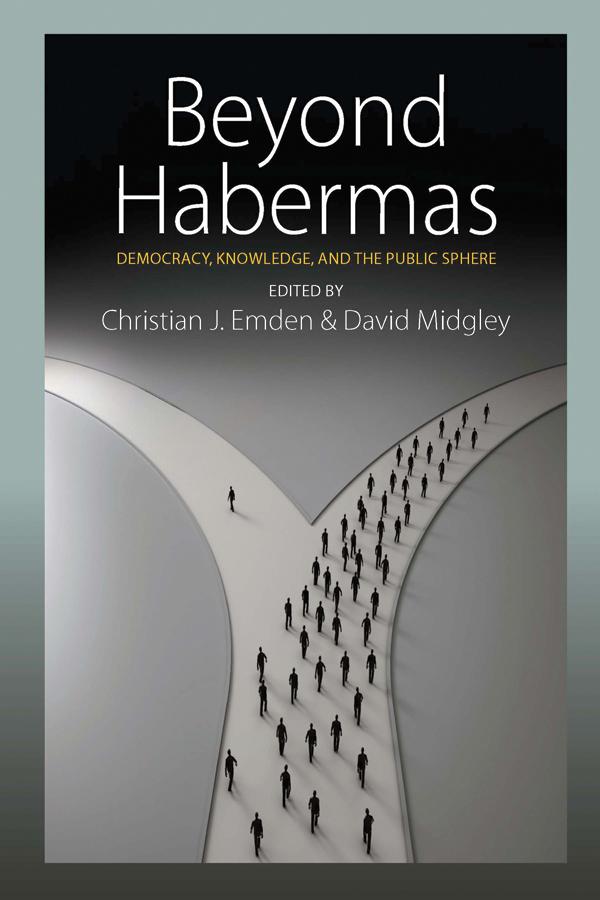
During the 1960s the German philosopher Jürgen Habermas introduced the notion of a “bourgeois public sphere” in order to describe the symbolic arena of political life and conversation that originated with the cultural institutions of the early eighteenth-century; since then the “public sphere” itself has become perhaps one of the most debated concepts at the very heart of modernity. For Habermas, the tension between the administrative power of the state, with its understanding of sovereignty, and the emerging institutions of the bourgeoisie—coffee houses, periodicals, encyclopedias, literary culture, etc.—was seen as being mediated by the public sphere, making it a symbolic site of public reasoning. This volume examines whether the “public sphere” remains a central explanatory model in the social sciences, political theory, and the humanities.
Paga fácilmente con tarjeta, Klarna, Apple Pay o Google Pay. ¿No estás contento? Siempre tienes 14 días de garantía de devolución. Lee más en nuestros términos. Si tienes preguntas, escríbenos a hello@memmo.org.
Memmo hace que estudiar sea más fácil, estés donde estés. Aquí tienes tus libros de texto y herramientas de estudio inteligentes en un solo lugar: resúmenes, quizzes, podcasts y flashcards. Y también a Ted, tu compañero de estudio que responde a todo lo que te preguntes. Más de 50 000 estudiantes ya estudian aquí. Está hecho para que aprendas más rápido y te estreses menos.