
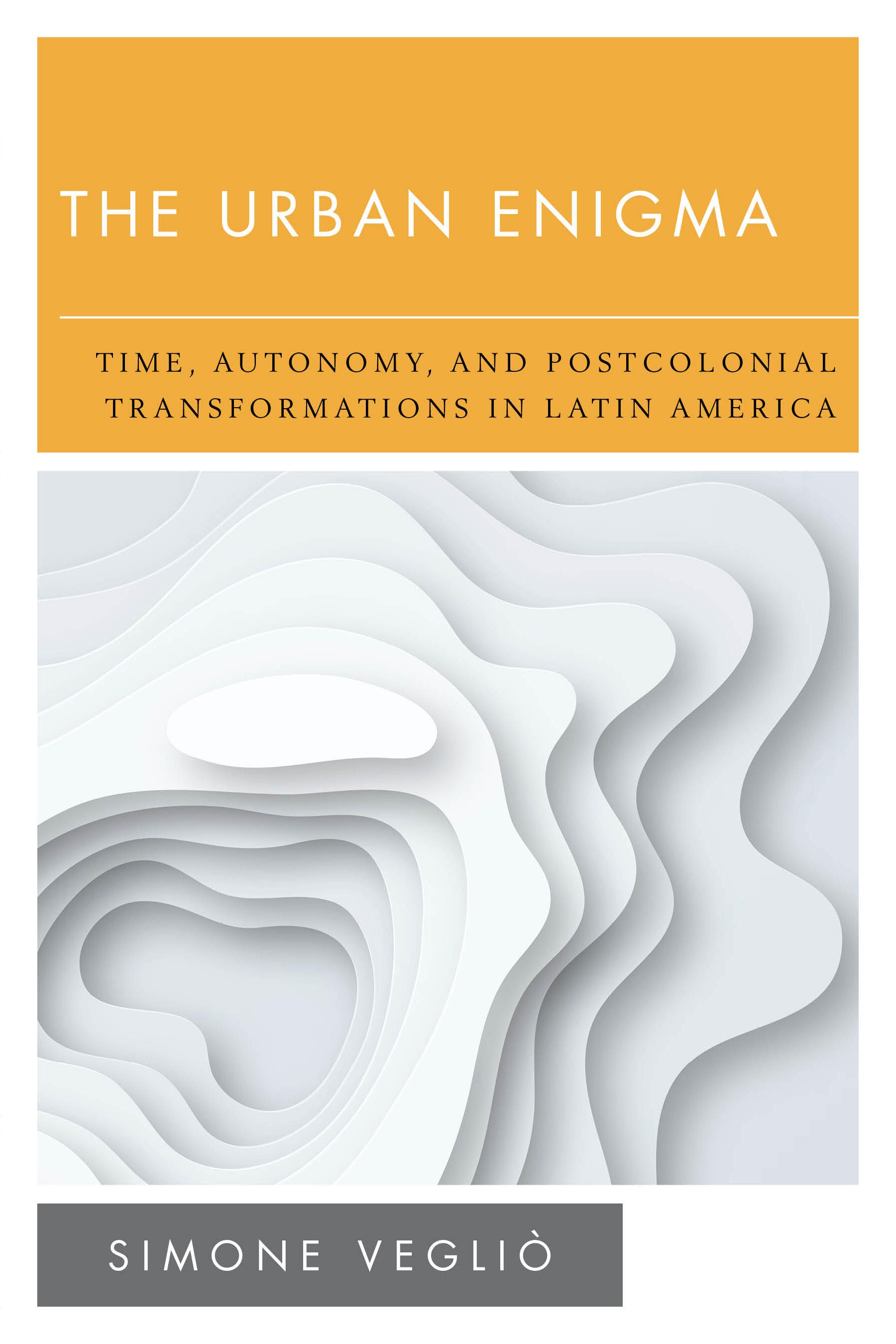
This book explores how Latin America indicated an autonomous form of postcolonialism that was marked by the production of multiple conceptualisations of time. The analysis particularly focuses on iconic urban transformations in capital cities such as Buenos Aires, Mexico City, and Brasilia, diachronically, and investigates each case’s specific representations of past, present, and future. By exploring these three episodes, the book shows how Latin America’s postcolonialism involved specific spatial dynamics that were inherently working over global socio-political geographies resulting from the legacy of a “long” colonial imagination. The text is divided into two parts.
The first part discusses some theoretical questions concerning the very conceptualization of Latin American space and the importance of exploring a genealogy of its urban geographies. The second part analyses the themes proposed through the discussion of the “materiality” of specific historical examples. The section delves into urban transformations in the aforementioned capital cities and focuses on how iconic material forms are able to encapsulate the main socio-political features defining each country’s post-colonial project.
The book aims to depict a historical geography capable of describing how controversial relations between power and knowledge had materialised in the shapes of the urban environment and had iconically contributed to the multifaceted production of the global area known as Latin America. Without any pretension to offer an all-embracing perspective, the book discusses the Latin America experience within the broader question concerning the genealogy of global socio-political geographies.
The first part discusses some theoretical questions concerning the very conceptualization of Latin American space and the importance of exploring a genealogy of its urban geographies. The second part analyses the themes proposed through the discussion of the “materiality” of specific historical examples. The section delves into urban transformations in the aforementioned capital cities and focuses on how iconic material forms are able to encapsulate the main socio-political features defining each country’s post-colonial project.
The book aims to depict a historical geography capable of describing how controversial relations between power and knowledge had materialised in the shapes of the urban environment and had iconically contributed to the multifaceted production of the global area known as Latin America. Without any pretension to offer an all-embracing perspective, the book discusses the Latin America experience within the broader question concerning the genealogy of global socio-political geographies.
Paga fácilmente con tarjeta, Klarna, Apple Pay o Google Pay. ¿No estás contento? Siempre tienes 14 días de garantía de devolución. Lee más en nuestros términos. Si tienes preguntas, escríbenos a hello@memmo.org.
Memmo hace que estudiar sea más fácil, estés donde estés. Aquí tienes tus libros de texto y herramientas de estudio inteligentes en un solo lugar: resúmenes, quizzes, podcasts y flashcards. Y también a Ted, tu compañero de estudio que responde a todo lo que te preguntes. Más de 50 000 estudiantes ya estudian aquí. Está hecho para que aprendas más rápido y te estreses menos.