
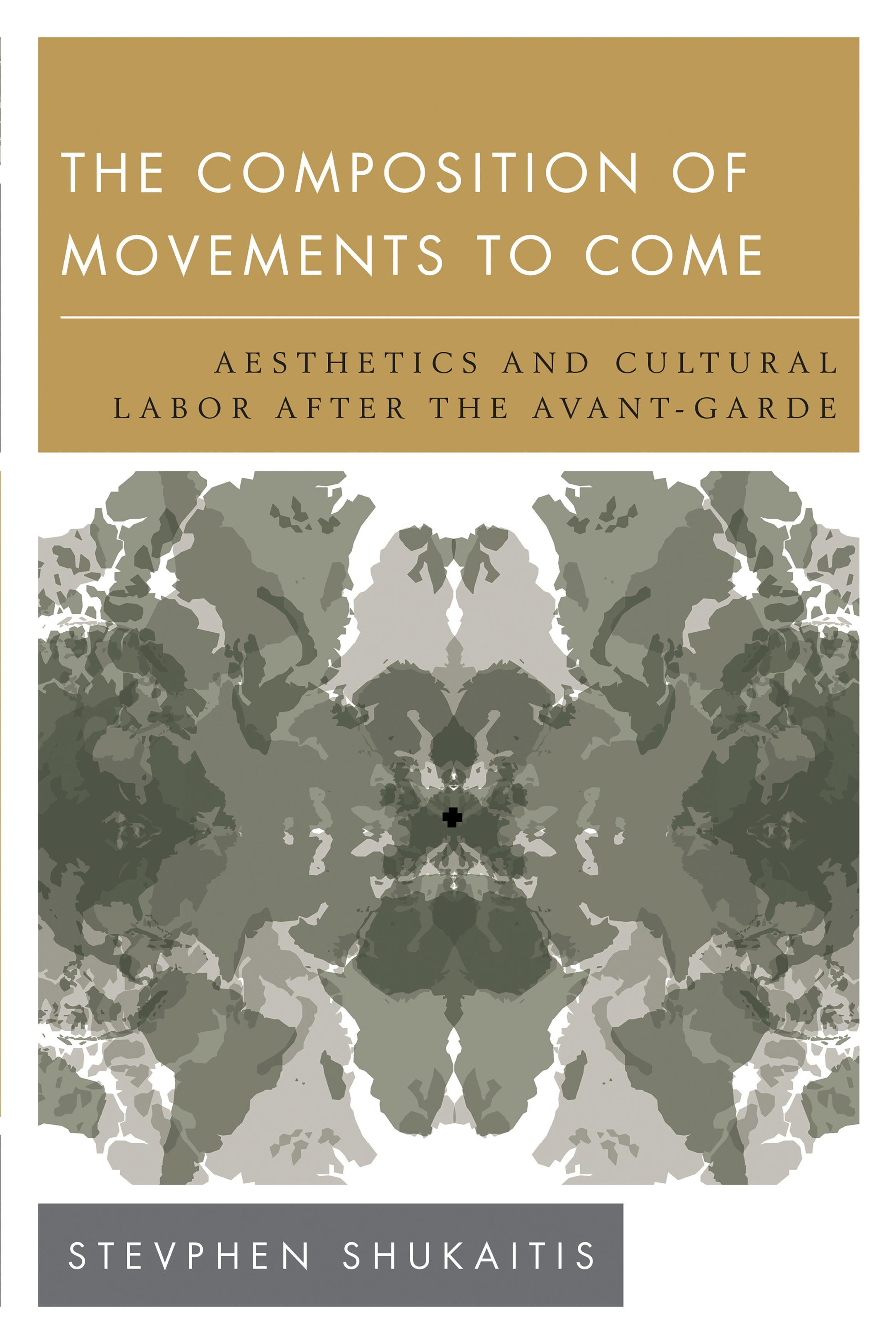
How does the avant-garde create spaces in everyday life that subvert regimes of economic and political control? How do art, aesthetics and activism inform one another? And how do strategic spaces of creativity become the basis for new forms of production and governance?
The Composition of Movements to Come reconsiders the history and the practices of the avant-garde, from the Situationists to the Art Strike, revolutionary Constructivism to Laibach and Neue Slowenische Kunst, through an autonomist Marxist framework. Moving the framework beyond an overly narrow class analysis, the book explores broader questions of the changing nature of cultural labor and forms of resistance around this labor. It examines a doubly articulated process of refusal: the refusal of separating art from daily life and the re-fusing of these antagonistic energies by capitalist production and governance. This relationship opens up a new terrain for strategic thought in relation to everyday politics, where the history of the avant-garde is no longer separated from broader questions of political economy or movement, but becomes a point around which to reorient these considerations.
The Composition of Movements to Come reconsiders the history and the practices of the avant-garde, from the Situationists to the Art Strike, revolutionary Constructivism to Laibach and Neue Slowenische Kunst, through an autonomist Marxist framework. Moving the framework beyond an overly narrow class analysis, the book explores broader questions of the changing nature of cultural labor and forms of resistance around this labor. It examines a doubly articulated process of refusal: the refusal of separating art from daily life and the re-fusing of these antagonistic energies by capitalist production and governance. This relationship opens up a new terrain for strategic thought in relation to everyday politics, where the history of the avant-garde is no longer separated from broader questions of political economy or movement, but becomes a point around which to reorient these considerations.
Paga fácilmente con tarjeta, Klarna, Apple Pay o Google Pay. ¿No estás contento? Siempre tienes 14 días de garantía de devolución. Lee más en nuestros términos. Si tienes preguntas, escríbenos a hello@memmo.org.
Memmo hace que estudiar sea más fácil, estés donde estés. Aquí tienes tus libros de texto y herramientas de estudio inteligentes en un solo lugar: resúmenes, quizzes, podcasts y flashcards. Y también a Ted, tu compañero de estudio que responde a todo lo que te preguntes. Más de 50 000 estudiantes ya estudian aquí. Está hecho para que aprendas más rápido y te estreses menos.