
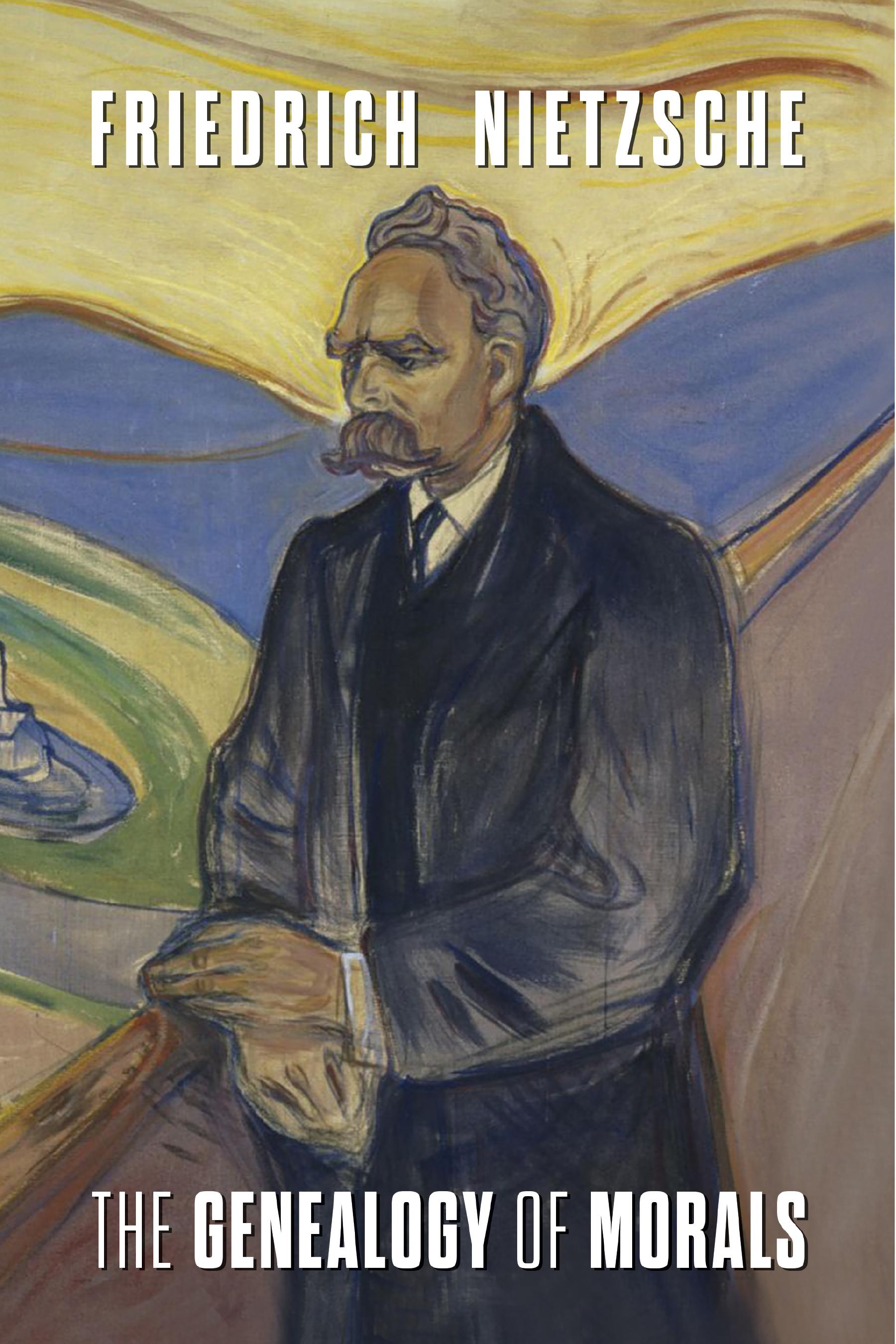
"Human history would be noting but a record of stupidity save for the cunning contributions of the weak."
The Genealogy of Morals is a collection of essays by Friedrich Nietzsche, one of the most interesting philosophers of the 19th century. His three interrelated treatises expand and follow through on concepts Nietzsche sketched out in Beyond Good and Evil. Important works on ethics and politics, the essays contain the author's "thoughts on the origin of our moral prejudices". It was written in response to his friend Paul Rée’s genealogical hypothesis of morality put forth in his work "The Origin of the Moral Sensations".
Finding Rée’s theory unsatisfactory, Nietzsche calls for an examination of moral values themselves.
The three essays are among Nietzsche's most sustained, cohesive and important works as they offer an interpretation and history of ethics which raises profoundly disquieting issues about the violence of both.
The Genealogy of Morals is a collection of essays by Friedrich Nietzsche, one of the most interesting philosophers of the 19th century. His three interrelated treatises expand and follow through on concepts Nietzsche sketched out in Beyond Good and Evil. Important works on ethics and politics, the essays contain the author's "thoughts on the origin of our moral prejudices". It was written in response to his friend Paul Rée’s genealogical hypothesis of morality put forth in his work "The Origin of the Moral Sensations".
Finding Rée’s theory unsatisfactory, Nietzsche calls for an examination of moral values themselves.
The three essays are among Nietzsche's most sustained, cohesive and important works as they offer an interpretation and history of ethics which raises profoundly disquieting issues about the violence of both.
- In the first essay Nietzsche sets up a contrast between what he calls "master" morality and "slave" morality and shows how strength and action have often been replaced by passivity and pessimism.
- The second essay, looks into the origins of guilt and punishment, and how the concept of justice was born.
- In the third essay, Nietzsche dissects the meaning of ascetic ideals showing that culture and morality, rather than being eternal truths, are human-made.
Paga fácilmente con tarjeta, Klarna, Apple Pay o Google Pay. ¿No estás contento? Siempre tienes 14 días de garantía de devolución. Lee más en nuestros términos. Si tienes preguntas, escríbenos a hello@memmo.org.
Memmo hace que estudiar sea más fácil, estés donde estés. Aquí tienes tus libros de texto y herramientas de estudio inteligentes en un solo lugar: resúmenes, quizzes, podcasts y flashcards. Y también a Ted, tu compañero de estudio que responde a todo lo que te preguntes. Más de 50 000 estudiantes ya estudian aquí. Está hecho para que aprendas más rápido y te estreses menos.
También te podría gustar
Comprar el libro0