
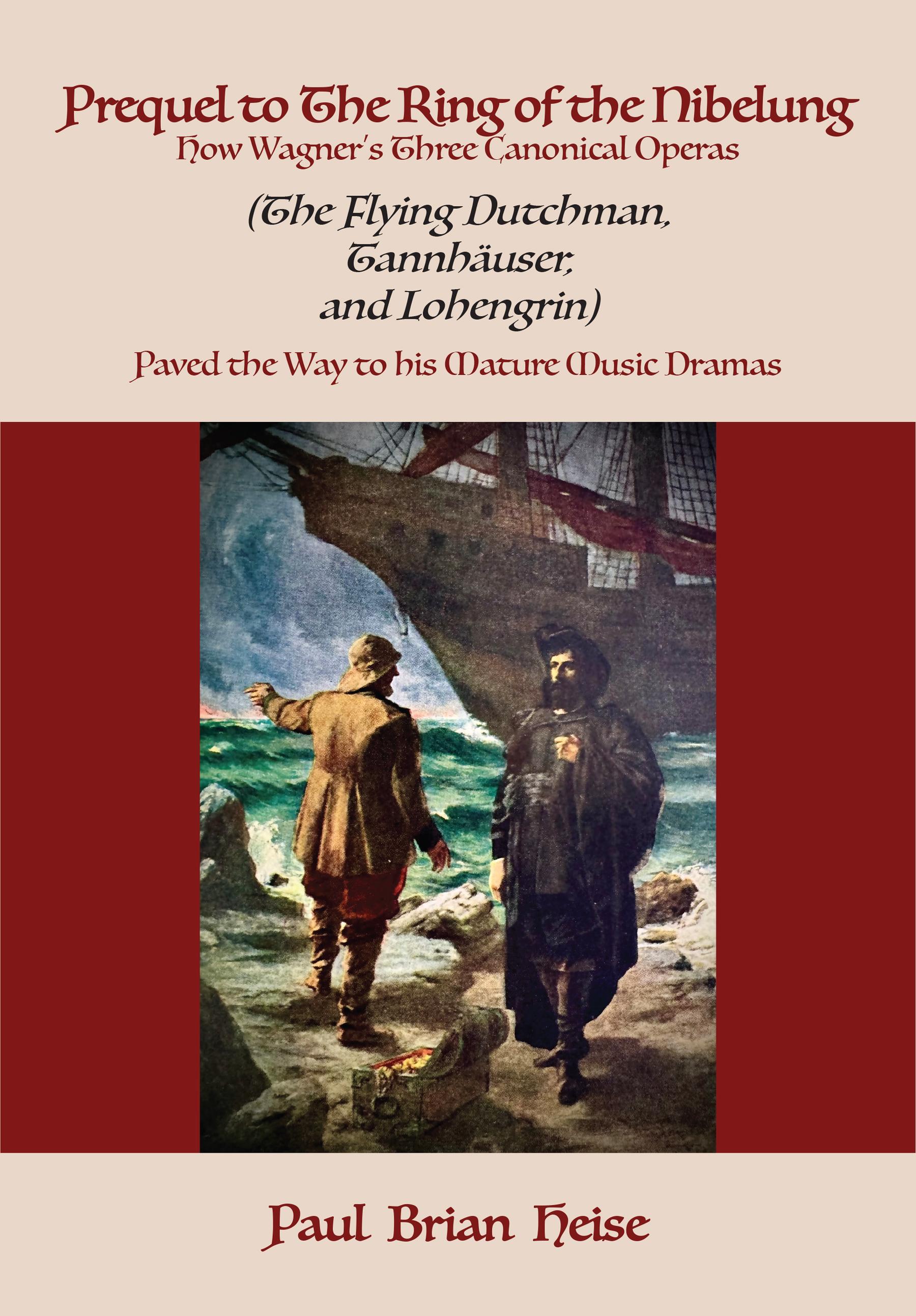
Scholars of Richard Wagner’s works have long noted his numerous comparisons between their characters and plots in his letters, essays, and recorded remarks. Yet no one has previously attempted to assess their implications for our understanding of his art systematically. Paul Heise’s quest to grasp the allegorical unity underlying Wagner’s canonical artworks began in the 1970s. Following his allegorical interpretation of Wagner’s Ring of the Nibelung, The Wound That Will Never Heal (Academica Press, 2021), this fresh installment of Heise’s lifelong Wagner project will demonstrate how the composer employed key facets of the plots of his first three canonical operas The Flying Dutchman, Tannhäuser, and Lohengrin in building the sophisticated allegorical superstructure which culminated in his Ring of the Nibelung and his other mature music-dramas, Tristan and Isolde, The Mastersingers of Nuremberg, and Parsifal. This study casts a retrospective light on the many meanings hidden within these three operas, which were the prequel to the Ring, revealing their heretofore subliminal content as never before.
Paga fácilmente con tarjeta, Klarna, Apple Pay o Google Pay. ¿No estás contento? Siempre tienes 14 días de garantía de devolución. Lee más en nuestros términos. Si tienes preguntas, escríbenos a hello@memmo.org.
Memmo hace que estudiar sea más fácil, estés donde estés. Aquí tienes tus libros de texto y herramientas de estudio inteligentes en un solo lugar: resúmenes, quizzes, podcasts y flashcards. Y también a Ted, tu compañero de estudio que responde a todo lo que te preguntes. Más de 50 000 estudiantes ya estudian aquí. Está hecho para que aprendas más rápido y te estreses menos.