
Choice 2025 Outstanding Academic Title
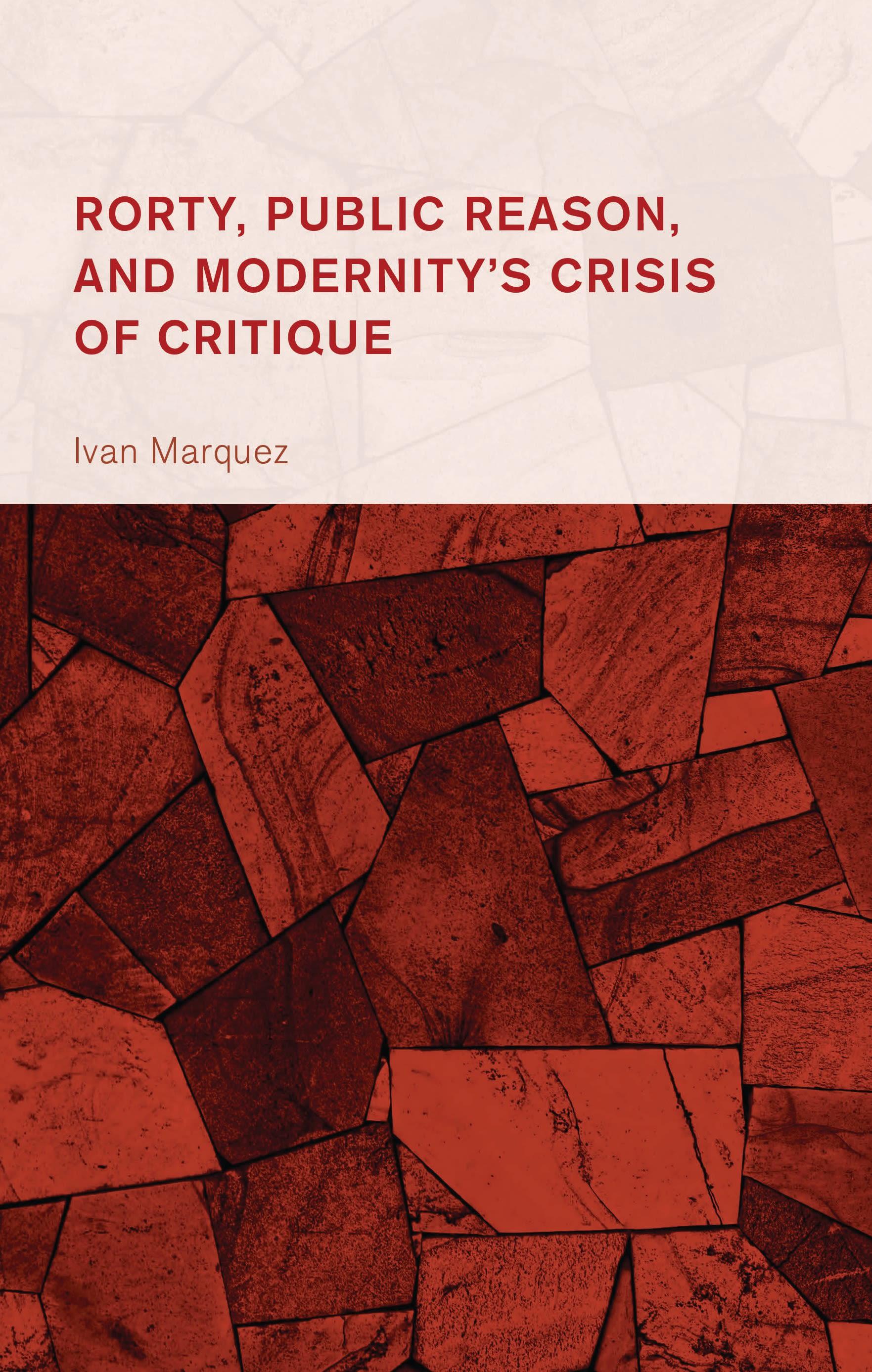
Starting with Richard Rorty's critique of reason, this book discusses modernity's legitimation crisis in political discourse. Rorty, Public Reason, and Modernity's Crisis of Critique explores the contemporary crisis of rational justification and collective will-formation in our current political institutions and the public sphere, arguing that there is an array of untapped rational resources that should be deployed to justify social, political, and economic views, agendas, and programs. It also identifies limits to the powers of public reason to generate rational agreement and collective will-formation. Using a critical analysis of Rorty's non-foundationalist perspective as a vehicle to study modernity's project of rational critique, Ivan Marquez highlights both the strengths and promise and the weaknesses and limitations of liberal and democratic societies-especially within pluralistic socio-cultural contexts-and some possible ways to work within this space of possibilities and constraints. Ultimately, this book can be seen as elaborating a political epistemology view that argues for a redefinition of philosophy and defends a type of post-metaphysical culture.
Starting with Richard Rorty's critique of reason, this book discusses modernity's legitimation crisis in political discourse. Rorty, Public Reason, and Modernity's Crisis of Critique explores the contemporary crisis of rational justification and collective will-formation in our current political institutions and the public sphere, arguing that there is an array of untapped rational resources that should be deployed to justify social, political, and economic views, agendas, and programs. It also identifies limits to the powers of public reason to generate rational agreement and collective will-formation. Using a critical analysis of Rorty's non-foundationalist perspective as a vehicle to study modernity's project of rational critique, Ivan Marquez highlights both the strengths and promise and the weaknesses and limitations of liberal and democratic societies-especially within pluralistic socio-cultural contexts-and some possible ways to work within this space of possibilities and constraints. Ultimately, this book can be seen as elaborating a political epistemology view that argues for a redefinition of philosophy and defends a type of post-metaphysical culture.
Paga fácilmente con tarjeta, Klarna, Apple Pay o Google Pay. ¿No estás contento? Siempre tienes 14 días de garantía de devolución. Lee más en nuestros términos. Si tienes preguntas, escríbenos a hello@memmo.org.
Memmo hace que estudiar sea más fácil, estés donde estés. Aquí tienes tus libros de texto y herramientas de estudio inteligentes en un solo lugar: resúmenes, quizzes, podcasts y flashcards. Y también a Ted, tu compañero de estudio que responde a todo lo que te preguntes. Más de 50 000 estudiantes ya estudian aquí. Está hecho para que aprendas más rápido y te estreses menos.