
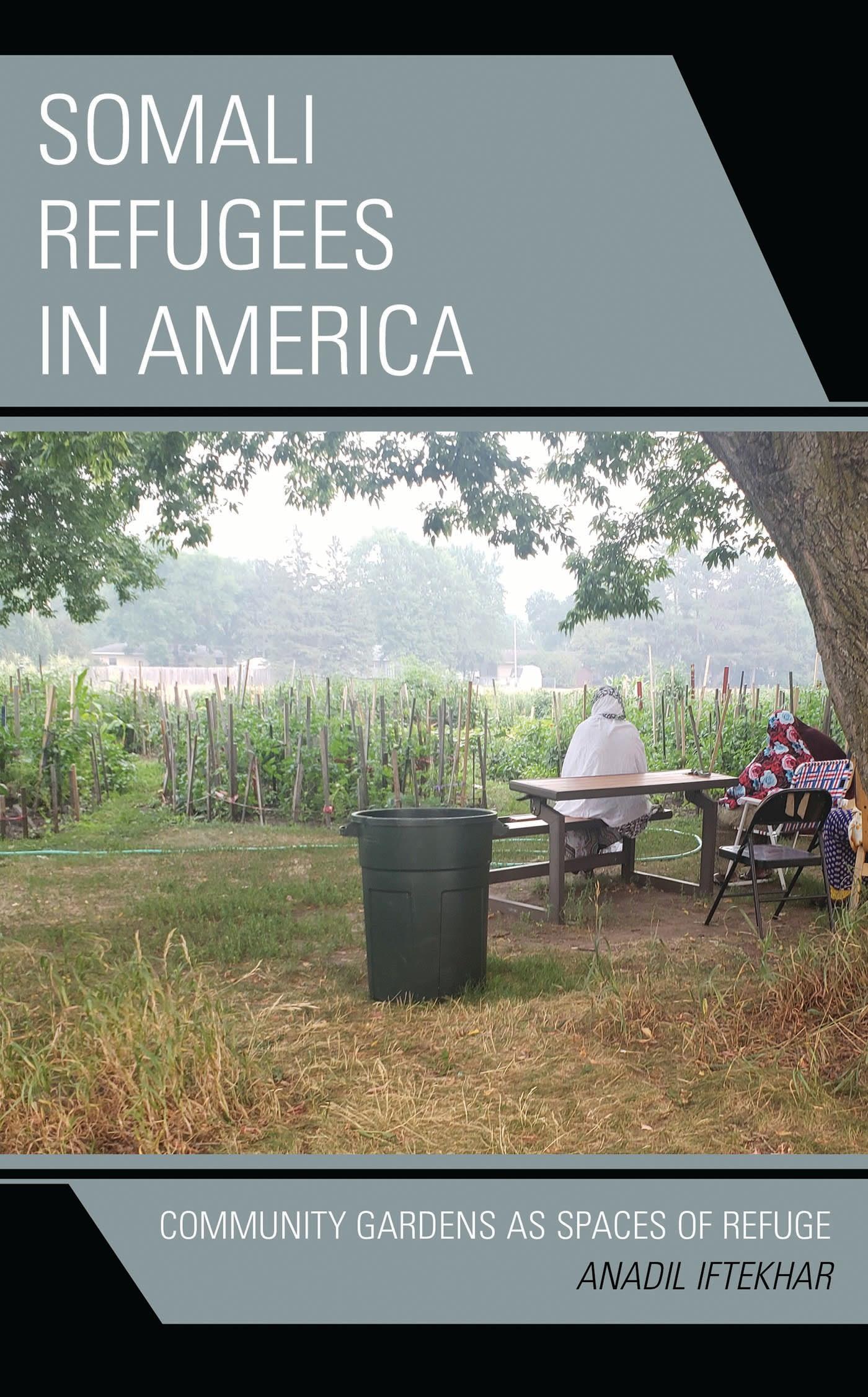
This study looks at the acculturation and social capital of twenty Somali refugee women participating in a community garden in a small town in Minnesota. The women had all been refugees at some point, even if they did not enter the US as a refugee. Using phenomenological interviews to gather the data, the author draws on Berry's framework and juxtaposes it against two other models of acculturation. Doing so allows the exploration of the pros and cons of each model and then offer suggestions for more holistic approaches to understanding and measuring acculturation. There are many aspects of life in the U.S. that were new to the Somali women such as driving, adult education, employment opportunities, and maintaining culture. Through many support systems, and efforts at keeping Somali culture intact through food and religion, along with the language barrier, the women adjusted to life in America. Participation at the community garden was an important part of their daily routine (even if only during the short growing season), giving the women agency, independence and the ability to create something and be on their own. In essence, the garden functioned as a mini-Somalia for them, providing not only a means of acculturation and accumulation of social capital, but a place of bonding.
Páginas: 124
Categoría: Samhällsvetenskap
e-ISBN: 9781666963564
Peso de envío: 1.2 kg
Envío en: 1-2 días
Paga fácilmente con tarjeta, Klarna, Apple Pay o Google Pay. ¿No estás contento? Siempre tienes 14 días de garantía de devolución. Lee más en nuestros términos. Si tienes preguntas, escríbenos a hello@memmo.org.
Memmo hace que estudiar sea más fácil, estés donde estés. Aquí tienes tus libros de texto y herramientas de estudio inteligentes en un solo lugar: resúmenes, quizzes, podcasts y flashcards. Y también a Ted, tu compañero de estudio que responde a todo lo que te preguntes. Más de 50 000 estudiantes ya estudian aquí. Está hecho para que aprendas más rápido y te estreses menos.