
Choice 2025 Outstanding Academic Title
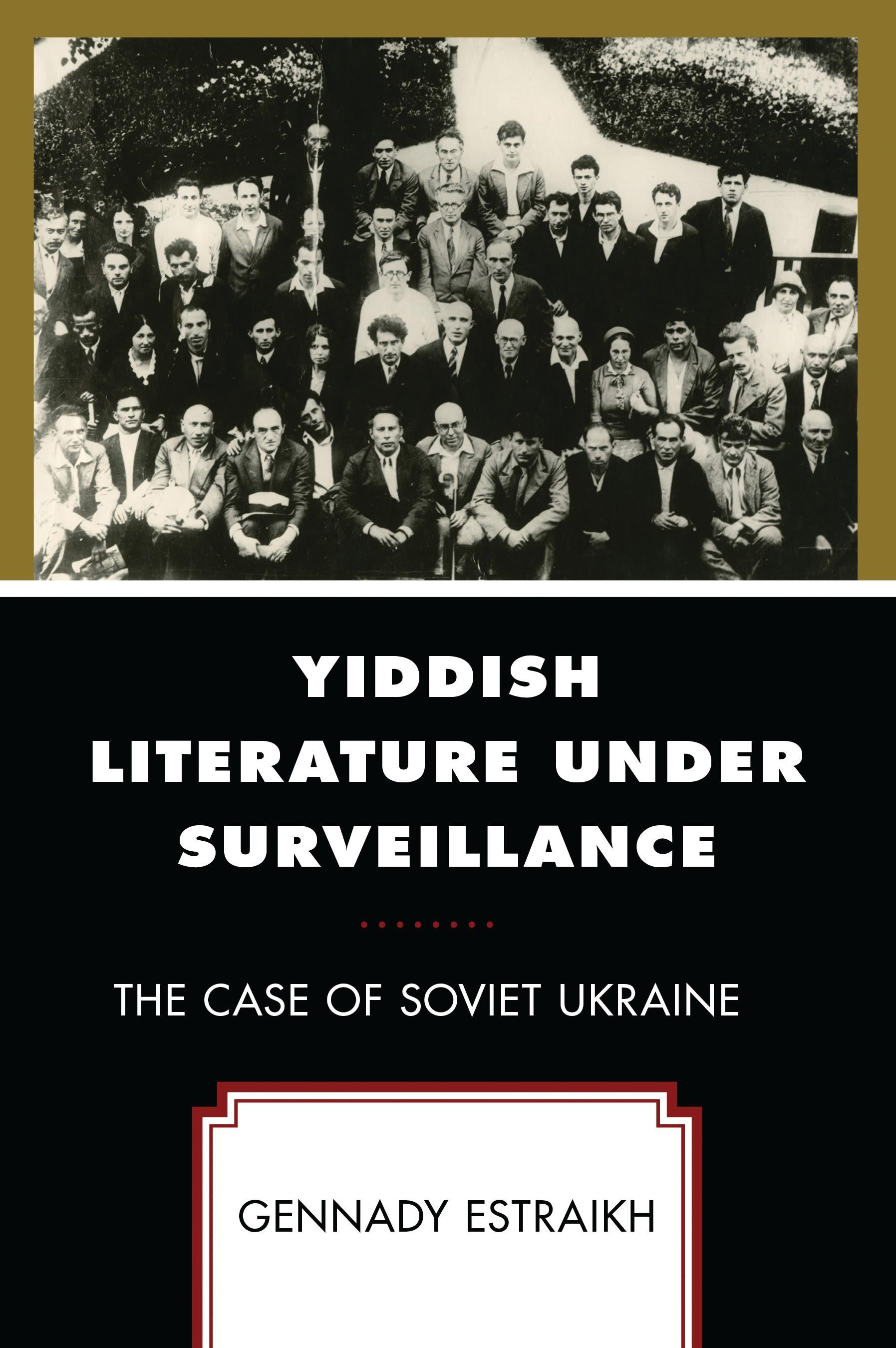
Yiddish Literature Under Surveillance: The Case of Soviet Ukraine gives a broad view on Soviet Jewish literary life, and on the repression suffered by Yiddish writers under Stalinist rule. It moves from the paradigm of writing almost exclusively about the most prominent authors, whose execution in Moscow on August 12, 1952 is tragically known as "The Night of Murdered Poets." Instead, the narrative is built as a group biography of five writers whose literary home was in Kyiv, the capital of Soviet Ukraine from 1934 to 1991. Those authors are as follows: Avrom Abchuk (arrested and executed in 1937), Chaim Gildin (arrested in 1940; died in a camp in 1943), Itsik Kipnis (arrested in 1949; released in 1955), Rive Balyasne (arrested in 1952; released in 1955), and Hirsh Bloshteyn, an enthusiastic agent of the secret police. In addition, this book is populated by other Yiddish, Ukrainian, and Russian literati. Kyiv was the primary fountainhead for Yiddish literary creativity in the early postrevolutionary period for seven decades and remained a leading Soviet Yiddish literary center, second in importance only to Moscow. Attention is paid to the victims' rehabilitation, posthumous or otherwise, in the mid-1950s and onwards.
Yiddish Literature Under Surveillance: The Case of Soviet Ukraine gives a broad view on Soviet Jewish literary life, and on the repression suffered by Yiddish writers under Stalinist rule. It moves from the paradigm of writing almost exclusively about the most prominent authors, whose execution in Moscow on August 12, 1952 is tragically known as "The Night of Murdered Poets." Instead, the narrative is built as a group biography of five writers whose literary home was in Kyiv, the capital of Soviet Ukraine from 1934 to 1991. Those authors are as follows: Avrom Abchuk (arrested and executed in 1937), Chaim Gildin (arrested in 1940; died in a camp in 1943), Itsik Kipnis (arrested in 1949; released in 1955), Rive Balyasne (arrested in 1952; released in 1955), and Hirsh Bloshteyn, an enthusiastic agent of the secret police. In addition, this book is populated by other Yiddish, Ukrainian, and Russian literati. Kyiv was the primary fountainhead for Yiddish literary creativity in the early postrevolutionary period for seven decades and remained a leading Soviet Yiddish literary center, second in importance only to Moscow. Attention is paid to the victims' rehabilitation, posthumous or otherwise, in the mid-1950s and onwards.
Paga fácilmente con tarjeta, Klarna, Apple Pay o Google Pay. ¿No estás contento? Siempre tienes 14 días de garantía de devolución. Lee más en nuestros términos. Si tienes preguntas, escríbenos a hello@memmo.org.
Memmo hace que estudiar sea más fácil, estés donde estés. Aquí tienes tus libros de texto y herramientas de estudio inteligentes en un solo lugar: resúmenes, quizzes, podcasts y flashcards. Y también a Ted, tu compañero de estudio que responde a todo lo que te preguntes. Más de 50 000 estudiantes ya estudian aquí. Está hecho para que aprendas más rápido y te estreses menos.