
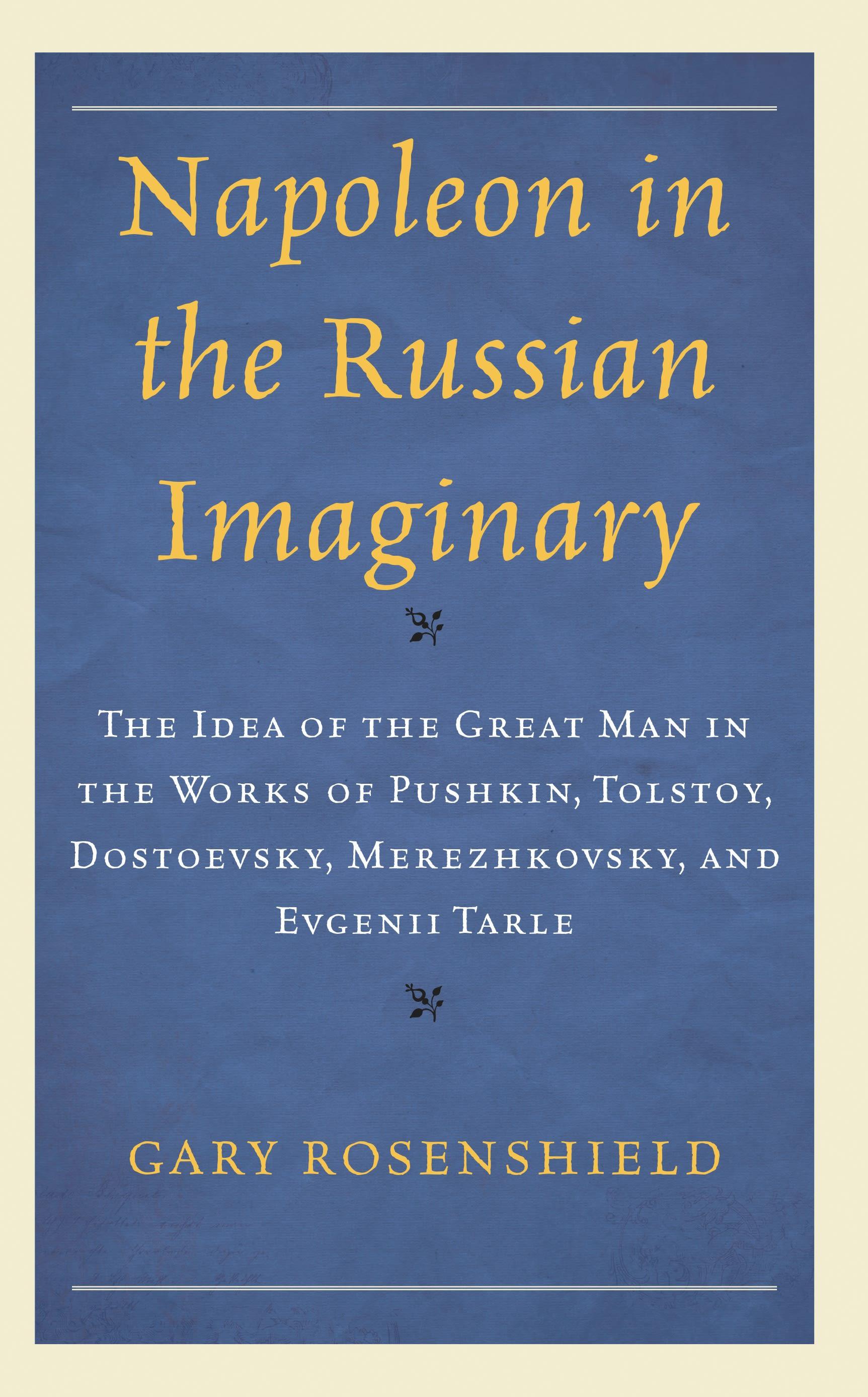
Napoleon today is still a figure who fascinates both his admirers and detractors because of his seminal role in European history at the end of the eighteenth and beginning of the nineteenth centuries, straddling the French Revolution and the enormous empire that he fashioned through military conquest. Napoleon in the Russian Imaginary focuses on the response of Russia's greatest writers—poets, novelists, critics, and historians—to the idea of "Great Man" as an agent of transformational change as it manifests itself in the person and career of Napoleon. After Napoleon's defeat at Waterloo in 1815 and his subsequent exile to St. Helena, in much of Europe a re-evaluation of Napoleon's person, stature, and historical significance occurred, as thinkers and writers witnessed the gradual reestablishment of repressive regimes throughout Europe. This re-evaluation in Russia would have to wait until Napoleon's death in 1821, but when it came to pass, it continued to occupy the imagination of Russia's greatest writers for over 130 years. Although Napoleon's invasion of Russia and subsequent defeat had a profound effect on Russian culture and Russian history, for Russian writers what was most important was the universal significance of Napoleon’s desire for world conquest and the idea of unbridled ambition which he embodied. Russian writers saw this, for good or ill, as potentially determining the spiritual and moral fate of future generations. What is particularly fascinating is their attempt to confront each other about this idea in a creative dialogue, with each succeeding writer addressing himself and responding to his predecessor and predecessors.
Paga fácilmente con tarjeta, Klarna, Apple Pay o Google Pay. ¿No estás contento? Siempre tienes 14 días de garantía de devolución. Lee más en nuestros términos. Si tienes preguntas, escríbenos a hello@memmo.org.
Memmo hace que estudiar sea más fácil, estés donde estés. Aquí tienes tus libros de texto y herramientas de estudio inteligentes en un solo lugar: resúmenes, quizzes, podcasts y flashcards. Y también a Ted, tu compañero de estudio que responde a todo lo que te preguntes. Más de 50 000 estudiantes ya estudian aquí. Está hecho para que aprendas más rápido y te estreses menos.