
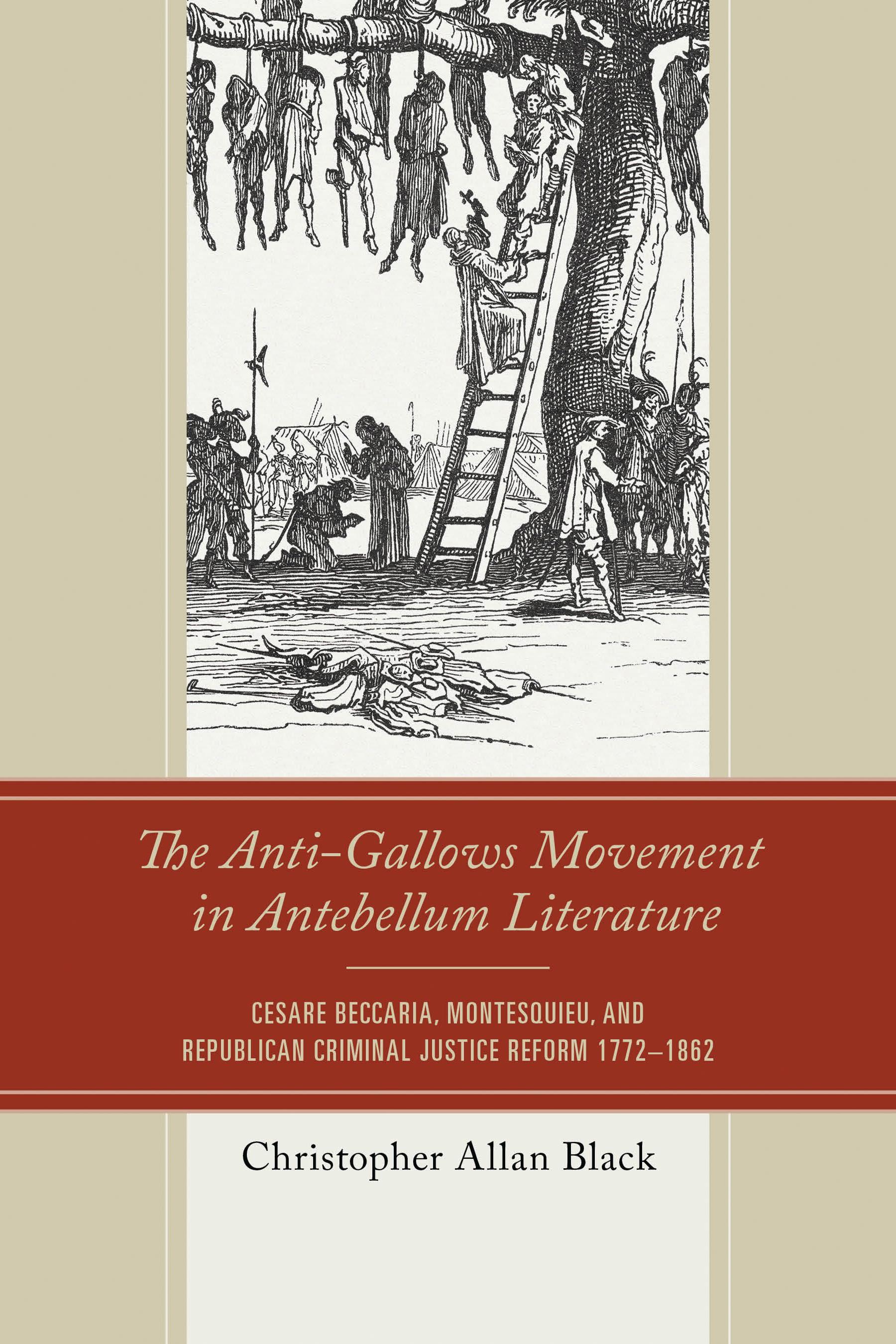
The Anti-Gallows Movement: Cesare Beccaria, Monetesquieu, and Republican Criminal Justice Reform in Antebellum Literature 1772-1862 examines the development of anti capital punishment sentiment in antebellum American Literature. Legal and philosophical debates over the effectiveness of capital punishment and penal reform have played a significant role in American civic and political life since the republican rejection of the Monarchy and oppression during the Revolution. In the late eighteenth and early nineteenth-century United States, criminal narratives, and literature in the form of the execution sermon, the gothic novel, the historical romance, autobiographical testimony, and the African American slave narrative informed the citizenry about the public abuse of convicted criminals on the gallows stressing the need for enlightenment legal reforms, such as the creation of penitentiaries, solitary confinement, and private execution behind prison walls. Humane reformers and activist authors such as Samson Occom, Henry Channing, Charles Brockden Brown, James Fenimore Cooper, Herman Melville, Nathaniel Hawthorne, Frederick Douglass, Austin Reed, and Margaret Fuller, proposed sympathetic alternatives to the spectacle of the gallows. As social reformers, influenced by the Enlightenment anti-capital punishment philosophy of Cesare Beccaria and the French Jurist Montesquieu, antebellum American authors argue that capital punishment in the form of hanging on the scaffold is incompatible with the natural right of Americans to social justice and criminal reform.
Paga fácilmente con tarjeta, Klarna, Apple Pay o Google Pay. ¿No estás contento? Siempre tienes 14 días de garantía de devolución. Lee más en nuestros términos. Si tienes preguntas, escríbenos a hello@memmo.org.
Memmo hace que estudiar sea más fácil, estés donde estés. Aquí tienes tus libros de texto y herramientas de estudio inteligentes en un solo lugar: resúmenes, quizzes, podcasts y flashcards. Y también a Ted, tu compañero de estudio que responde a todo lo que te preguntes. Más de 50 000 estudiantes ya estudian aquí. Está hecho para que aprendas más rápido y te estreses menos.