
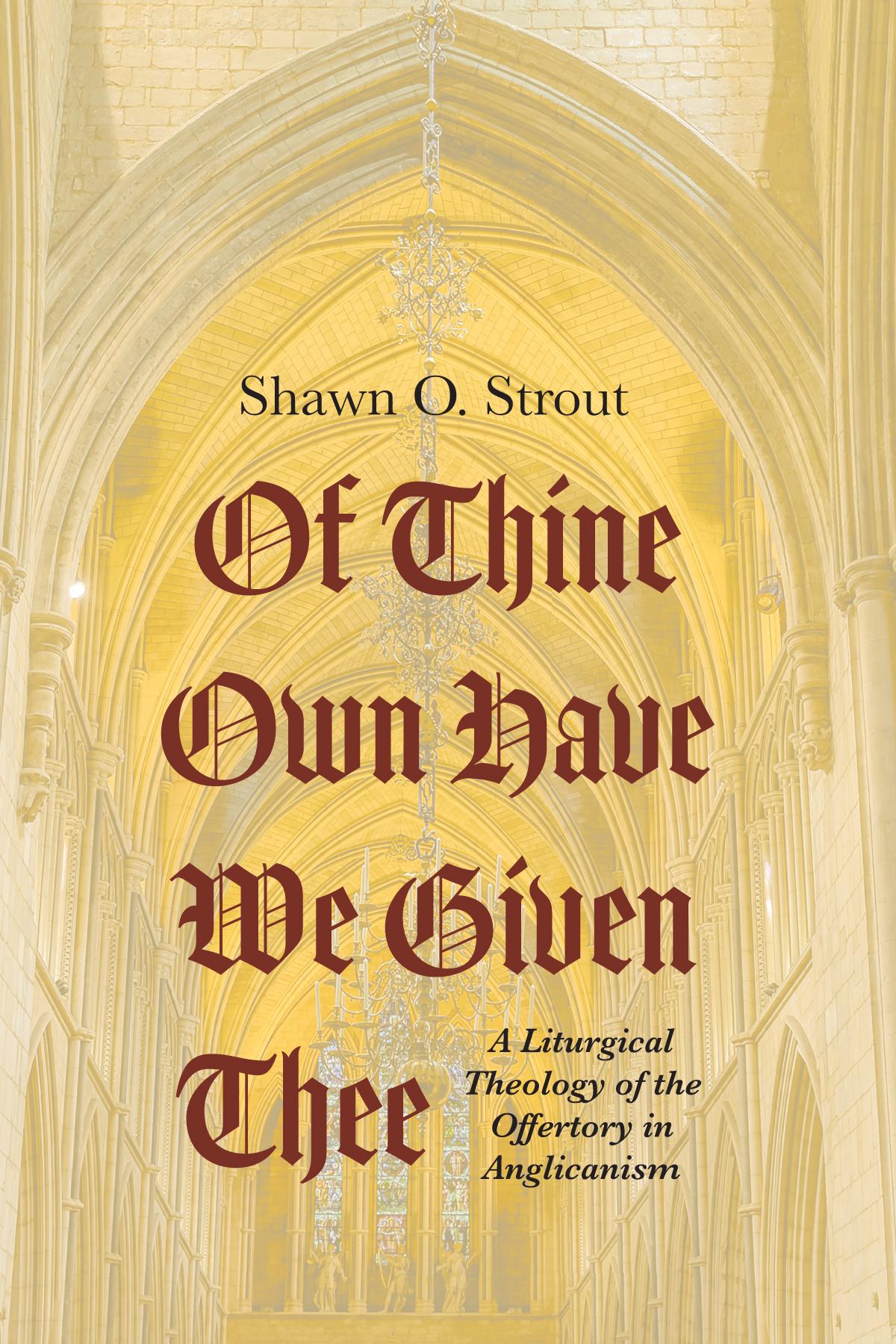
Every Sunday around the world, Christians offer money and in-kind gifts to the church, traditionally known as alms. For communities that celebrate the Eucharist regularly, bread and wine, traditionally known as oblations, often accompany these gifts. What does it mean theologically for Christians to offer gifts to God, who first offered the greatest gift of Jesus Christ? This question regarding the role of alms and oblations in the liturgy was among the most controversial questions of the English Reformations in the sixteenth century. While the eucharistic prayer proper has often been the site of this theological controversy, the offertory rite has also received great attention. The 1552 English Book of Common Prayer excised all references to oblation in the offertory rite, but oblationary language and actions, such as the offertory procession, returned in full force by the twentieth century. The movement from the near elimination of oblation in the offertory rite to its widespread usage in the churches of the Anglican Communion is a remarkable liturgical and theological development. Using liturgical theology's tools of historical, textual, and contextual analyses, this book explores how this development occurred and why it is important for the church today.
Paga fácilmente con tarjeta, Klarna, Apple Pay o Google Pay. ¿No estás contento? Siempre tienes 14 días de garantía de devolución. Lee más en nuestros términos. Si tienes preguntas, escríbenos a hello@memmo.org.
Memmo hace que estudiar sea más fácil, estés donde estés. Aquí tienes tus libros de texto y herramientas de estudio inteligentes en un solo lugar: resúmenes, quizzes, podcasts y flashcards. Y también a Ted, tu compañero de estudio que responde a todo lo que te preguntes. Más de 50 000 estudiantes ya estudian aquí. Está hecho para que aprendas más rápido y te estreses menos.
También te podría gustar
Comprar el libro0