
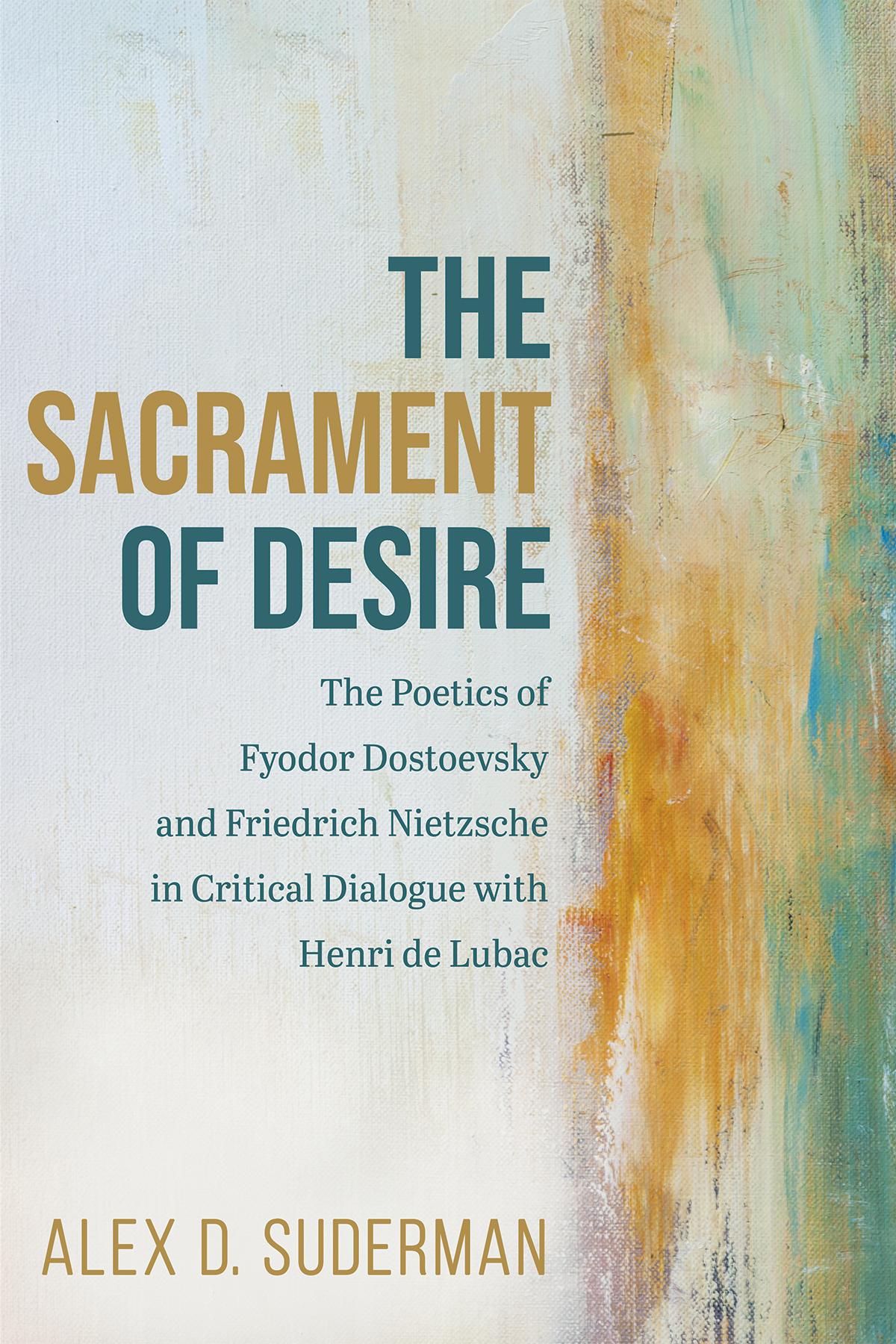
This book explores the political-theological implications of sacramental desire in Fyodor Dostoevsky`s The Brothers Karamazov with Friedrich Nietzsche's Thus Spoke Zarathustra in critical dialogue with Henri de Lubac. Suderman demonstrates how the work of de Lubac, Dostoevsky, and Nietzsche address a transcendent desire for a higher social and political unity in late-modern Western cultures and the imperialistic and coercive tendencies latent within it, concretely expressed in the Western church and the modern state. Specifically, this book investigates how Dostoevsky and Nietzsche envision new forms of political embodiment that are neither escapist nor imperialist. Through a detailed examination of Zarathustra's dramatic discovery of the eternal return and Alyosha's mystical experience of the resurrection, Suderman demonstrates the metaphysical significance of their respective political ethics. While the intent of de Lubac is to recover the social implications of the sacraments of Roman Catholicism, Nietzsche and Dostoevsky espouse alternative articulations of community and the sacramental desire necessary for such embodiment, a desire rooted in their respective perceptions of God.
Paga fácilmente con tarjeta, Klarna, Apple Pay o Google Pay. ¿No estás contento? Siempre tienes 14 días de garantía de devolución. Lee más en nuestros términos. Si tienes preguntas, escríbenos a hello@memmo.org.
Memmo hace que estudiar sea más fácil, estés donde estés. Aquí tienes tus libros de texto y herramientas de estudio inteligentes en un solo lugar: resúmenes, quizzes, podcasts y flashcards. Y también a Ted, tu compañero de estudio que responde a todo lo que te preguntes. Más de 50 000 estudiantes ya estudian aquí. Está hecho para que aprendas más rápido y te estreses menos.
También te podría gustar
Comprar el libro0