
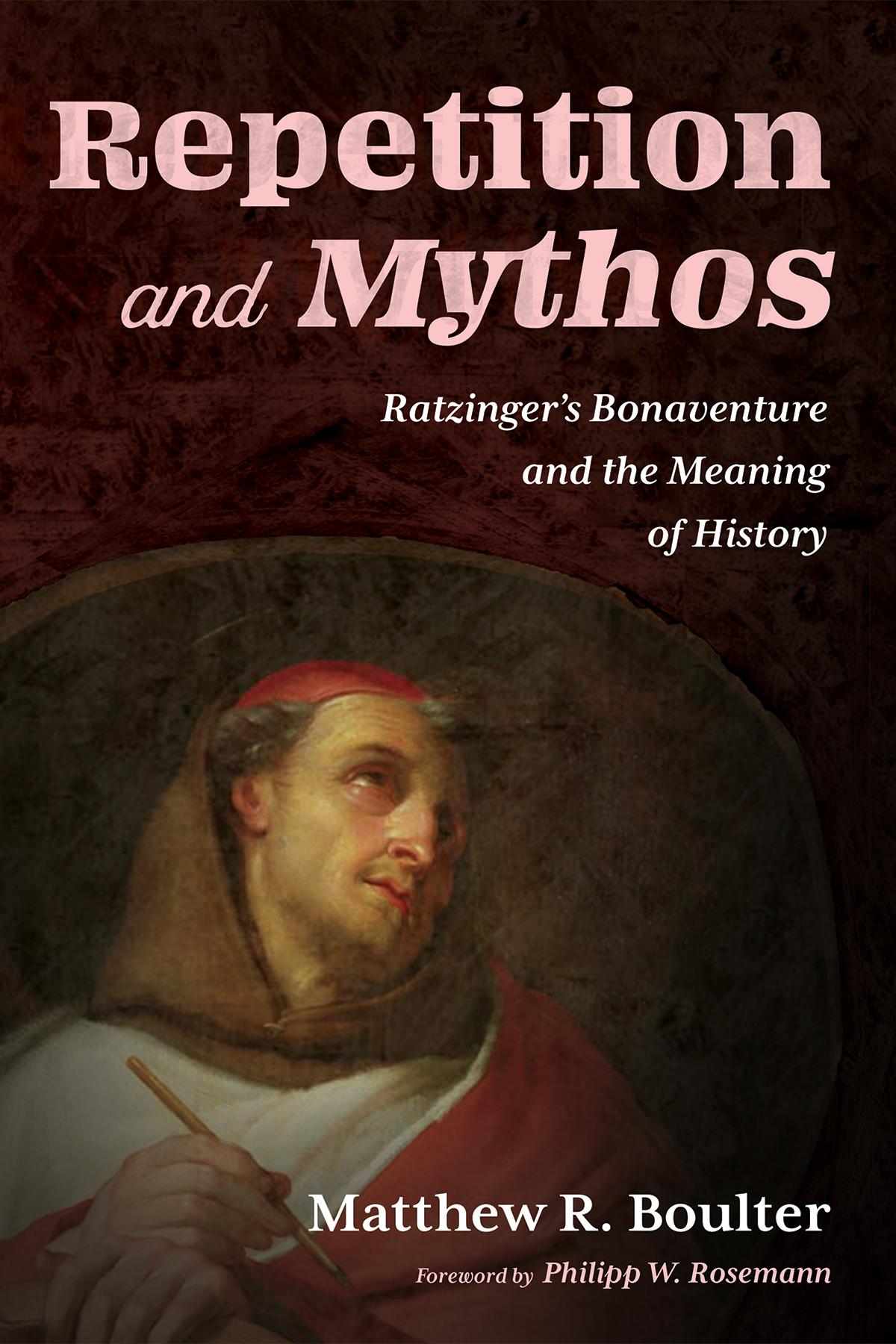
Writing his Habilitationsschrift as a young man in the late 1950s, future Pontiff Joseph Ratzinger argues that, when St. Bonaventure composed his Collationes in Hexaemeron in the spring of 1273, not since St. Augustine's De Civitate Dei contra Paganos had the world seen such a ground-breaking work on the logos of history. Indeed, for Ratzinger's Bonaventure, history is "first philosophy." The thirteenth-century Franciscan rails against the widespread assumption, rooted the newly "rediscovered" Aristotle, of history's unintelligibility. For Bonaventure, mythos mediates the difference between science and history, yielding a non-positivistic approach to the latter. Building on the dynamics of Plato's Line, Boulter show that the days of creation, narrated by Bonaventure, structure both history and thought. Because, like a story, it has beginning and end, history as a whole can be grasped. Hence, eschatological knowledge of the end of the world is possible. Yet this work also shows how the false "progress myths" of modernity are counterfeit versions of true, spiritual advancement of the kind embodied by saints such as Francis and Bonaventure himself. What is the logos of history? It turns out that it is mythos.
Paga fácilmente con tarjeta, Klarna, Apple Pay o Google Pay. ¿No estás contento? Siempre tienes 14 días de garantía de devolución. Lee más en nuestros términos. Si tienes preguntas, escríbenos a hello@memmo.org.
Memmo hace que estudiar sea más fácil, estés donde estés. Aquí tienes tus libros de texto y herramientas de estudio inteligentes en un solo lugar: resúmenes, quizzes, podcasts y flashcards. Y también a Ted, tu compañero de estudio que responde a todo lo que te preguntes. Más de 50 000 estudiantes ya estudian aquí. Está hecho para que aprendas más rápido y te estreses menos.
También te podría gustar
Comprar el libro0