
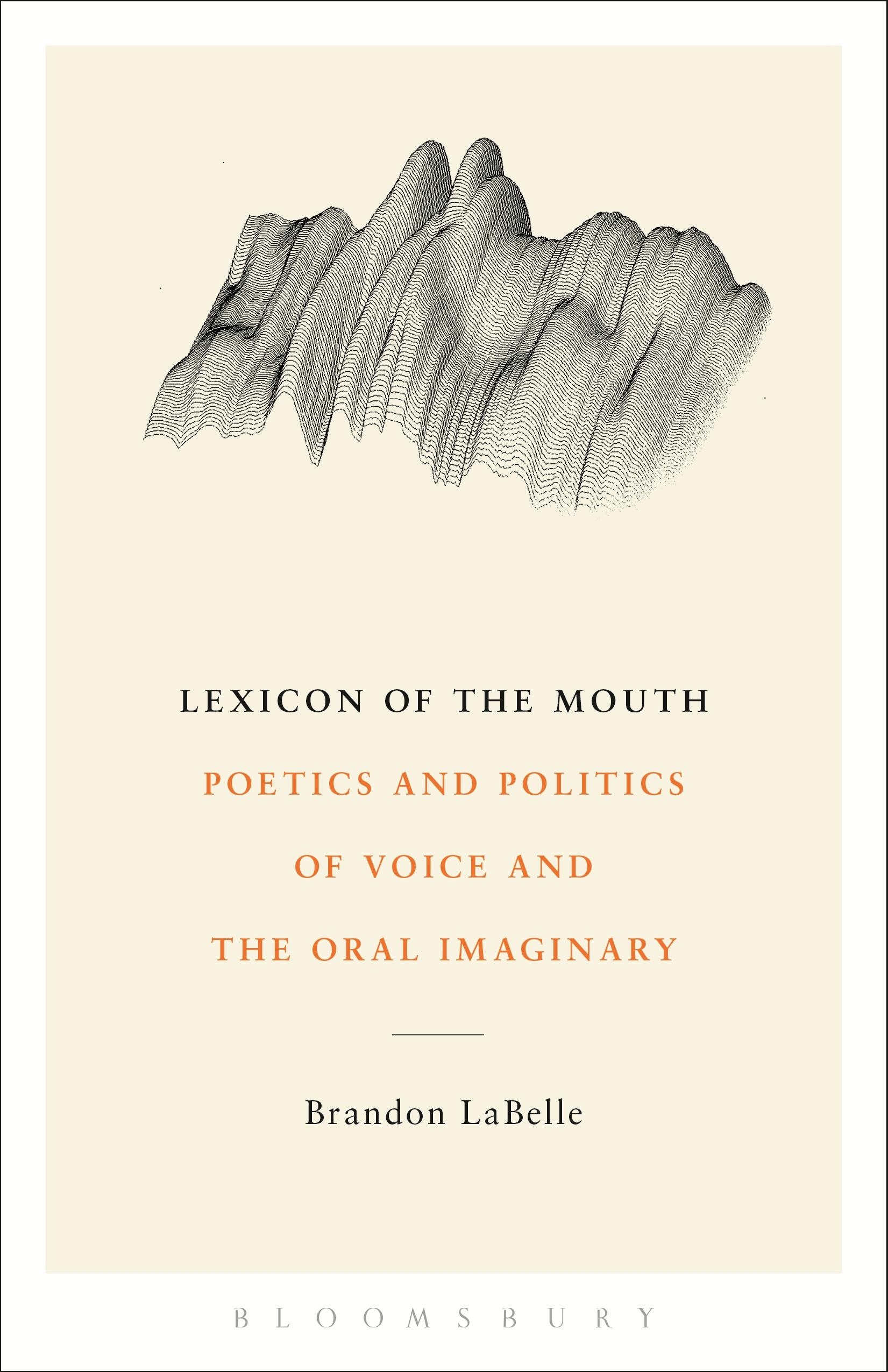
Lexicon of the Mouth surveys the oral cavity as the central channel by which self and surrounding are brought into relation. Questions of embodiment and agency, attachment and loss, incorporation and hunger, locution and the non-sensical are critically examined. In doing so, LaBelle emphasizes the mouth as a vital conduit for negotiating "the foundational narrative of proper speech." Lexicon of the Mouth aims for a viscous, poetic and resonant discourse of subjectivity, detailed through the "micro-oralities" of laughing and whispering, stuttering and reciting, eating and kissing, among others. The oral cavity is posed as an impressionable arena, susceptible to all types of material input, contamination and intervention, while also enabling powerful forms of resistance, attachment and conversation, as well as radical imagination.
Lexicon of the Mouth argues for the revolutionary promise of the laugh, the spirited mythologies of the whisper, the schizophonics of self-talk, and the primal noise of gibberish, suggesting that the significance of voicing is fundamentally bound to the exertions of the mouth. Subsequently, assumptions around voice and vocality are unsettled in favor of an epistemology of the oral, highlighting the acts of the tongue, the lips and the throat as primary mediations between interior and exterior, social structures and embodied expressions. LaBelle makes a significant contribution to currents in sound and voice studies by reminding that to hear the voice, and to consider a politics of speech, is first and foremost to assume the mouth.
Lexicon of the Mouth argues for the revolutionary promise of the laugh, the spirited mythologies of the whisper, the schizophonics of self-talk, and the primal noise of gibberish, suggesting that the significance of voicing is fundamentally bound to the exertions of the mouth. Subsequently, assumptions around voice and vocality are unsettled in favor of an epistemology of the oral, highlighting the acts of the tongue, the lips and the throat as primary mediations between interior and exterior, social structures and embodied expressions. LaBelle makes a significant contribution to currents in sound and voice studies by reminding that to hear the voice, and to consider a politics of speech, is first and foremost to assume the mouth.
Paga fácilmente con tarjeta, Klarna, Apple Pay o Google Pay. ¿No estás contento? Siempre tienes 14 días de garantía de devolución. Lee más en nuestros términos. Si tienes preguntas, escríbenos a hello@memmo.org.
Memmo hace que estudiar sea más fácil, estés donde estés. Aquí tienes tus libros de texto y herramientas de estudio inteligentes en un solo lugar: resúmenes, quizzes, podcasts y flashcards. Y también a Ted, tu compañero de estudio que responde a todo lo que te preguntes. Más de 50 000 estudiantes ya estudian aquí. Está hecho para que aprendas más rápido y te estreses menos.