
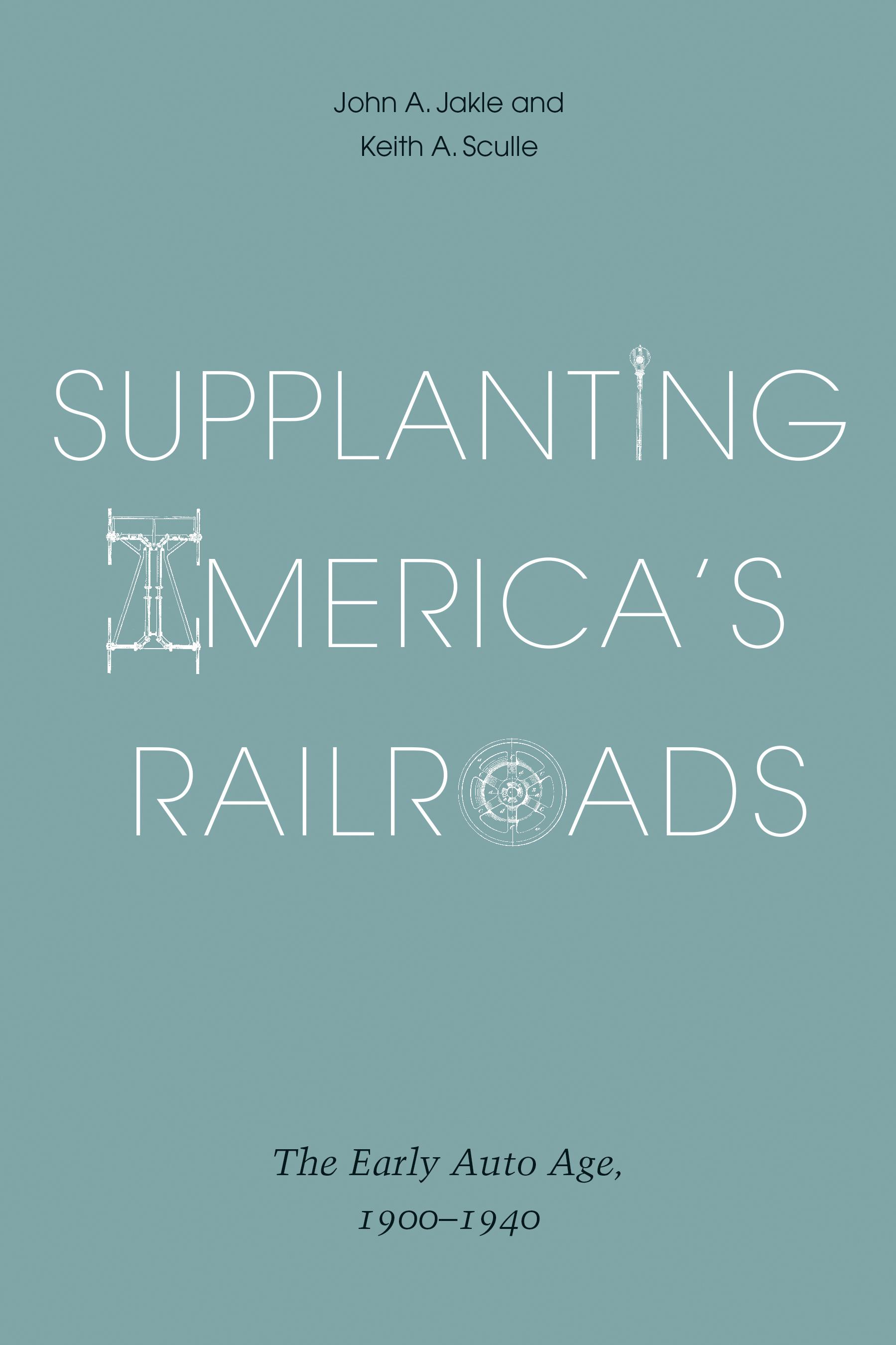
With their speed and geographical reach, America’s railroads reigned supreme through much of the nineteenth century, knitting together the sprawling country as no other mode of transportation was able to do. Around 1900, however, an upstart challenger—the automobile— arrived on the scene. At first regarded as little more than a plaything for the wealthy, the new invention rapidly gained popularity, especially after Henry Ford’s innovative mass-production techniques made cars affordable to the middling classes.
In this engaging book, John A. Jakle and Keith A. Sculle—renowned experts on the wide-ranging effects of automobility on American life—examine the various ways in which the railroads responded to their new competition, not just from the automobile itself but from its close cousins, the motor truck and motor bus, through several decades up to the eve of World War II. Drawing on extensive research in the trade publications of the period, the authors examine the development of interurban and intraurban rail transport, the transition from steam to electric and diesel power, and the railroads’ close involvement in the nascent trucking and passenger-bus industries. They devote a chapter to the places where trains and automobiles came most directly and dangerously into conflict—railroad crossings—and pay special attention throughout to the key role of government in the competition, whether through antitrust legislation, taxation, or the building of the “good roads” that were so necessary to the rise of auto, truck, and bus transport.
Although the railroads remain with us, it was the automobile that emerged as the predominant transportation form, owing to its promise of speed, convenience, flexibility of movement, and, most important, self-gratification. In a country that places such high value on individual freedom, the romance of motoring has proven irresistible.
JOHN A. JAKLE, emeritus professor of geography at the University of Illinois, Urbana-Champaign, and KEITH A. SCULLE, the former head of research and education at the Illinois Historic Preservation Agency, have collaborated on eight previous books on the history of “Roadside America,” the most recent of which is The Garage: Automobility and Building Innovation in America’s Early Auto Age.
In this engaging book, John A. Jakle and Keith A. Sculle—renowned experts on the wide-ranging effects of automobility on American life—examine the various ways in which the railroads responded to their new competition, not just from the automobile itself but from its close cousins, the motor truck and motor bus, through several decades up to the eve of World War II. Drawing on extensive research in the trade publications of the period, the authors examine the development of interurban and intraurban rail transport, the transition from steam to electric and diesel power, and the railroads’ close involvement in the nascent trucking and passenger-bus industries. They devote a chapter to the places where trains and automobiles came most directly and dangerously into conflict—railroad crossings—and pay special attention throughout to the key role of government in the competition, whether through antitrust legislation, taxation, or the building of the “good roads” that were so necessary to the rise of auto, truck, and bus transport.
Although the railroads remain with us, it was the automobile that emerged as the predominant transportation form, owing to its promise of speed, convenience, flexibility of movement, and, most important, self-gratification. In a country that places such high value on individual freedom, the romance of motoring has proven irresistible.
JOHN A. JAKLE, emeritus professor of geography at the University of Illinois, Urbana-Champaign, and KEITH A. SCULLE, the former head of research and education at the Illinois Historic Preservation Agency, have collaborated on eight previous books on the history of “Roadside America,” the most recent of which is The Garage: Automobility and Building Innovation in America’s Early Auto Age.
Paga fácilmente con tarjeta, Klarna, Apple Pay o Google Pay. ¿No estás contento? Siempre tienes 14 días de garantía de devolución. Lee más en nuestros términos. Si tienes preguntas, escríbenos a hello@memmo.org.
Memmo hace que estudiar sea más fácil, estés donde estés. Aquí tienes tus libros de texto y herramientas de estudio inteligentes en un solo lugar: resúmenes, quizzes, podcasts y flashcards. Y también a Ted, tu compañero de estudio que responde a todo lo que te preguntes. Más de 50 000 estudiantes ya estudian aquí. Está hecho para que aprendas más rápido y te estreses menos.
También te podría gustar
Comprar el libro0