
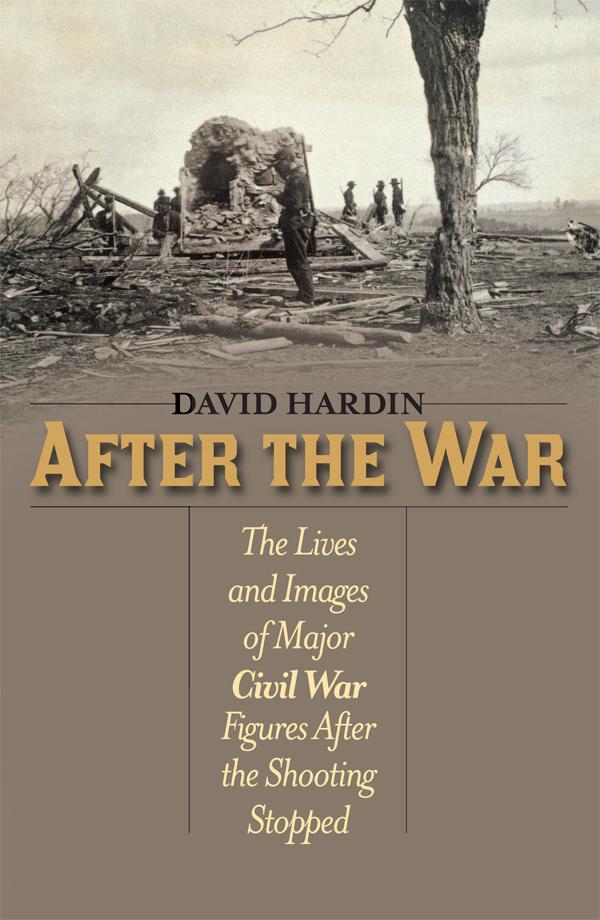
"Show me a hero and I will write you a tragedy," said F. Scott Fitzgerald. Perhaps no event in American history better illustrates this view than the Civil War and its principal players in the years after the conflict. The value of military glory and ties to greatness would turn toward the tragic even among the victors—like earthquake survivors stumbling into another world, simply trying to make a new life. Their struggle would be a constant tug back toward a destroyed past, and a confrontation with the reality of being strangers in their own land.
David Hardin's stories of eleven such figures are revealing and touching: the explosive romance between Jefferson Davis's daughter and the grandson of a Yankee abolitionist; the struggle between the irreligious William T. Sherman and his devout Catholic wife for the soul of their unstable son; the bankrupt Ulysses Grant's heroic race to complete his memoirs and provide for his family while dying of cancer. These are among the stories and people in After the War, which also includes the Southern diarist Mary Chesnut, the luckless Confederate John Bell Hood, the sometimes Klan leader Nathan Bedford Forrest, the shopaholic Mary Lincoln, the gentlemanly Joe Johnston, the mythological Robert E. Lee, the underappreciated Union general George Thomas, and the plucky Libbie Custer, who defended her husband best known for his reckless disaster.
Whether Northerner or Southerner, their lives did not end at Appomattox. Their dissimilar outcomes are a feast of irony and, collectively, a portrait of national change. With eleven black-and-white photographs.
David Hardin's stories of eleven such figures are revealing and touching: the explosive romance between Jefferson Davis's daughter and the grandson of a Yankee abolitionist; the struggle between the irreligious William T. Sherman and his devout Catholic wife for the soul of their unstable son; the bankrupt Ulysses Grant's heroic race to complete his memoirs and provide for his family while dying of cancer. These are among the stories and people in After the War, which also includes the Southern diarist Mary Chesnut, the luckless Confederate John Bell Hood, the sometimes Klan leader Nathan Bedford Forrest, the shopaholic Mary Lincoln, the gentlemanly Joe Johnston, the mythological Robert E. Lee, the underappreciated Union general George Thomas, and the plucky Libbie Custer, who defended her husband best known for his reckless disaster.
Whether Northerner or Southerner, their lives did not end at Appomattox. Their dissimilar outcomes are a feast of irony and, collectively, a portrait of national change. With eleven black-and-white photographs.
Paga fácilmente con tarjeta, Klarna, Apple Pay o Google Pay. ¿No estás contento? Siempre tienes 14 días de garantía de devolución. Lee más en nuestros términos. Si tienes preguntas, escríbenos a hello@memmo.org.
Memmo hace que estudiar sea más fácil, estés donde estés. Aquí tienes tus libros de texto y herramientas de estudio inteligentes en un solo lugar: resúmenes, quizzes, podcasts y flashcards. Y también a Ted, tu compañero de estudio que responde a todo lo que te preguntes. Más de 50 000 estudiantes ya estudian aquí. Está hecho para que aprendas más rápido y te estreses menos.