
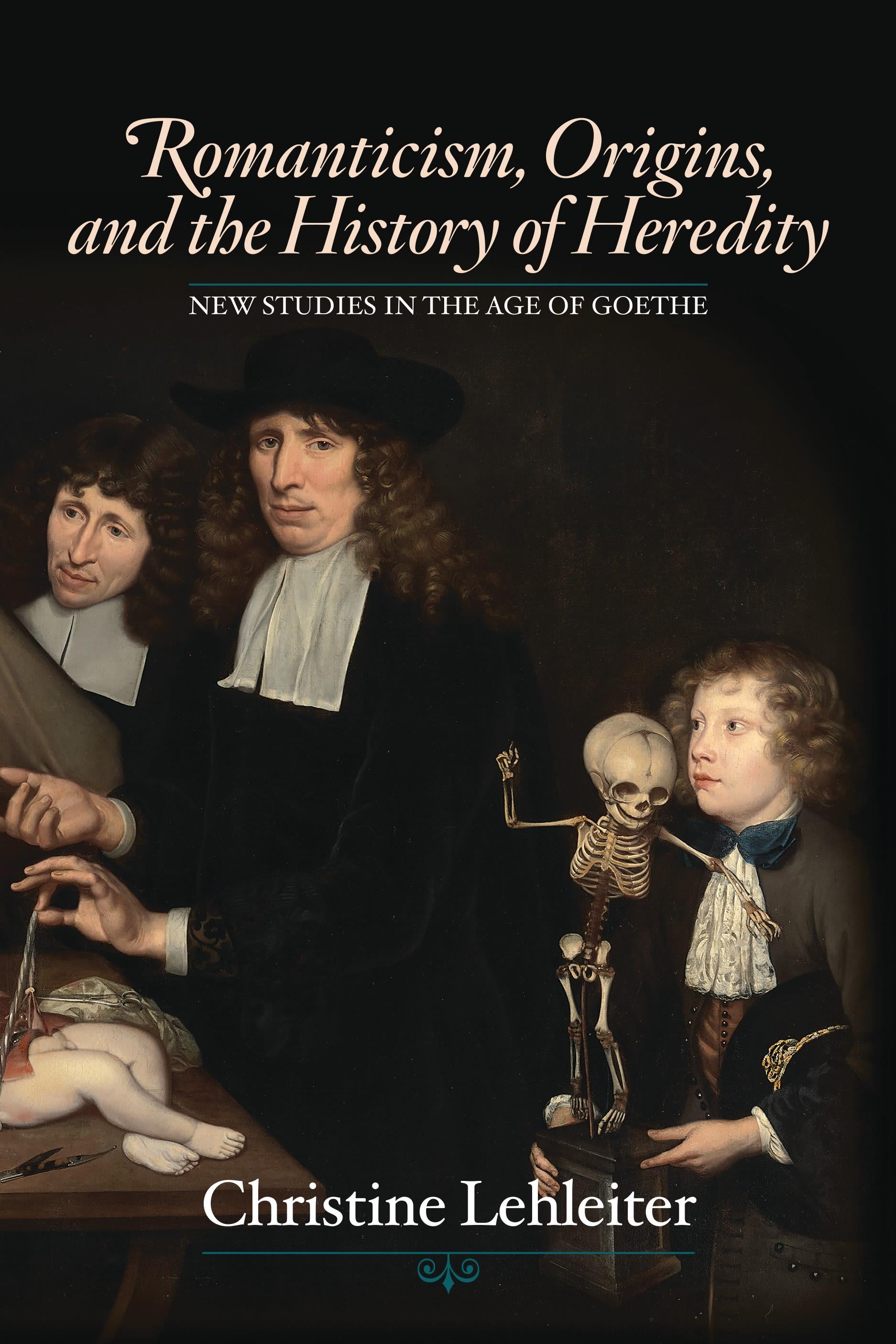
At the turn of the eighteenth century, selfhood was understood as a “tabularasa” to be imprinted in the course of an individual’s life. By the middle of the nineteenth-century, however, the individual had become defined as determined by heredity already from birth. Examining novels by Goethe, Jean Paul, and E.T.A. Hoffmann, studies on plant hybridization, treatises on animal breeding, and anatomical collections, Romanticism, Origins, and the History of Heredity delineates how romantic authors imagined the ramifications of emerging notions of heredity for the conceptualization of selfhood. Focusing on three fields of inquiry—inbreeding and incest, cross-breeding and bastardization, evolution and autopoiesis—Christine Lehleiter proposes that the notion of selfhood for which Romanticism has become known was not threatened by considerations of determinism and evolution, but was in fact already a result of these very considerations. Romanticism, Origins and the History of Heredity will be of interest for literary scholars, historians of science, and all readers fascinated by the long durée of subjectivity and evolutionary thought.
Paga fácilmente con tarjeta, Klarna, Apple Pay o Google Pay. ¿No estás contento? Siempre tienes 14 días de garantía de devolución. Lee más en nuestros términos. Si tienes preguntas, escríbenos a hello@memmo.org.
Memmo hace que estudiar sea más fácil, estés donde estés. Aquí tienes tus libros de texto y herramientas de estudio inteligentes en un solo lugar: resúmenes, quizzes, podcasts y flashcards. Y también a Ted, tu compañero de estudio que responde a todo lo que te preguntes. Más de 50 000 estudiantes ya estudian aquí. Está hecho para que aprendas más rápido y te estreses menos.