
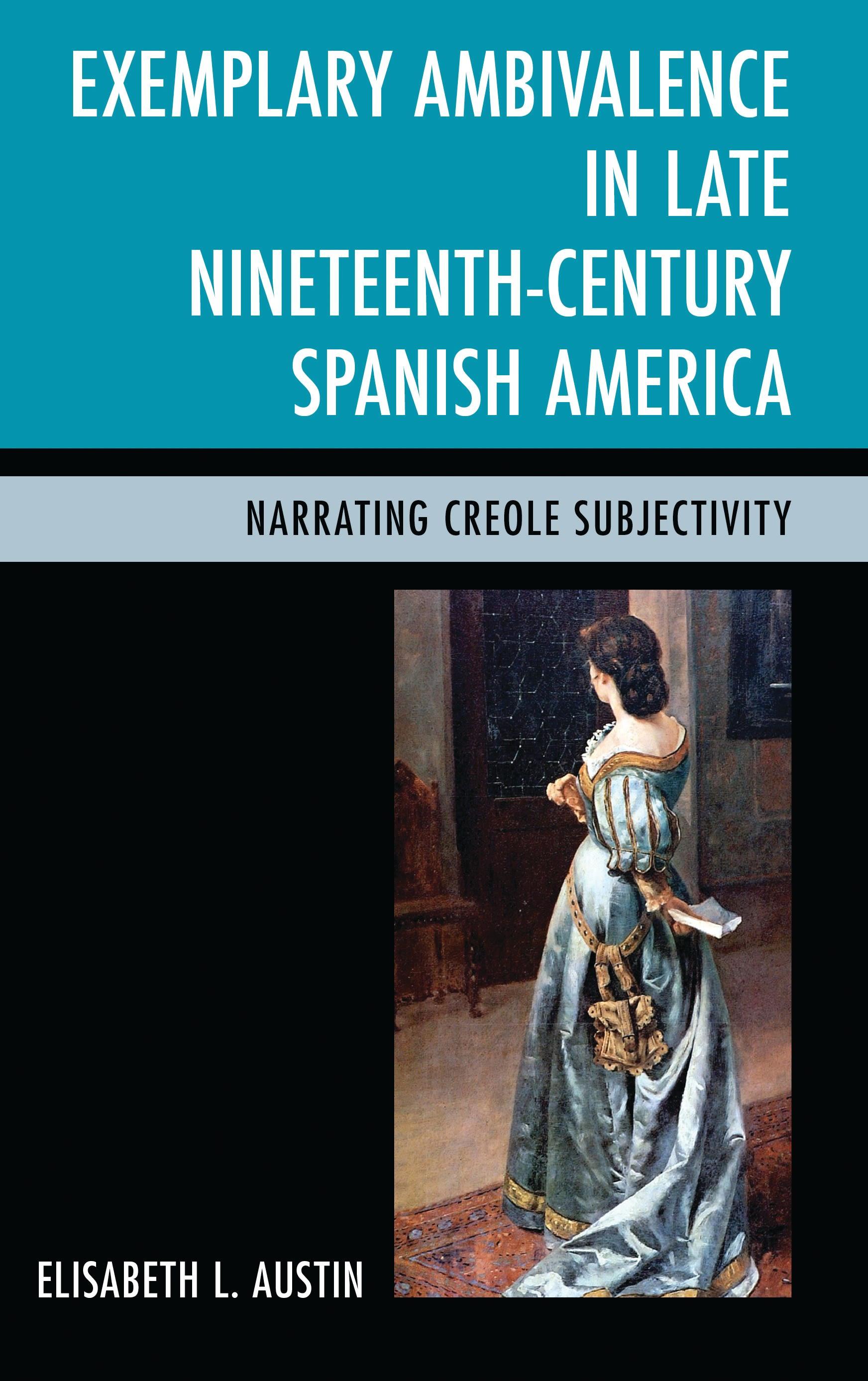
Exemplary Ambivalence in Late Nineteenth-Century Spanish America: Narrating Creole Subjectivity casts new light on the role of exemplary narrative in nineteenth-century Spanish America, highlighting the multiplicity of didactic writing and its dynamic relationship with readers as interpretive agents. Drawing on literary and historical models of creole heterogeneity, Austin’s study probes the unstable social and ethnic fictions of the creole elite as they portray themselves through the flawed canvas of exemplary discourse. Exemplary Ambivalence examines creole subjectivity through postcolonial and Latin American theoretical lenses to show that Spanish American creole subjects, always multiple, reveal their ideological ambivalence through exemplary narrative.
This study examines a cross-section of canonical and lesser-known texts written toward the end of the nineteenth-century by authors across Spanish America, including Eugenio Cambaceres (Argentina), José Asunción Silva (Colombia), José Martí (Cuba), Clorinda Matto de Turner (Peru), and Juana Manuela Gorriti (Argentina). These texts range from realist and modernist novels to a cookbook of multiple authorship, and engage issues of nationalism, citizenship, gender, indigenous rights, and liberal ideologies within the historical context of Spanish America’s weakened democracies and modernizing economies at the end of the nineteenth-century.
Austin’s research fills a critical gap within studies of the nineteenth-century in Spanish America as it explores the inconsistencies of exemplary texts and emphasizes the forms, sources, and implications of creole ideological and narrative multiplicity. By recognizing the inherent ambivalence of exemplary discourse, along with creole writing and reading subjectivities, Exemplary Ambivalence opens fresh perspectives on canonical texts while it also engages some of the non-canonical, hybrid, and fragmentary texts of nineteenth-century reading culture.
This study examines a cross-section of canonical and lesser-known texts written toward the end of the nineteenth-century by authors across Spanish America, including Eugenio Cambaceres (Argentina), José Asunción Silva (Colombia), José Martí (Cuba), Clorinda Matto de Turner (Peru), and Juana Manuela Gorriti (Argentina). These texts range from realist and modernist novels to a cookbook of multiple authorship, and engage issues of nationalism, citizenship, gender, indigenous rights, and liberal ideologies within the historical context of Spanish America’s weakened democracies and modernizing economies at the end of the nineteenth-century.
Austin’s research fills a critical gap within studies of the nineteenth-century in Spanish America as it explores the inconsistencies of exemplary texts and emphasizes the forms, sources, and implications of creole ideological and narrative multiplicity. By recognizing the inherent ambivalence of exemplary discourse, along with creole writing and reading subjectivities, Exemplary Ambivalence opens fresh perspectives on canonical texts while it also engages some of the non-canonical, hybrid, and fragmentary texts of nineteenth-century reading culture.
Páginas: 306
Categoría: Litteraturvetenskap & Teori
e-ISBN: 9781611484656
Peso de envío: 1.2 kg
Envío en: 1-2 días
Paga fácilmente con tarjeta, Klarna, Apple Pay o Google Pay. ¿No estás contento? Siempre tienes 14 días de garantía de devolución. Lee más en nuestros términos. Si tienes preguntas, escríbenos a hello@memmo.org.
Memmo hace que estudiar sea más fácil, estés donde estés. Aquí tienes tus libros de texto y herramientas de estudio inteligentes en un solo lugar: resúmenes, quizzes, podcasts y flashcards. Y también a Ted, tu compañero de estudio que responde a todo lo que te preguntes. Más de 50 000 estudiantes ya estudian aquí. Está hecho para que aprendas más rápido y te estreses menos.