
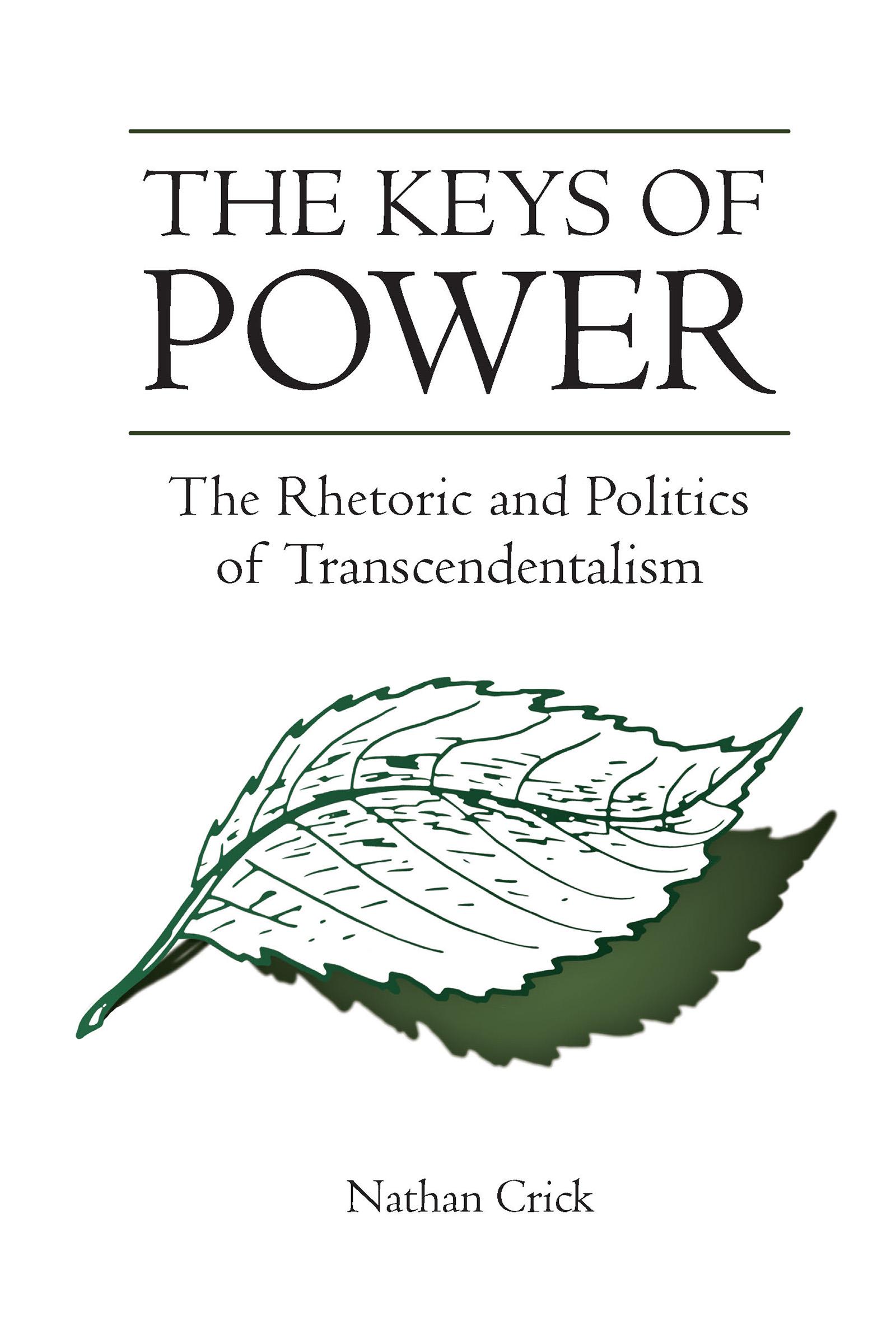
Examines Transcendentalism as a distinct rhetorical genre concerned primarily and self-consciously with questions of power
Nathan Crick has crafted a new critical rhetorical history of American Transcendentalists that interprets a selection of their major works between the years 1821 and 1852 as political and ethical responses to the growing crises of their times. In The Keys of Power, Crick argues that one of the most enduring legacies of the Transcendentalist movement is the multifaceted understanding of transcendental eloquence as a distinct rhetorical genre concerned primarily and self-consciously with questions of power.
Crick examines the Transcendentalist understanding of how power is constituted in both th self and in society, conceptualizing the relationships among technology, nature, language, and identity, critiquing the ethical responsibilities to oneself, the other, and the state, and defining and ultimately praising the unique role that art, action, persuasion, and ideas have in the transformation of the structure of political culture over historical time.
What is offered hereis not a comprehensive genealogy of ideas, a series of individual biographies, or an effort at conceptual generalization,but instead an exercise in narrative rhetorical theory and criticism that interprets some of the major specific writings and speeches by men and women associated with the Transcendentalist movement—Sampson Reed, Amos BronsonAlcott, Orestes Brownson, Ralph Waldo Emerson, Margaret Fuller, Henry David Thoreau, and Frederick Douglass—by placing them within a specific political and social history. Rather than attempting to provide comprehensive overviews of the life and work of each of these individuals, this volume presents close readings of individual texts that bring to life their rhetorical character in reaction to particular exigencies while addressing audiences of a unique moment. This rhetoric of Transcendentalism provides insights into the "keys of power"—that is, the means of persuasion for our modern era—that remain vital tools for individuals seeking to reconcile power and virtue in their struggle to make manifest a higher ideal in the world.
Paga fácilmente con tarjeta, Klarna, Apple Pay o Google Pay. ¿No estás contento? Siempre tienes 14 días de garantía de devolución. Lee más en nuestros términos. Si tienes preguntas, escríbenos a hello@memmo.org.
Memmo hace que estudiar sea más fácil, estés donde estés. Aquí tienes tus libros de texto y herramientas de estudio inteligentes en un solo lugar: resúmenes, quizzes, podcasts y flashcards. Y también a Ted, tu compañero de estudio que responde a todo lo que te preguntes. Más de 50 000 estudiantes ya estudian aquí. Está hecho para que aprendas más rápido y te estreses menos.