
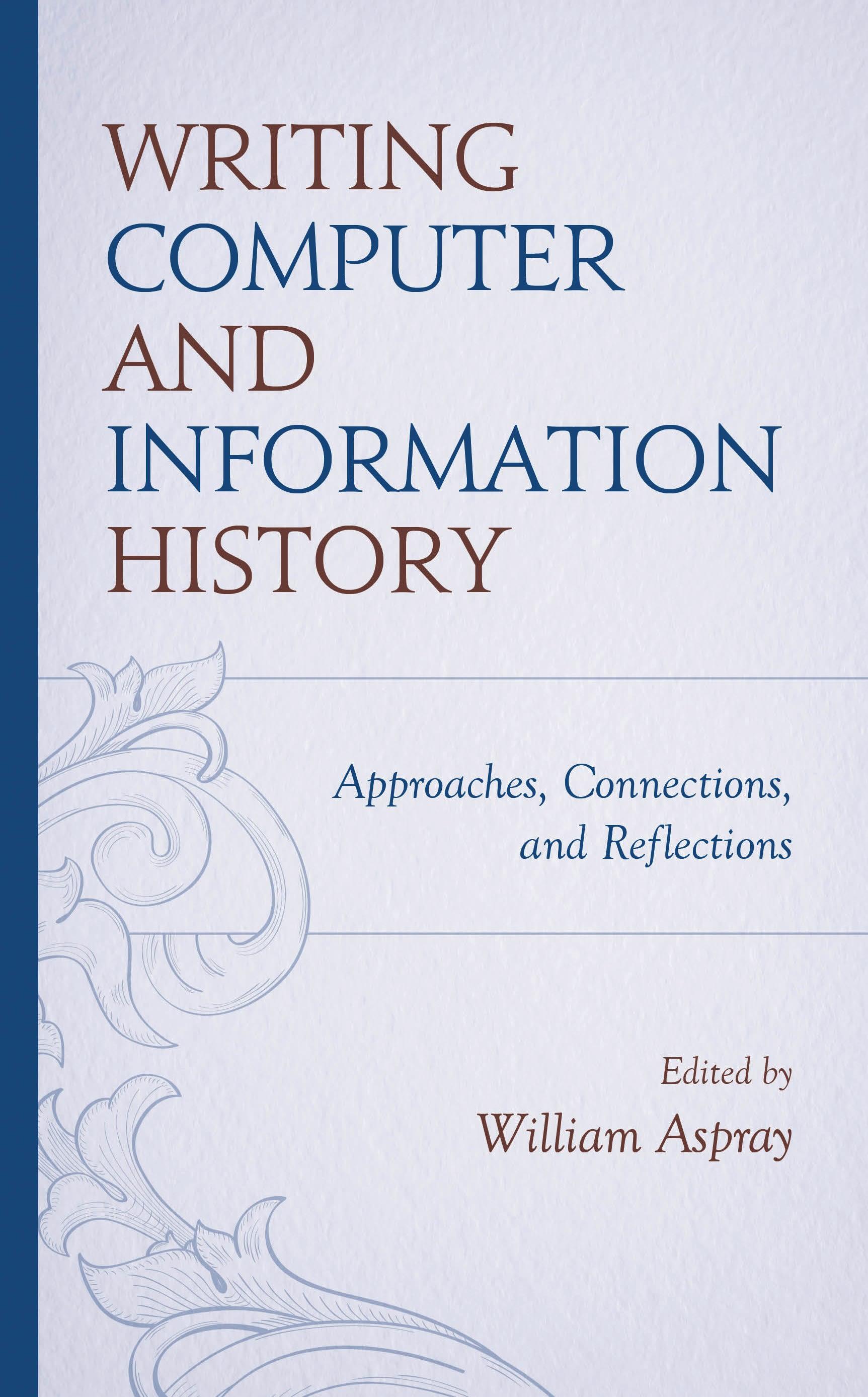
This is not a book about the history of computing or the history of information. Instead, it is a meta-historical book about the research and writing of these types of history.
The formal presentation of historical research in the form of a publication often hides the process by which the topic was selected, boundaries were drawn, evidence was selected, analytic approach was chosen and applied, results were presented, how this work fits into a larger body of scholarship, the implicit goals and biases of the author, and many other similar issues. This process of learning about the various ways to carry out computer history or information history can be enriched by this collection of reflective essays by experienced scholars, discussing the craft that they practice.
This is a book that concerns both computer history and information history. The first scholarship in computer history by professionally trained scholars began to appear in the 1970s, so we are approaching a half century of research and publication in this area. The field has generated numerous pieces of exemplary scholarship from various perspectives such as intellectual history of individual technologies, business histories of firms, economic histories of market sectors, externalist histories of funding and professionalization, and so on.
However, the field continues to evolve, especially as computing and communication technologies have drawn together in the form of the Internet and social media; and with them a new set of scholars is participating, drawn not only from the history of science and technology, but also from the communication and media studies fields. Powerful theories, approaches, and frameworks are being increasingly drawn more widely from both the humanities and the social sciences to inform the practice of computer history. The scholars in this volume look at what's happened, what's happening now, and where historical scholarship in these disciplines is headed.
The formal presentation of historical research in the form of a publication often hides the process by which the topic was selected, boundaries were drawn, evidence was selected, analytic approach was chosen and applied, results were presented, how this work fits into a larger body of scholarship, the implicit goals and biases of the author, and many other similar issues. This process of learning about the various ways to carry out computer history or information history can be enriched by this collection of reflective essays by experienced scholars, discussing the craft that they practice.
This is a book that concerns both computer history and information history. The first scholarship in computer history by professionally trained scholars began to appear in the 1970s, so we are approaching a half century of research and publication in this area. The field has generated numerous pieces of exemplary scholarship from various perspectives such as intellectual history of individual technologies, business histories of firms, economic histories of market sectors, externalist histories of funding and professionalization, and so on.
However, the field continues to evolve, especially as computing and communication technologies have drawn together in the form of the Internet and social media; and with them a new set of scholars is participating, drawn not only from the history of science and technology, but also from the communication and media studies fields. Powerful theories, approaches, and frameworks are being increasingly drawn more widely from both the humanities and the social sciences to inform the practice of computer history. The scholars in this volume look at what's happened, what's happening now, and where historical scholarship in these disciplines is headed.
Paga fácilmente con tarjeta, Klarna, Apple Pay o Google Pay. ¿No estás contento? Siempre tienes 14 días de garantía de devolución. Lee más en nuestros términos. Si tienes preguntas, escríbenos a hello@memmo.org.
Memmo hace que estudiar sea más fácil, estés donde estés. Aquí tienes tus libros de texto y herramientas de estudio inteligentes en un solo lugar: resúmenes, quizzes, podcasts y flashcards. Y también a Ted, tu compañero de estudio que responde a todo lo que te preguntes. Más de 50 000 estudiantes ya estudian aquí. Está hecho para que aprendas más rápido y te estreses menos.