
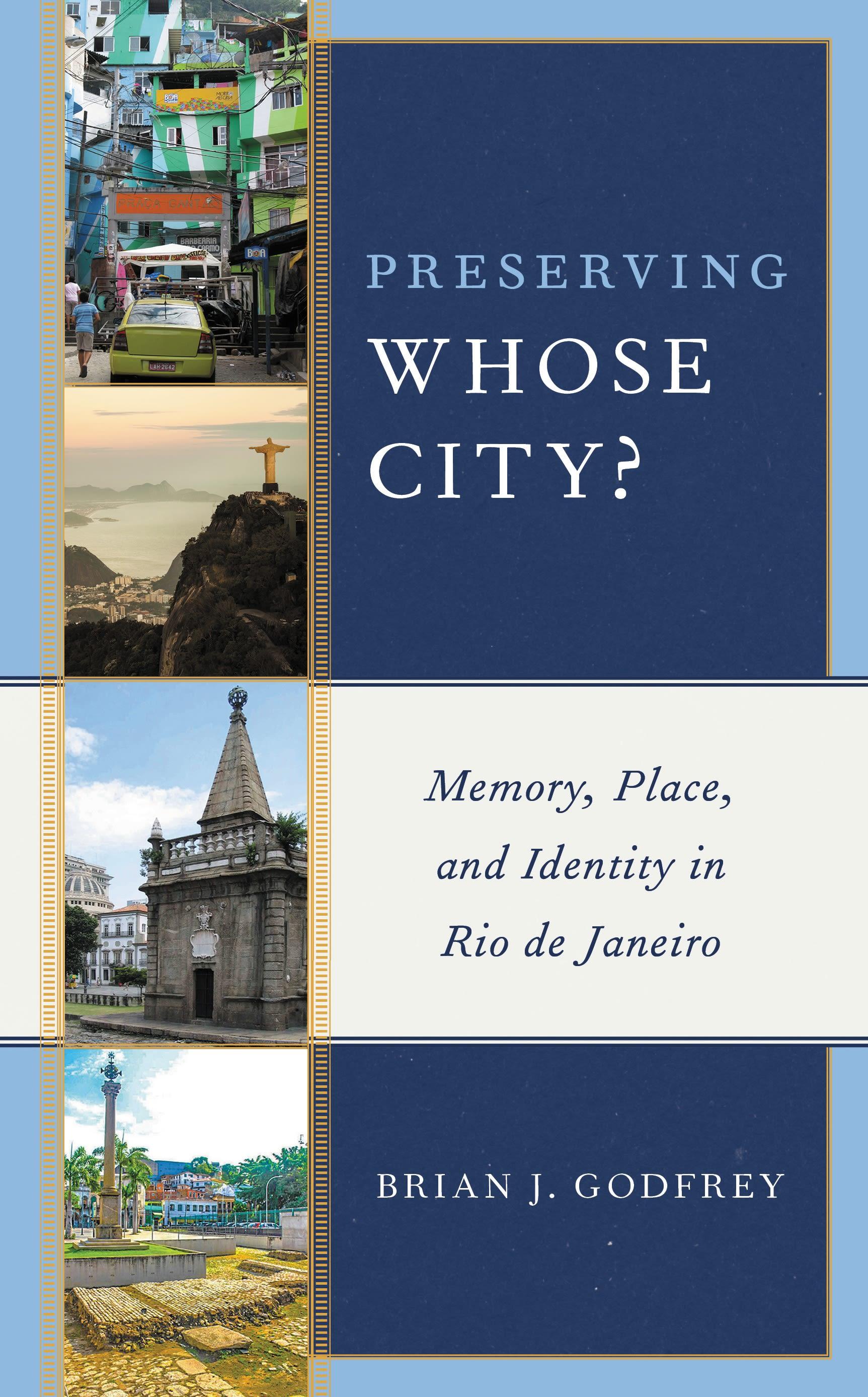
With Brazil’s largest concentration of historic landmarks and famous landscapes, Rio de Janeiro’s passionate heritage debates have helped to define both the city and the country. Taking a critical preservationist stance, Brian Godfrey explores how historic designation and urban rebranding have shaped Rio’s distinctive sense of place.
Official heritage programs date from the 1930s, when federal authorities centralized power and promoted nationalism. The city began a heritage-based strategy of urban revitalization and rebranding in the 1980s––the “Cultural Corridor” of historic places downtown. Subsequent rediscovery of the old “Little Africa” district and continuing struggles of favela communities have emphasized narratives of “counter-memory” against racism, social injustice, and governmental neglect. Meanwhile environmental activism has encouraged programs to conserve the historic landscapes of Rio’s famous mountains, forests, beaches, and bays.
While historic preservation often presumes to conserve or restore heritage sites according to a preexisting authenticity, Godfrey shows how the past actually becomes a resource for present-day interests. Memory brokers have guided the reinvention of historic places, determining whose past has been preserved. Debates over the “right of remembrance,” he argues, shape place memories and identities in this spectacular if highly unequal megacity, which has much to teach the world about conserving cultural diversity and urban environments.
Official heritage programs date from the 1930s, when federal authorities centralized power and promoted nationalism. The city began a heritage-based strategy of urban revitalization and rebranding in the 1980s––the “Cultural Corridor” of historic places downtown. Subsequent rediscovery of the old “Little Africa” district and continuing struggles of favela communities have emphasized narratives of “counter-memory” against racism, social injustice, and governmental neglect. Meanwhile environmental activism has encouraged programs to conserve the historic landscapes of Rio’s famous mountains, forests, beaches, and bays.
While historic preservation often presumes to conserve or restore heritage sites according to a preexisting authenticity, Godfrey shows how the past actually becomes a resource for present-day interests. Memory brokers have guided the reinvention of historic places, determining whose past has been preserved. Debates over the “right of remembrance,” he argues, shape place memories and identities in this spectacular if highly unequal megacity, which has much to teach the world about conserving cultural diversity and urban environments.
Paga fácilmente con tarjeta, Klarna, Apple Pay o Google Pay. ¿No estás contento? Siempre tienes 14 días de garantía de devolución. Lee más en nuestros términos. Si tienes preguntas, escríbenos a hello@memmo.org.
Memmo hace que estudiar sea más fácil, estés donde estés. Aquí tienes tus libros de texto y herramientas de estudio inteligentes en un solo lugar: resúmenes, quizzes, podcasts y flashcards. Y también a Ted, tu compañero de estudio que responde a todo lo que te preguntes. Más de 50 000 estudiantes ya estudian aquí. Está hecho para que aprendas más rápido y te estreses menos.