
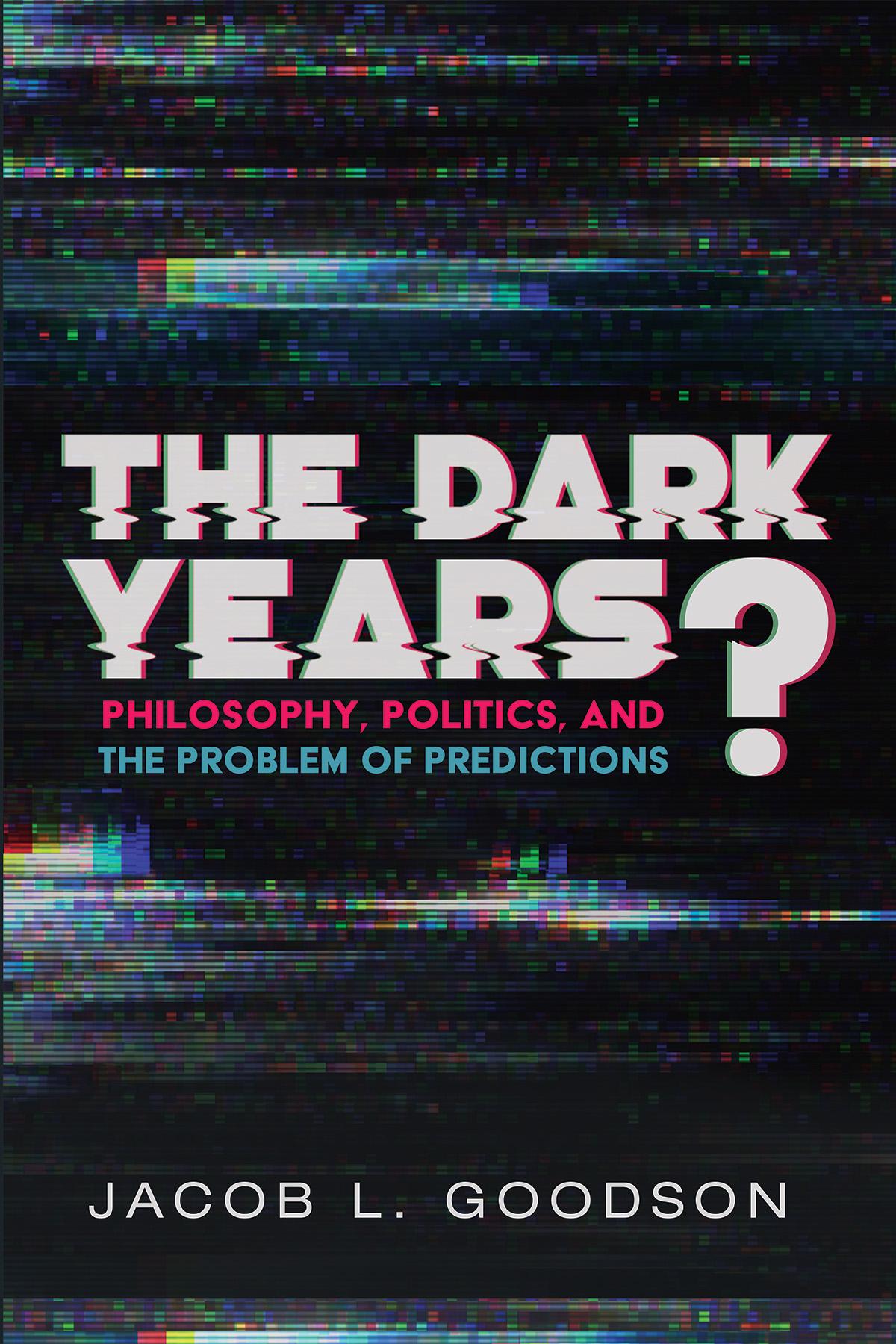
In 1997 and 1998, the American secular philosopher Richard Rorty published a set of predictions about the twenty-first century ranging from the years 2014-95. He predicted, for instance, the election of a "strong man" in the 2016 presidential race and the proliferation of gun violence starting in 2014. He labels the years from 2014-44 the darkest years of American history, politics, and society. From 2045-95, Rorty thinks his own vision for "social hope" will be implemented within American society--a vision that includes charity (in the Pauline sense), solidarity, and sympathy. Rorty considers himself a leftist, liberal, and a philosopher of hope. So why would a philosopher of hope predict such darkness and despair? In The Dark Years? Philosophy, Politics, and the Problem of Predictions philosopher and political theorist Jacob L. Goodson explains the fullness of Rorty's predictions, the problem of making predictions within the social sciences, and the reasons why even Rorty's vision for life after the "dark years" fails us on the standards of hope. Goodson argues that we ought to challenge the monopoly that American politics has as our object of hope. Goodson makes the case for a melancholic yet redemptive hope.
Paga fácilmente con tarjeta, Klarna, Apple Pay o Google Pay. ¿No estás contento? Siempre tienes 14 días de garantía de devolución. Lee más en nuestros términos. Si tienes preguntas, escríbenos a hello@memmo.org.
Memmo hace que estudiar sea más fácil, estés donde estés. Aquí tienes tus libros de texto y herramientas de estudio inteligentes en un solo lugar: resúmenes, quizzes, podcasts y flashcards. Y también a Ted, tu compañero de estudio que responde a todo lo que te preguntes. Más de 50 000 estudiantes ya estudian aquí. Está hecho para que aprendas más rápido y te estreses menos.
También te podría gustar
Comprar el libro0