
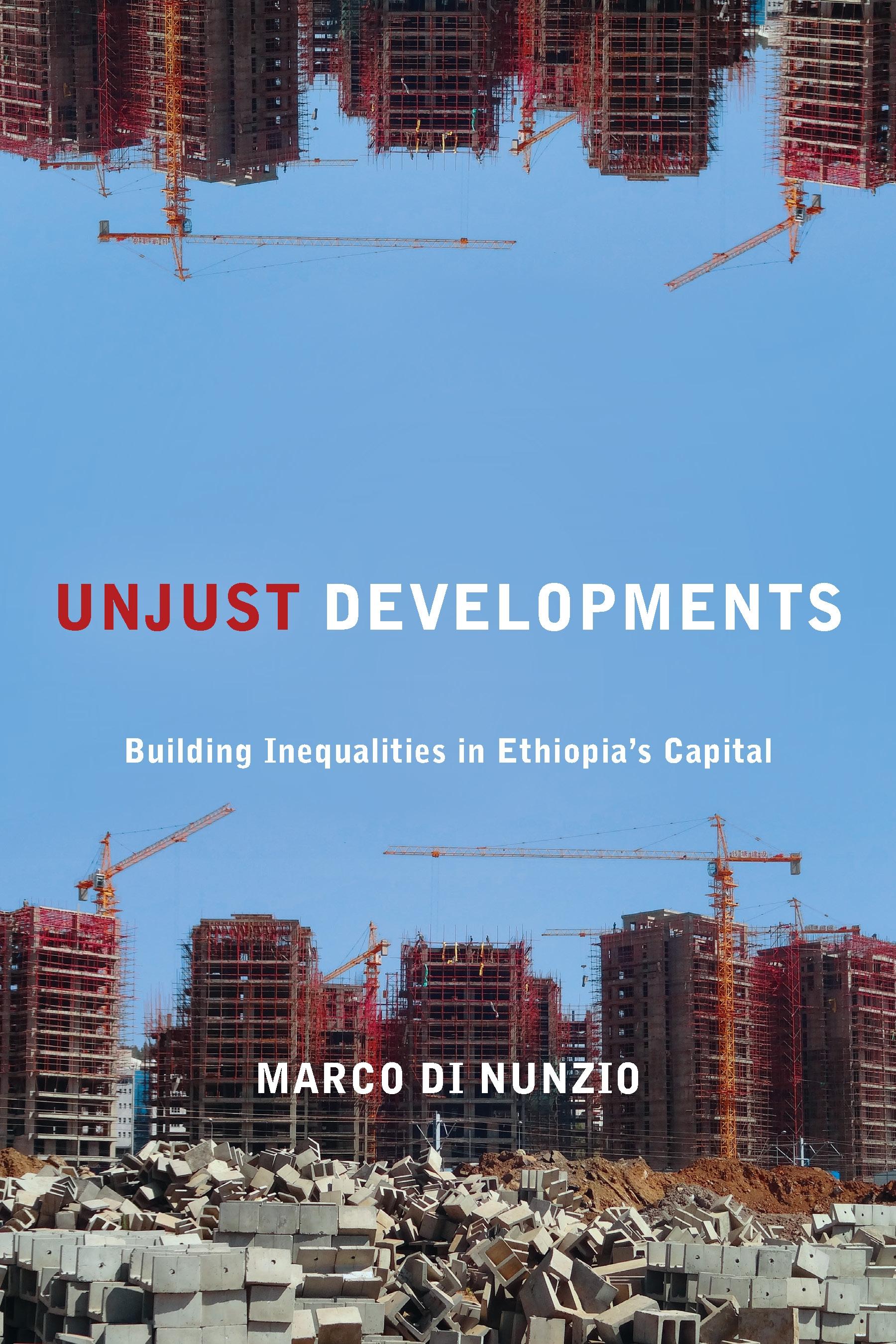
Why does injustice often deepen during moments of rapid urban growth? And what does the pursuit of more just urban futures look like when the realization of alternatives seems impossible?
African cities have boomed over the last two decades. Large-scale infrastructure projects, high-rises, and real estate ventures have transformed urban landscapes. While urban poverty levels have declined, rising housing costs, stagnant wages, and forced evictions—twinned with political authoritarianism—have intensified precarity and injustice.
Drawing on more than a decade of ethnographic research in construction sites, design offices, and new developments, anthropologist Marco Di Nunzio narrates the tensions animating the urban transformation that has reshaped Addis Ababa, Ethiopia’s capital, beyond recognition.
Unjust Developments reminds us that city building in Addis Ababa, as elsewhere, is not only about economic accumulation. It is a moral project, rooted in the belief that modern infrastructure will generate opportunity and uplift the poor. These promises have often failed the poor. Commitments to infrastructure have given political leaders, investors, planners, developers, and architects the leverage to prioritize their own visions of development and dismiss demands for better wages and affordable housing as politically irrelevant or economically unviable. Government and corporate investments in the built environment have helped entrench unequal hierarchies of entitlement and rights.
Yet city building remains a fragile achievement. It is marked by struggles not only between developers and displaced communities, or companies and workers, but also among the city builders themselves. Demands for a more just city and frictions within the building industry open space for rearticulating what counts as political necessity, moral action, expertise, and the future of development.
In conversation with critical urbanism, anthropology, and moral philosophy, Unjust Developments offers a powerful account of city building as both a site of injustice and a terrain of struggle—where justice is not guaranteed, but persistently demanded.
Paga fácilmente con tarjeta, Klarna, Apple Pay o Google Pay. ¿No estás contento? Siempre tienes 14 días de garantía de devolución. Lee más en nuestros términos. Si tienes preguntas, escríbenos a hello@memmo.org.
Memmo hace que estudiar sea más fácil, estés donde estés. Aquí tienes tus libros de texto y herramientas de estudio inteligentes en un solo lugar: resúmenes, quizzes, podcasts y flashcards. Y también a Ted, tu compañero de estudio que responde a todo lo que te preguntes. Más de 50 000 estudiantes ya estudian aquí. Está hecho para que aprendas más rápido y te estreses menos.