
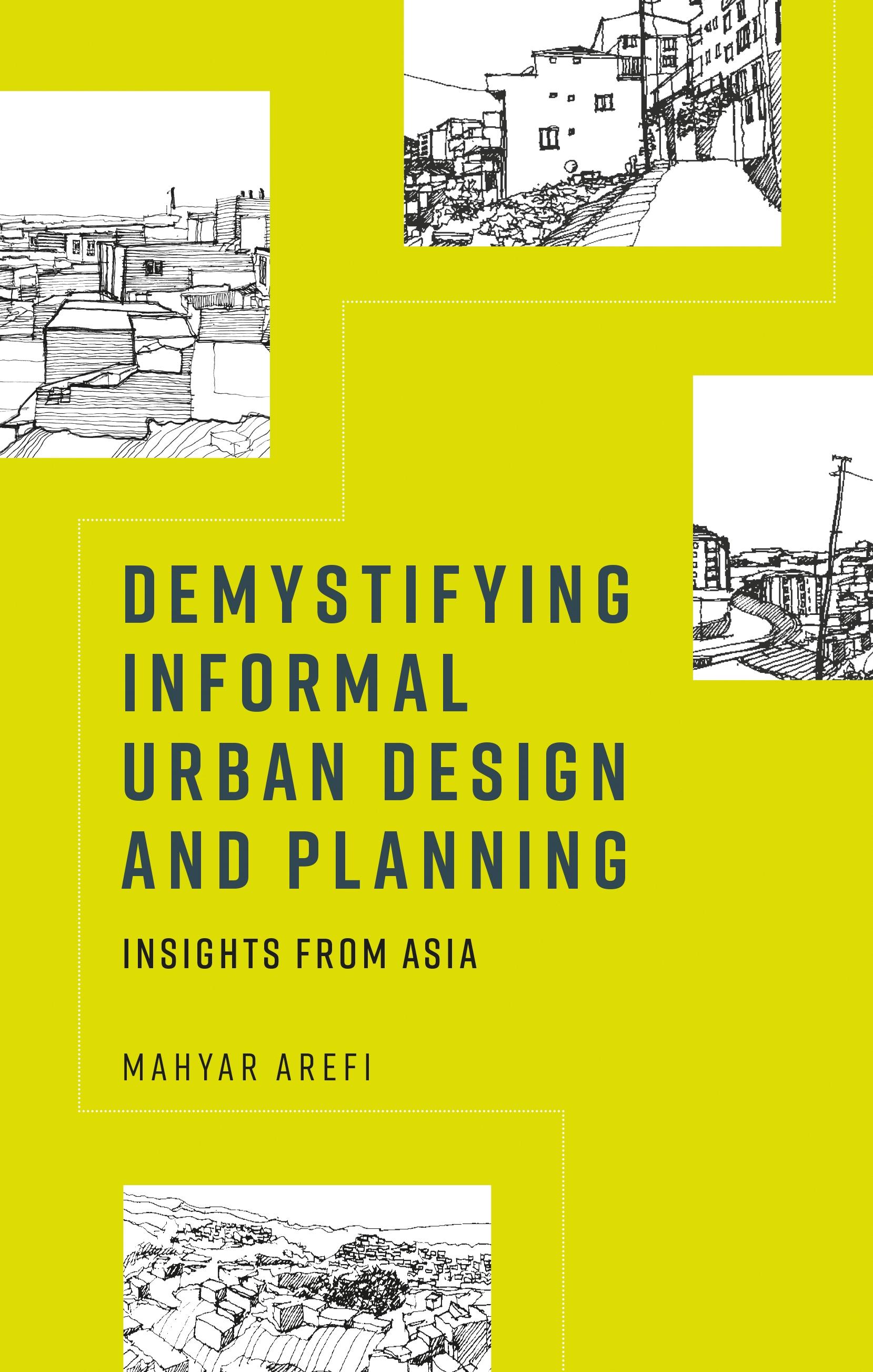
With more than half of the world’s population living in cities, informal settlements, or slums, continue to expand. This book explores the informality-urban design nexus, and asks why formal urban designers and planners have remained largely reluctant to address these challenges facing our cities.
What distinguishes the formal vs. informal urban design paradigm? While urban designers are able to identify and address specific problems like walkability, gentrification, or sense of place, informal settlement problems prove inexorably complex, and harder to fathom to begin with.
Therefore, seeking to demystify these epistemological ambiguities – while difficult – makes sense. The use of abductive reasoning, regulations, aesthetics, and design epitomise the formal, while informal urban planning and design is characterized by information, assets and adaptation. In support of these thematic differentiations, this book uses case studies to better contextualize and unpack the metaphorical distinctions of the two theoretical entities.
Conceptualizing these two schools of thought this way, the book engages urban designers with these debates, and explores how informal settlement residents see themselves, act collectively, care about their settlements, and leverage opportunities.
Paga fácilmente con tarjeta, Klarna, Apple Pay o Google Pay. ¿No estás contento? Siempre tienes 14 días de garantía de devolución. Lee más en nuestros términos. Si tienes preguntas, escríbenos a hello@memmo.org.
Memmo hace que estudiar sea más fácil, estés donde estés. Aquí tienes tus libros de texto y herramientas de estudio inteligentes en un solo lugar: resúmenes, quizzes, podcasts y flashcards. Y también a Ted, tu compañero de estudio que responde a todo lo que te preguntes. Más de 50 000 estudiantes ya estudian aquí. Está hecho para que aprendas más rápido y te estreses menos.