
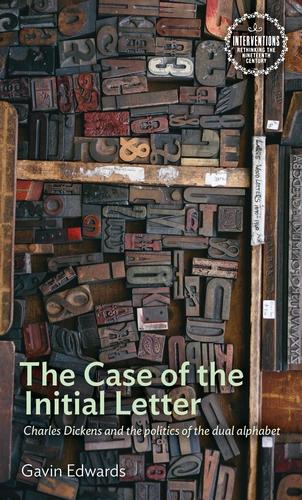
The book analyses attempts by Dickens and other nineteenth-century writers to challenge established ways of using the distinction between upper and lower case letters, in the interests of a wider radicalism. It discusses Dickens’s satire - on ‘Shares’ in Our Mutual Friend, on Paul Dombey’s position as the ‘Son’ of Dombey and Son - alongside the proto-modernist typography of suffragist poet Augusta Webster and the work of Marx’s translators transforming German conventions of capitalisation into English under the influence of Dickens and Carlyle. Placing these innovations within the history of the dual alphabet from its invention by Carolingian scribes to its rejection by modernist poets and the Bauhaus printers, the book tracks the dual alphabet through Dickens’s manuscripts, corrected proofs, and the ‘prompt copies’ for his public Readings, highlighting distinct ways in which writing, printing and speech produce meaning.
Paga fácilmente con tarjeta, Klarna, Apple Pay o Google Pay. ¿No estás contento? Siempre tienes 14 días de garantía de devolución. Lee más en nuestros términos. Si tienes preguntas, escríbenos a hello@memmo.org.
Memmo hace que estudiar sea más fácil, estés donde estés. Aquí tienes tus libros de texto y herramientas de estudio inteligentes en un solo lugar: resúmenes, quizzes, podcasts y flashcards. Y también a Ted, tu compañero de estudio que responde a todo lo que te preguntes. Más de 50 000 estudiantes ya estudian aquí. Está hecho para que aprendas más rápido y te estreses menos.
También te podría gustar
Comprar el libro0