
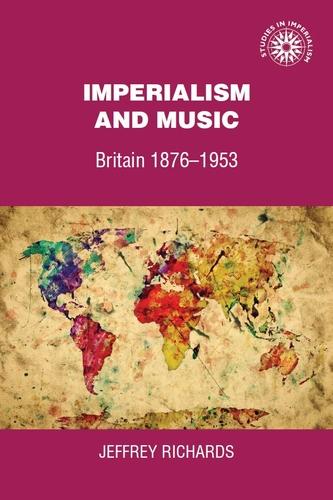
Music played a major role in the life of a global ideological phenomenon like the British Empire. This book demonstrates that music has to be recognised as one of the central characteristics of the cultural imperialism of the late nineteenth and early twentieth centuries. It begins with an account of the imperial music of Sir Edward Elgar and Sir Arthur Sullivan and the establishing of an imperial musical idiom. The book discusses the music composed for or utilized by official occasions: coronations, jubilees, exhibitions, tattoos, Armistice Day and Empire Day. Community singing was also introduced at the Aldershot Military Tattoo in 1927, sponsored by the Daily Express. The book examines the imperial content of a range of musical forms: operetta and ballet, films, music hall songs, ballads, hymns and marches. In one of the scenes depicting ballet, Indian dancing girls are ordered to reveal the riches of the land and the Ballet of Jewels. There were two staples of song in the second half of the nineteenth century: the drawing-room ballad and the music-hall song. Sir Henry Coward was Britain's leading chorus-master, and his 1911 musical world tour with Sheffield choir was the high point of his career. The book concludes with a discussion of practitioners of imperial music: the divas Emma Albani, Nellie Melba and Clara Butt, and the baritone Peter Dawson.
Paga fácilmente con tarjeta, Klarna, Apple Pay o Google Pay. ¿No estás contento? Siempre tienes 14 días de garantía de devolución. Lee más en nuestros términos. Si tienes preguntas, escríbenos a hello@memmo.org.
Memmo hace que estudiar sea más fácil, estés donde estés. Aquí tienes tus libros de texto y herramientas de estudio inteligentes en un solo lugar: resúmenes, quizzes, podcasts y flashcards. Y también a Ted, tu compañero de estudio que responde a todo lo que te preguntes. Más de 50 000 estudiantes ya estudian aquí. Está hecho para que aprendas más rápido y te estreses menos.
También te podría gustar
Comprar el libro0