
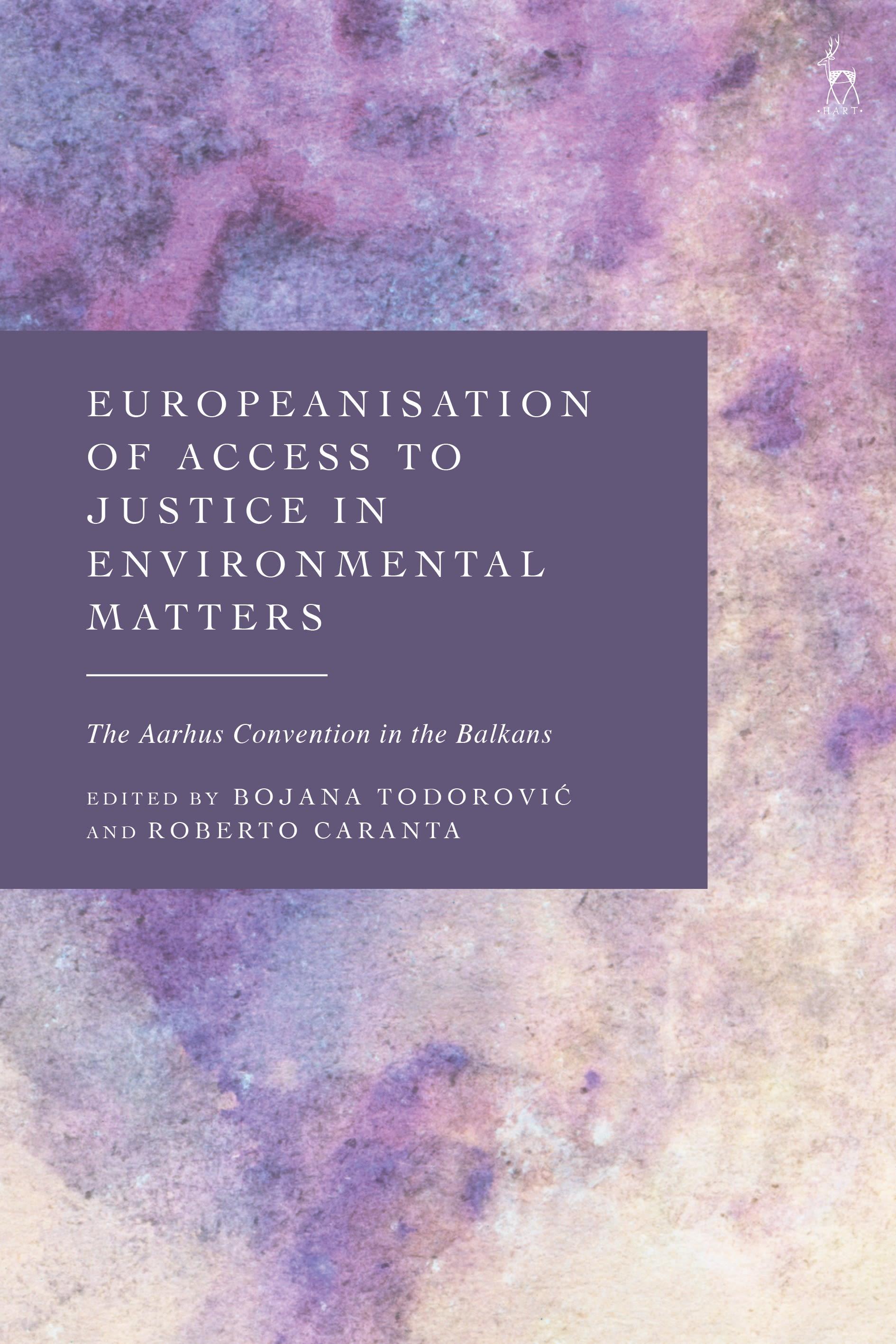
This book analyses the ways in which Article 9 of the Aarhus Convention enables environmental access to justice in the Balkans, a region at the epicentre of extreme climate change events.
Adopting a law-in-context approach, the chapters explore national cultures and driving forces shaping the implementation of Aarhus standards in Albania, Croatia, North Macedonia, Romania, Slovenia and Serbia, paving the way for their comparative assessment.
The book combines EU law and the case law of the European Court of Human Rights with the bottom-up Europeanisation brought about by rising environmental protests and the activism of civil society organisations in the region. In doing so, it explores the extent to which these Balkan countries comply with requirements stemming from Article 9 of the Aarhus Convention, and whether, despite national differences, it is possible to talk about Europeanisation of access to justice in environmental matters.
The interdisciplinary approach and geographical scope of the book make it an important read for academics and practitioners, as well as for the civil society sector and policy makers grappling with the normative and practical challenges around environmental access to justice – both in and beyond Europe.
Adopting a law-in-context approach, the chapters explore national cultures and driving forces shaping the implementation of Aarhus standards in Albania, Croatia, North Macedonia, Romania, Slovenia and Serbia, paving the way for their comparative assessment.
The book combines EU law and the case law of the European Court of Human Rights with the bottom-up Europeanisation brought about by rising environmental protests and the activism of civil society organisations in the region. In doing so, it explores the extent to which these Balkan countries comply with requirements stemming from Article 9 of the Aarhus Convention, and whether, despite national differences, it is possible to talk about Europeanisation of access to justice in environmental matters.
The interdisciplinary approach and geographical scope of the book make it an important read for academics and practitioners, as well as for the civil society sector and policy makers grappling with the normative and practical challenges around environmental access to justice – both in and beyond Europe.
Paga fácilmente con tarjeta, Klarna, Apple Pay o Google Pay. ¿No estás contento? Siempre tienes 14 días de garantía de devolución. Lee más en nuestros términos. Si tienes preguntas, escríbenos a hello@memmo.org.
Memmo hace que estudiar sea más fácil, estés donde estés. Aquí tienes tus libros de texto y herramientas de estudio inteligentes en un solo lugar: resúmenes, quizzes, podcasts y flashcards. Y también a Ted, tu compañero de estudio que responde a todo lo que te preguntes. Más de 50 000 estudiantes ya estudian aquí. Está hecho para que aprendas más rápido y te estreses menos.