
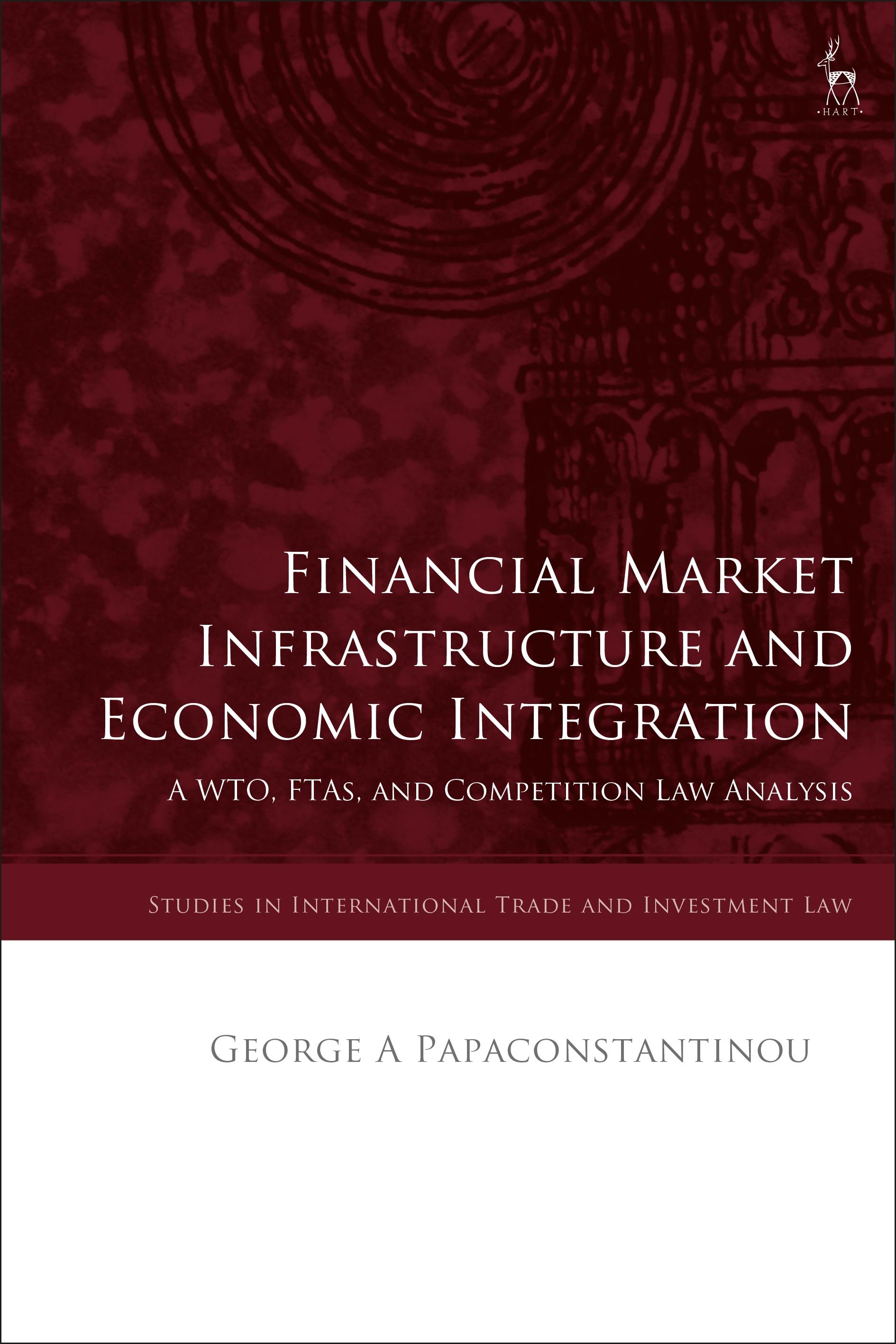
This book is the first comprehensive study of the interplay between the cutting-edge regulation of financial infrastructure and international economic integration. It tackles a series of important questions: How does the regulation of central counterparties interact with international economic law? Is the WTO able to deal with the regulatory diversity of each country's financial rulebook? Do FTAs foster deeper integration of financial infrastructure services? Can competition law effectively tackle monopolisation and anti-competitive conduct in financial infrastructure?
The book discusses how the liberalisation of financial market infrastructure is achieved within the most prominent international economic integration settings: the WTO, Economic Integration Agreements, and EU competition law. It explores whether a more harmonious relationship between financial regulation and economic integration is feasible, and how it can be achieved. The book demonstrates the existence of both structural barriers to trade and trade-facilitating tools that can impede and foster the further integration of financial market infrastructure. Measuring the depth of liberalisation of financial market infrastructure services in more than 120 FTAs, as well as surveying recent case law of the WTO, the Court of Justice of the European Union, and the practice of the European Commission, the book shows how the economic integration of financial market infrastructure occurs.
An essential read for those seeking to understand how the cutting-edge regulation of financial market infrastructure and transnational systems of economic integration interact with one another.
The book discusses how the liberalisation of financial market infrastructure is achieved within the most prominent international economic integration settings: the WTO, Economic Integration Agreements, and EU competition law. It explores whether a more harmonious relationship between financial regulation and economic integration is feasible, and how it can be achieved. The book demonstrates the existence of both structural barriers to trade and trade-facilitating tools that can impede and foster the further integration of financial market infrastructure. Measuring the depth of liberalisation of financial market infrastructure services in more than 120 FTAs, as well as surveying recent case law of the WTO, the Court of Justice of the European Union, and the practice of the European Commission, the book shows how the economic integration of financial market infrastructure occurs.
An essential read for those seeking to understand how the cutting-edge regulation of financial market infrastructure and transnational systems of economic integration interact with one another.
Paga fácilmente con tarjeta, Klarna, Apple Pay o Google Pay. ¿No estás contento? Siempre tienes 14 días de garantía de devolución. Lee más en nuestros términos. Si tienes preguntas, escríbenos a hello@memmo.org.
Memmo hace que estudiar sea más fácil, estés donde estés. Aquí tienes tus libros de texto y herramientas de estudio inteligentes en un solo lugar: resúmenes, quizzes, podcasts y flashcards. Y también a Ted, tu compañero de estudio que responde a todo lo que te preguntes. Más de 50 000 estudiantes ya estudian aquí. Está hecho para que aprendas más rápido y te estreses menos.