
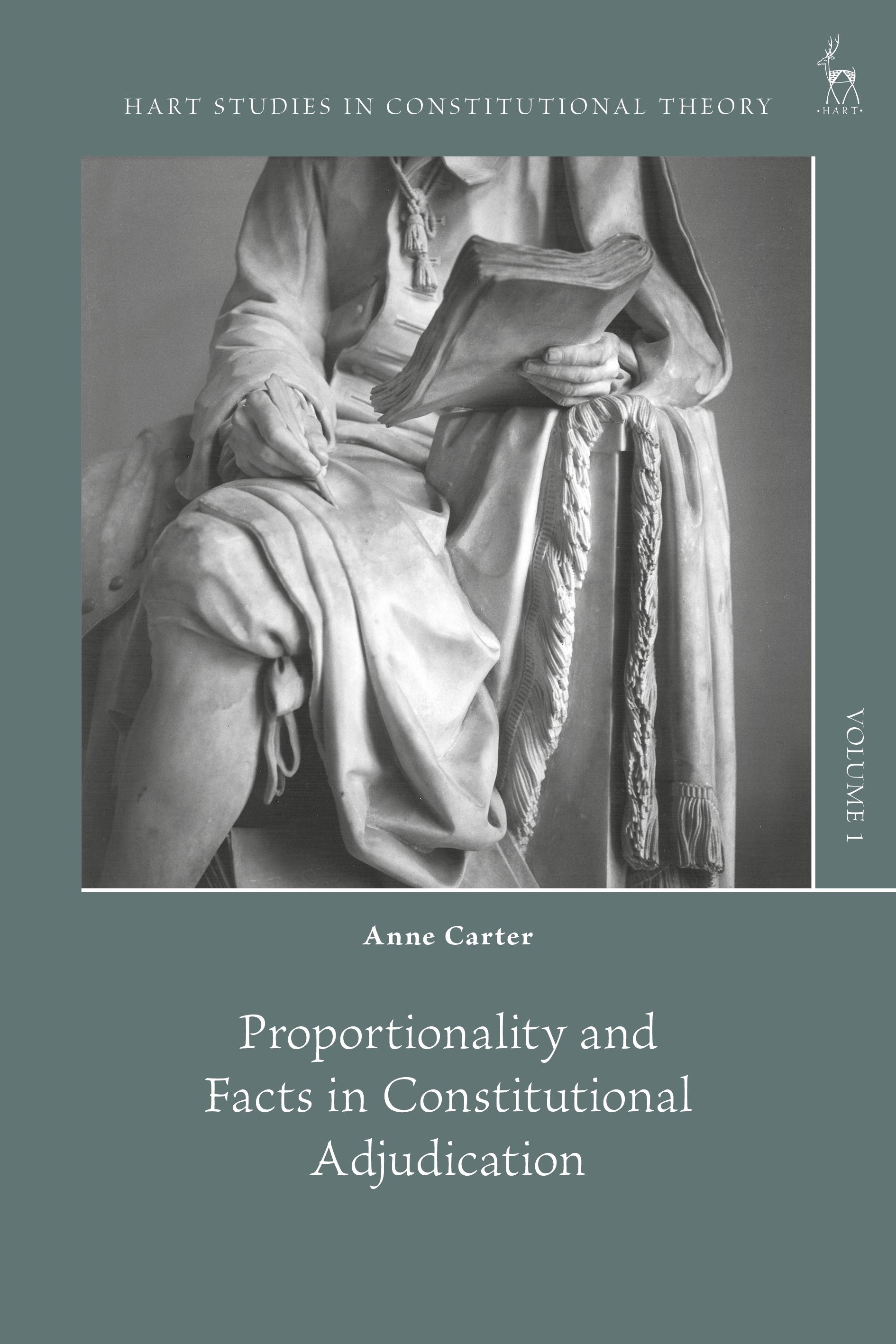
This book considers the relationship between proportionality and facts in constitutional adjudication. Analysing where facts arise within each of the three stages of the structured proportionality test – suitability, necessity, and balancing – it considers the nature of these 'facts' vis-à-vis the facts that arise in the course of ordinary litigation.
The book's central focus is on how proportionality has been applied by courts in practice, and it draws on the comparative experience of four jurisdictions across a range of legal systems. The central case study of the book is Australia, where the embryonic and contested nature of proportionality means it provides an illuminating study of how facts can inform the framing of constitutional tests. The rich proportionality jurisprudence from Germany, Canada, and South Africa is used to contextualise the approach of the High Court of Australia and to identify future directions for proportionality in Australia, at a time when the doctrine is in its formative stages.
The book has three broad aims:
First, it considers the role of facts within proportionality reasoning.
Second, it offers procedural insights into fact-finding in constitutional litigation.
Third, the book's analysis of the dynamic Australian case-law on proportionality means it also serves to clarify the nature and status of proportionality in Australia at a critical moment. Since the 2015 decision of McCloy v New South Wales, where four justices supported the introduction of a structured three-part test of proportionality, the Court has continued to disagree about the utility of such a test. These developments mean that this book, with its doctrinal and comparative approach, is particularly timely.
The book's central focus is on how proportionality has been applied by courts in practice, and it draws on the comparative experience of four jurisdictions across a range of legal systems. The central case study of the book is Australia, where the embryonic and contested nature of proportionality means it provides an illuminating study of how facts can inform the framing of constitutional tests. The rich proportionality jurisprudence from Germany, Canada, and South Africa is used to contextualise the approach of the High Court of Australia and to identify future directions for proportionality in Australia, at a time when the doctrine is in its formative stages.
The book has three broad aims:
First, it considers the role of facts within proportionality reasoning.
Second, it offers procedural insights into fact-finding in constitutional litigation.
Third, the book's analysis of the dynamic Australian case-law on proportionality means it also serves to clarify the nature and status of proportionality in Australia at a critical moment. Since the 2015 decision of McCloy v New South Wales, where four justices supported the introduction of a structured three-part test of proportionality, the Court has continued to disagree about the utility of such a test. These developments mean that this book, with its doctrinal and comparative approach, is particularly timely.
Paga fácilmente con tarjeta, Klarna, Apple Pay o Google Pay. ¿No estás contento? Siempre tienes 14 días de garantía de devolución. Lee más en nuestros términos. Si tienes preguntas, escríbenos a hello@memmo.org.
Memmo hace que estudiar sea más fácil, estés donde estés. Aquí tienes tus libros de texto y herramientas de estudio inteligentes en un solo lugar: resúmenes, quizzes, podcasts y flashcards. Y también a Ted, tu compañero de estudio que responde a todo lo que te preguntes. Más de 50 000 estudiantes ya estudian aquí. Está hecho para que aprendas más rápido y te estreses menos.