
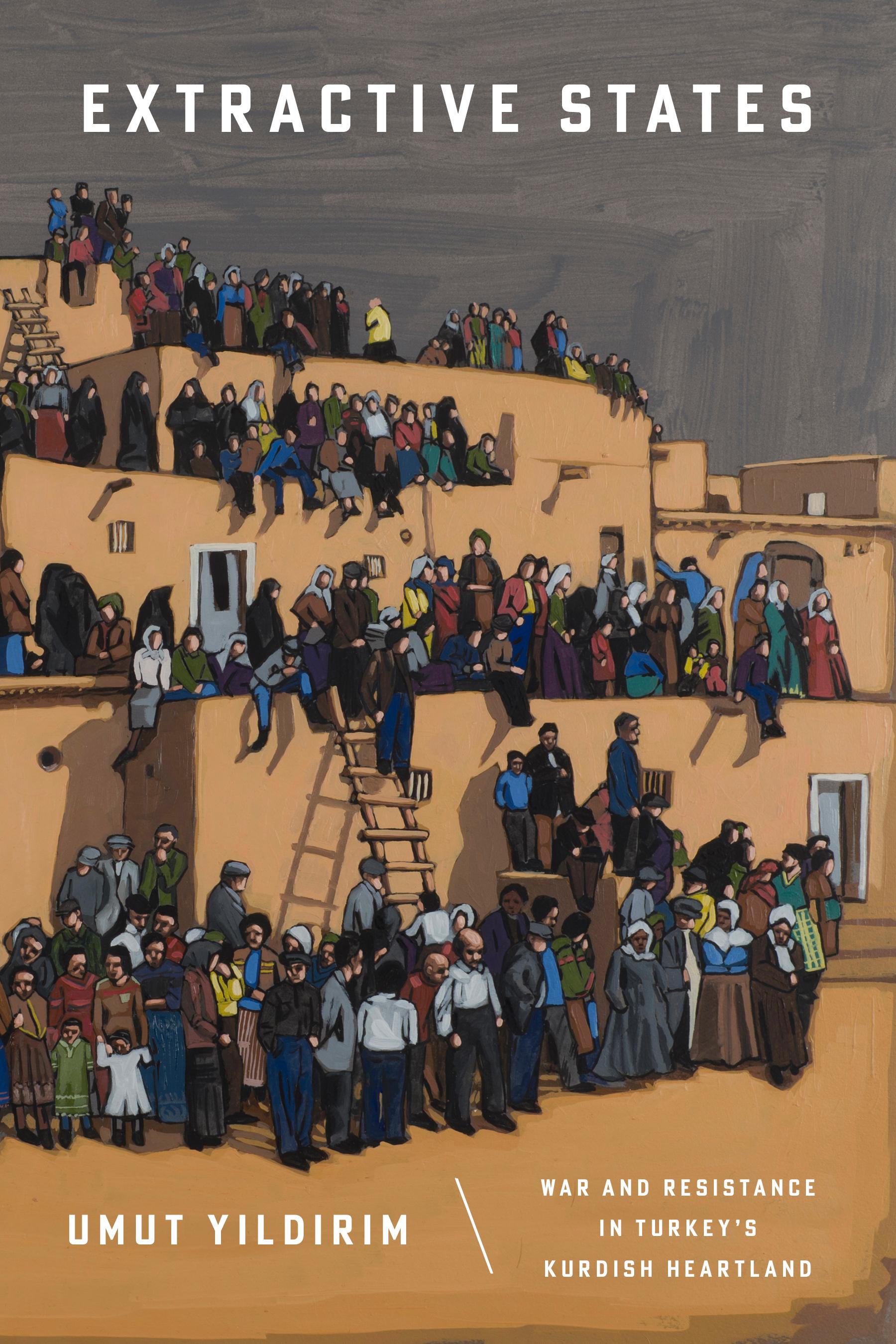
The Turkish state and the Kurdistan Workers' Party engaged in a counterinsurgency war for nearly four decades. Over this period, Diyarbakır, the de facto capital of Greater Kurdistan, was a site of sieges and ceasefires, welfare and humanitarian relief, NGO interventions and decolonial resistance—the complementary, intertwined processes of low-intensity war. War turned urban slums into high-security frontiers and transactional hubs for policy design, and settled deep into embodied knowledges and environments.
Through committed and engaged ethnography, Umut Yıldırım reveals how destruction and displacement became structures of extraction, by which the Turkish state subjugated the Kurdish population into an object to be intervened in, traded, and contained. She also tracks Kurdish efforts to reassert their own stories of war through fact-building, welfare and compensation, women's wellbeing, acts of solidarity, and environmental politics. What we see is a constant dance between war and peace, movement building and its containment, forced displacement and its rehabilitation, memory and its transmutations, environmental damage and its reconstruction. Extractive States offers compelling example of how low-intensity war transforms everyday needs, embodied knowledges, and uprooted populations into securitized knowledge—and how everyday sites of perseverance can reveal such extraction, and thus help conceive of novel modes of resistance.
Paga fácilmente con tarjeta, Klarna, Apple Pay o Google Pay. ¿No estás contento? Siempre tienes 14 días de garantía de devolución. Lee más en nuestros términos. Si tienes preguntas, escríbenos a hello@memmo.org.
Memmo hace que estudiar sea más fácil, estés donde estés. Aquí tienes tus libros de texto y herramientas de estudio inteligentes en un solo lugar: resúmenes, quizzes, podcasts y flashcards. Y también a Ted, tu compañero de estudio que responde a todo lo que te preguntes. Más de 50 000 estudiantes ya estudian aquí. Está hecho para que aprendas más rápido y te estreses menos.