
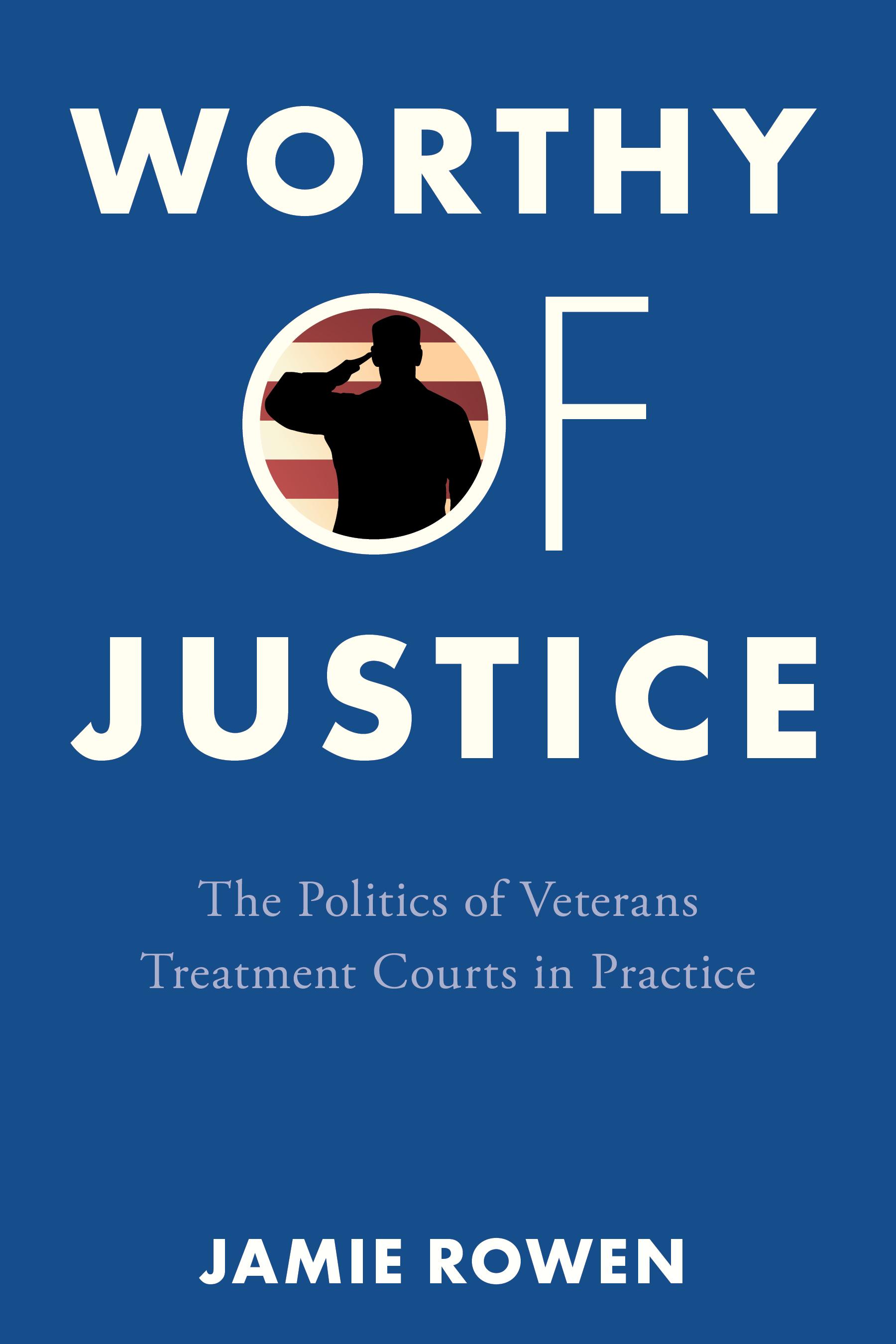
Over the past three decades, jurisdictions across the United States have developed alternatives to traditional criminal procedures and punishments for adults accused of crimes that are associated with substance use and mental health disorders. The Veterans Treatment Court (VTC) is one example of these problem-solving courts. VTCs benefit from the availability of extensive (and free) medical and social services through the Department of Veterans Affairs, as well as the social and political legitimacy that comes with serving veterans.
Worthy of Justice takes this specific form of problem-solving court as lens for examining broader social inequalities in the criminal legal system. Jamie Rowen argues that the rationale for VTCs flows not from what veterans have done but from who they are. Their operations are fueled by the notion that their participants' criminal behavior is the result of military service rather than other personal choices made, thus making them uniquely worthy of public support. In this way, VTCs powerfully expose the contradictions inherent in the idea that criminals deserve punishment.
Rowen draws on fieldwork at three such courts across the US. Ultimately, she illustrates how the politics of crime and the politics of welfare increasingly intersect and, together, construct classes of Americans who are either worthy, or not.
Paga fácilmente con tarjeta, Klarna, Apple Pay o Google Pay. ¿No estás contento? Siempre tienes 14 días de garantía de devolución. Lee más en nuestros términos. Si tienes preguntas, escríbenos a hello@memmo.org.
Memmo hace que estudiar sea más fácil, estés donde estés. Aquí tienes tus libros de texto y herramientas de estudio inteligentes en un solo lugar: resúmenes, quizzes, podcasts y flashcards. Y también a Ted, tu compañero de estudio que responde a todo lo que te preguntes. Más de 50 000 estudiantes ya estudian aquí. Está hecho para que aprendas más rápido y te estreses menos.