
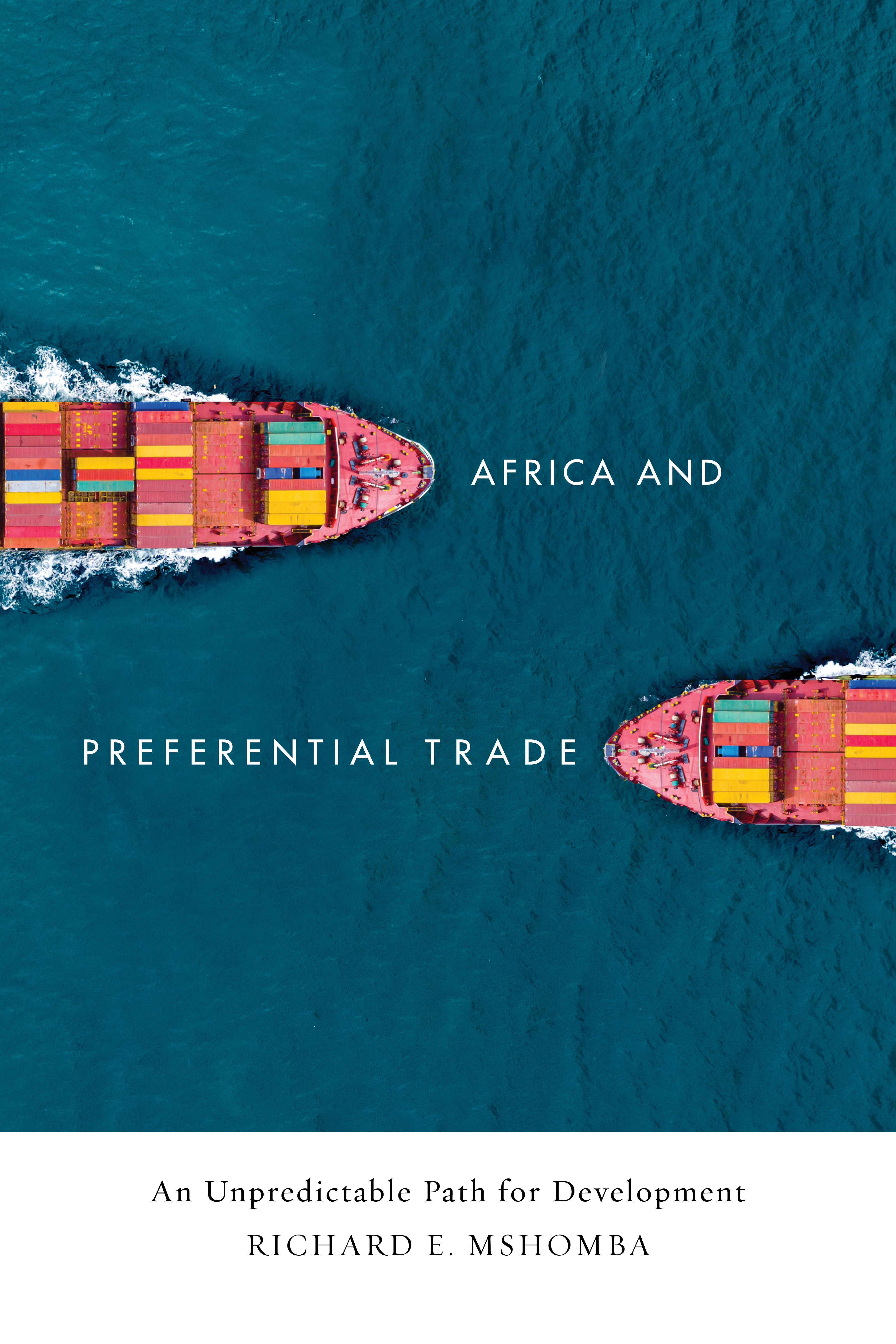
Nonreciprocal preferential trade arrangements are a defining feature of the relationship between developed and developing countries dating back to the colonial era. In the late 1950s, these arrangements started to take a multilateral form when members of the European Economic Community established special trade arrangements with their colonies. Since then, several trade arrangements have featured African countries among the preference-receiving countries. Yet it is not always clear how preferential these arrangements are and whether they in fact help African countries or instead lead them to perpetual dependence on specific markets and products.
Richard E. Mshomba carefully examines the history of these programs and their salient features. He analyzes negotiations between the EU and African countries to form Economic Partnership Agreements. Nonreciprocal preferential trade arrangements are often unpredictable, since the duration and magnitude of preferences are at the discretion of the preference-giving countries. However, when used in conjunction with other development programs and with laws and regulations that encourage long-term investment and protect employees, they can increase economic opportunities and foster human development. This book recognizes the potential impact of nonreciprocal preferential trade arrangements and provides recommendations to increase their viability.
Paga fácilmente con tarjeta, Klarna, Apple Pay o Google Pay. ¿No estás contento? Siempre tienes 14 días de garantía de devolución. Lee más en nuestros términos. Si tienes preguntas, escríbenos a hello@memmo.org.
Memmo hace que estudiar sea más fácil, estés donde estés. Aquí tienes tus libros de texto y herramientas de estudio inteligentes en un solo lugar: resúmenes, quizzes, podcasts y flashcards. Y también a Ted, tu compañero de estudio que responde a todo lo que te preguntes. Más de 50 000 estudiantes ya estudian aquí. Está hecho para que aprendas más rápido y te estreses menos.