
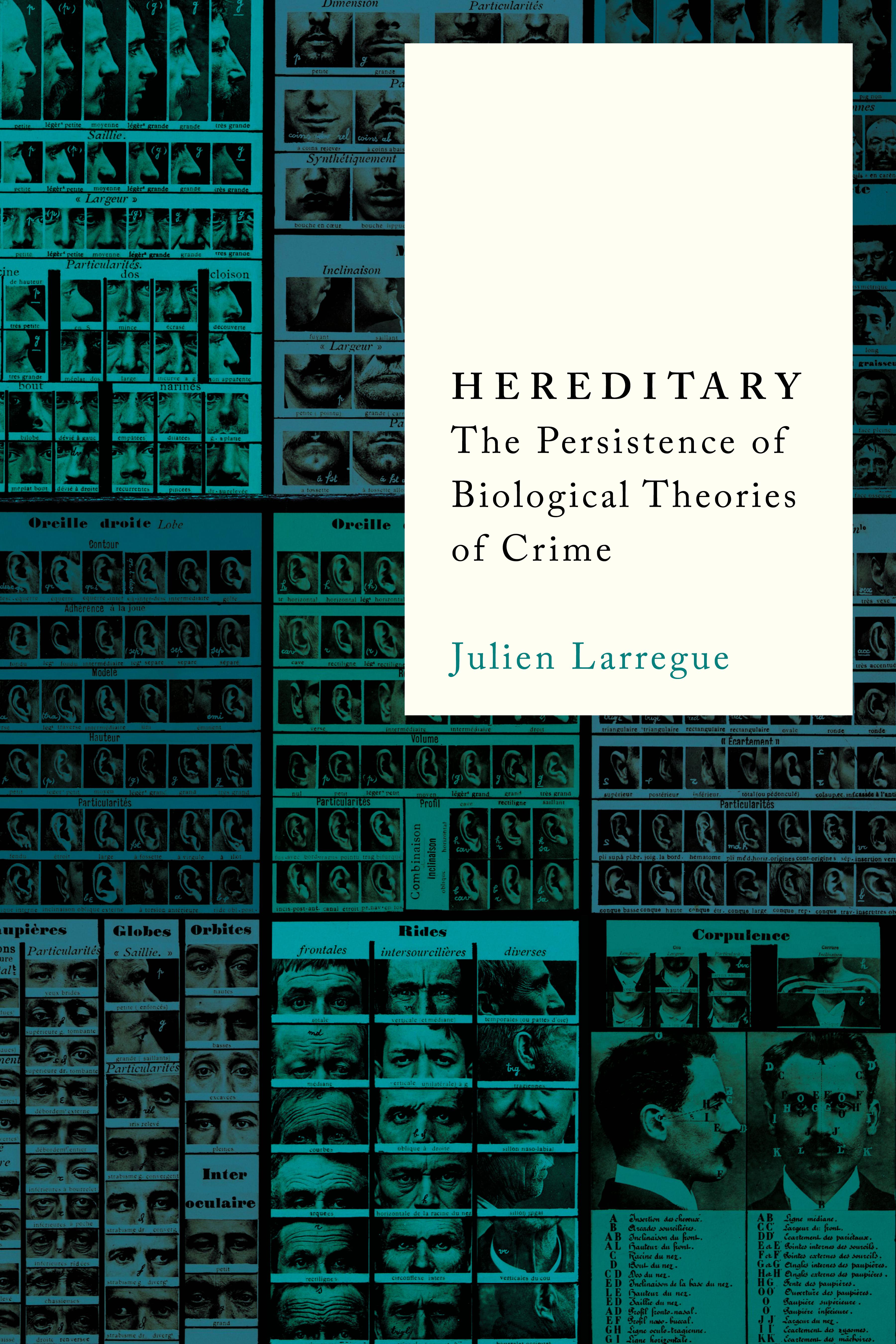
Since the 1990s, a growing number of criminal courts around the world have been using expert assessments based on behavioral genetics and neuroscience to evaluate the responsibility and dangerousness of offenders. Despite this rapid circulation, however, we still know very little about the scientific knowledge underlying these expert evaluations. Hereditary traces the historical development of biosocial criminology in the United States from the 1960s to the present, showing how the fate of this movement is intimately linked to that of the field of criminology as a whole. In claiming to identify the biological and environmental causes of so-called "antisocial" behaviors, biosocial criminologists are redefining the boundary between the normal and the pathological. Julien Larregue examines what is at stake in the development of biosocial criminology. Beyond the origins of delinquency, Larregue addresses the reconfiguration of expertise in contemporary societies, and in particular the territorial struggles between the medical and legal professions. For if the causes of crime are both biological and social, its treatment may call for medical as well as legal solutions.
Paga fácilmente con tarjeta, Klarna, Apple Pay o Google Pay. ¿No estás contento? Siempre tienes 14 días de garantía de devolución. Lee más en nuestros términos. Si tienes preguntas, escríbenos a hello@memmo.org.
Memmo hace que estudiar sea más fácil, estés donde estés. Aquí tienes tus libros de texto y herramientas de estudio inteligentes en un solo lugar: resúmenes, quizzes, podcasts y flashcards. Y también a Ted, tu compañero de estudio que responde a todo lo que te preguntes. Más de 50 000 estudiantes ya estudian aquí. Está hecho para que aprendas más rápido y te estreses menos.