
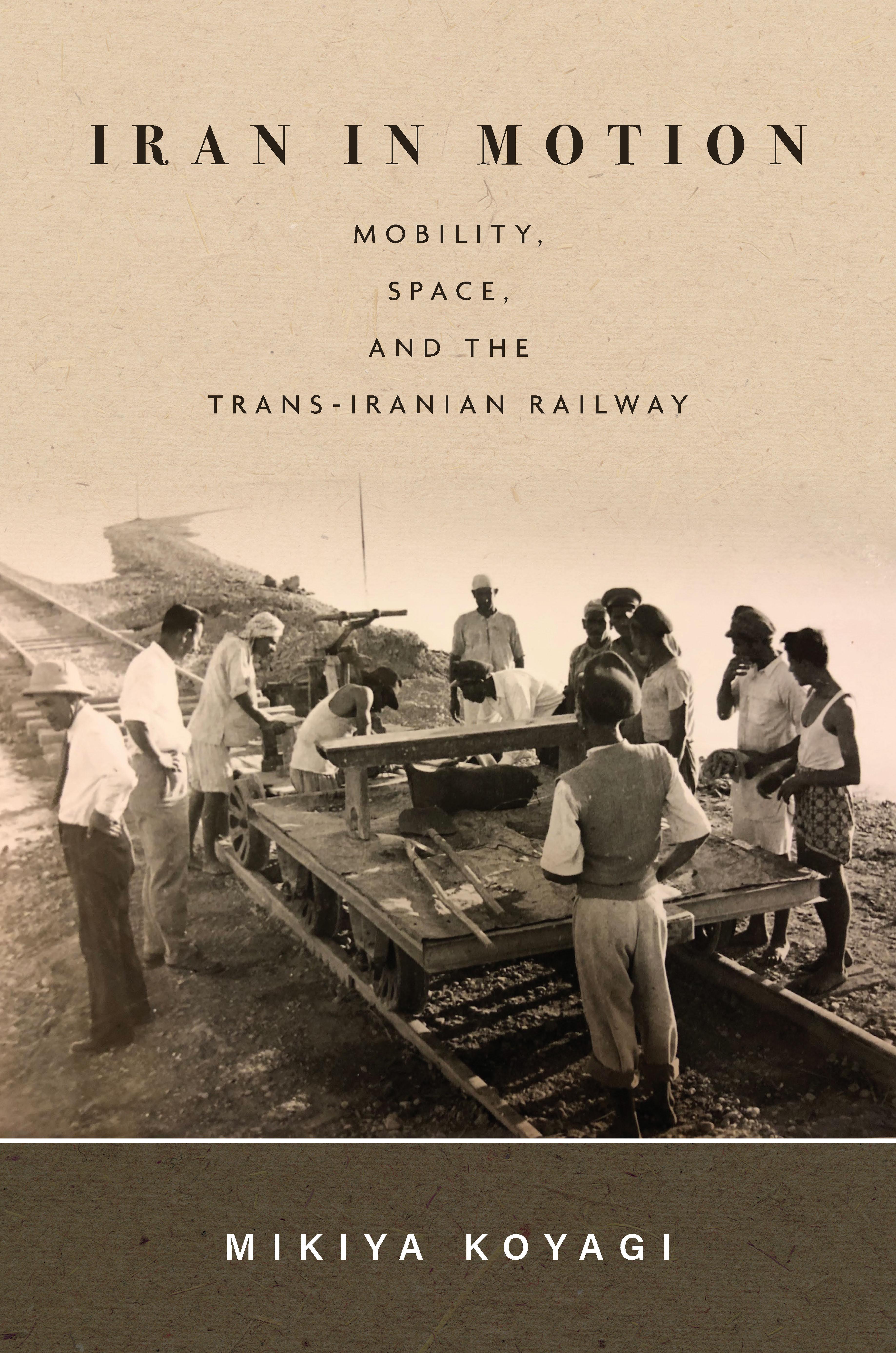
Completed in 1938, the Trans-Iranian Railway connected Tehran to Iran's two major bodies of water: the Caspian Sea in the north and the Persian Gulf in the south. Iran's first national railway, it produced and disrupted various kinds of movement—voluntary and forced, intended and unintended, on different scales and in different directions—among Iranian diplomats, tribesmen, migrant laborers, technocrats, railway workers, tourists and pilgrims, as well as European imperial officials alike. Iran in Motion tells the hitherto unexplored stories of these individuals as they experienced new levels of mobility.
Drawing on newspapers, industry publications, travelogues, and memoirs, as well as American, British, Danish, and Iranian archival materials, Mikiya Koyagi traces contested imaginations and practices of mobility from the conception of a trans-Iranian railway project during the nineteenth-century global transport revolution to its early years of operation on the eve of Iran's oil nationalization movement in the 1950s. Weaving together various individual experiences, this book considers how the infrastructural megaproject reoriented the flows of people and goods. In so doing, the railway project simultaneously brought the provinces closer to Tehran and pulled them away from it, thereby constantly reshaping local, national, and transnational experiences of space among mobile individuals.
Paga fácilmente con tarjeta, Klarna, Apple Pay o Google Pay. ¿No estás contento? Siempre tienes 14 días de garantía de devolución. Lee más en nuestros términos. Si tienes preguntas, escríbenos a hello@memmo.org.
Memmo hace que estudiar sea más fácil, estés donde estés. Aquí tienes tus libros de texto y herramientas de estudio inteligentes en un solo lugar: resúmenes, quizzes, podcasts y flashcards. Y también a Ted, tu compañero de estudio que responde a todo lo que te preguntes. Más de 50 000 estudiantes ya estudian aquí. Está hecho para que aprendas más rápido y te estreses menos.