
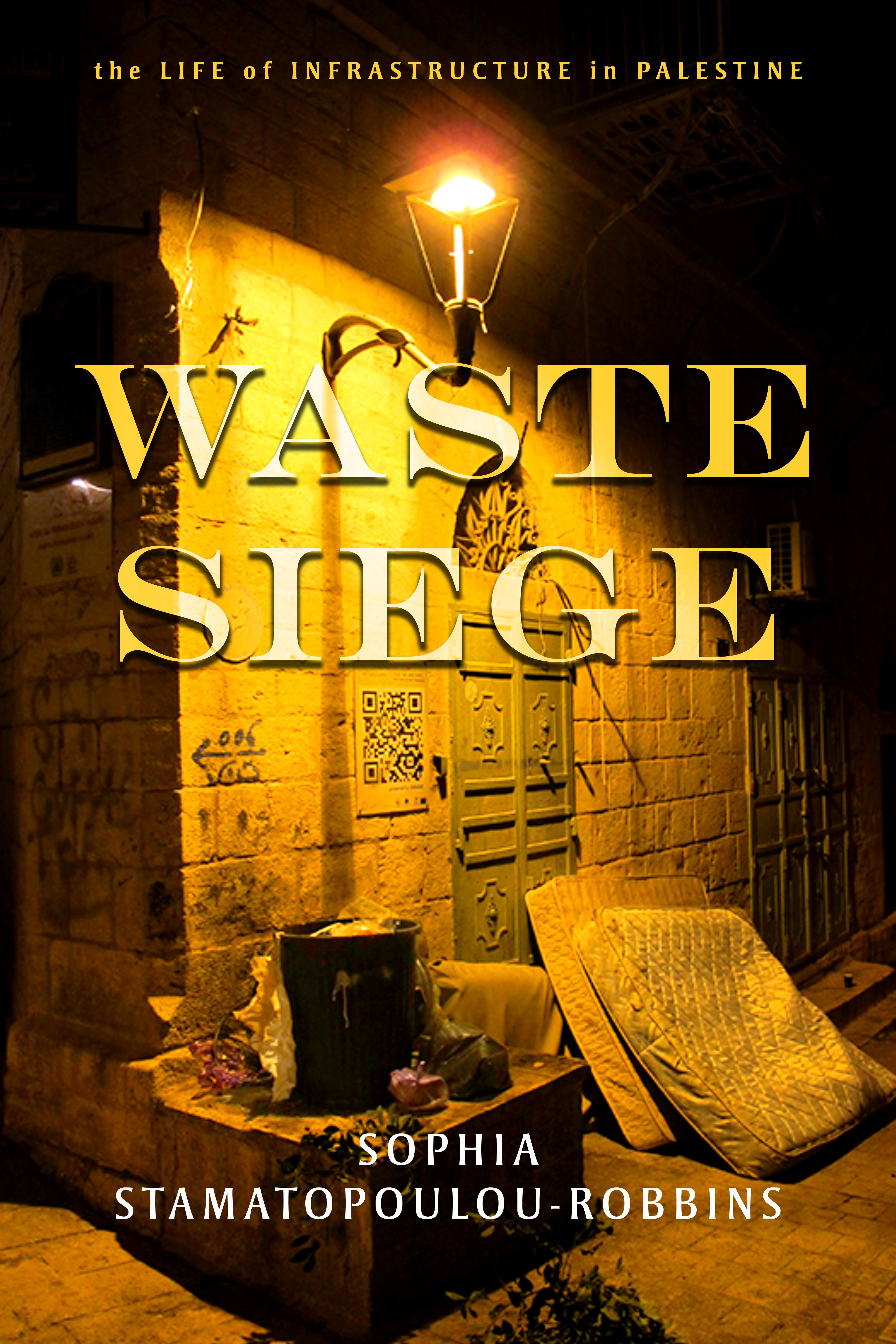
Waste Siege offers an analysis unusual in the study of Palestine: it depicts the environmental, infrastructural, and aesthetic context in which Palestinians are obliged to forge their lives. To speak of waste siege is to describe a series of conditions, from smelling wastes to negotiating military infrastructures, from biopolitical forms of colonial rule to experiences of governmental abandonment, from obvious targets of resistance to confusion over responsibility for the burdensome objects of daily life. Within this rubble, debris, and infrastructural fallout, West Bank Palestinians create a life under settler colonial rule.
Sophia Stamatopoulou-Robbins focuses on waste as an experience of everyday life that is continuous with, but not a result only of, occupation. Tracing Palestinians' own experiences of wastes over the past decade, she considers how multiple authorities governing the West Bank—including municipalities, the Palestinian Authority, international aid organizations, NGOs, and Israel—rule by waste siege, whether intentionally or not. Her work challenges both common formulations of waste as "matter out of place" and as the ontological opposite of the environment, by suggesting instead that waste siege be understood as an ecology of "matter with no place to go." Waste siege thus not only describes a stateless Palestine, but also becomes a metaphor for our besieged planet.
Paga fácilmente con tarjeta, Klarna, Apple Pay o Google Pay. ¿No estás contento? Siempre tienes 14 días de garantía de devolución. Lee más en nuestros términos. Si tienes preguntas, escríbenos a hello@memmo.org.
Memmo hace que estudiar sea más fácil, estés donde estés. Aquí tienes tus libros de texto y herramientas de estudio inteligentes en un solo lugar: resúmenes, quizzes, podcasts y flashcards. Y también a Ted, tu compañero de estudio que responde a todo lo que te preguntes. Más de 50 000 estudiantes ya estudian aquí. Está hecho para que aprendas más rápido y te estreses menos.