
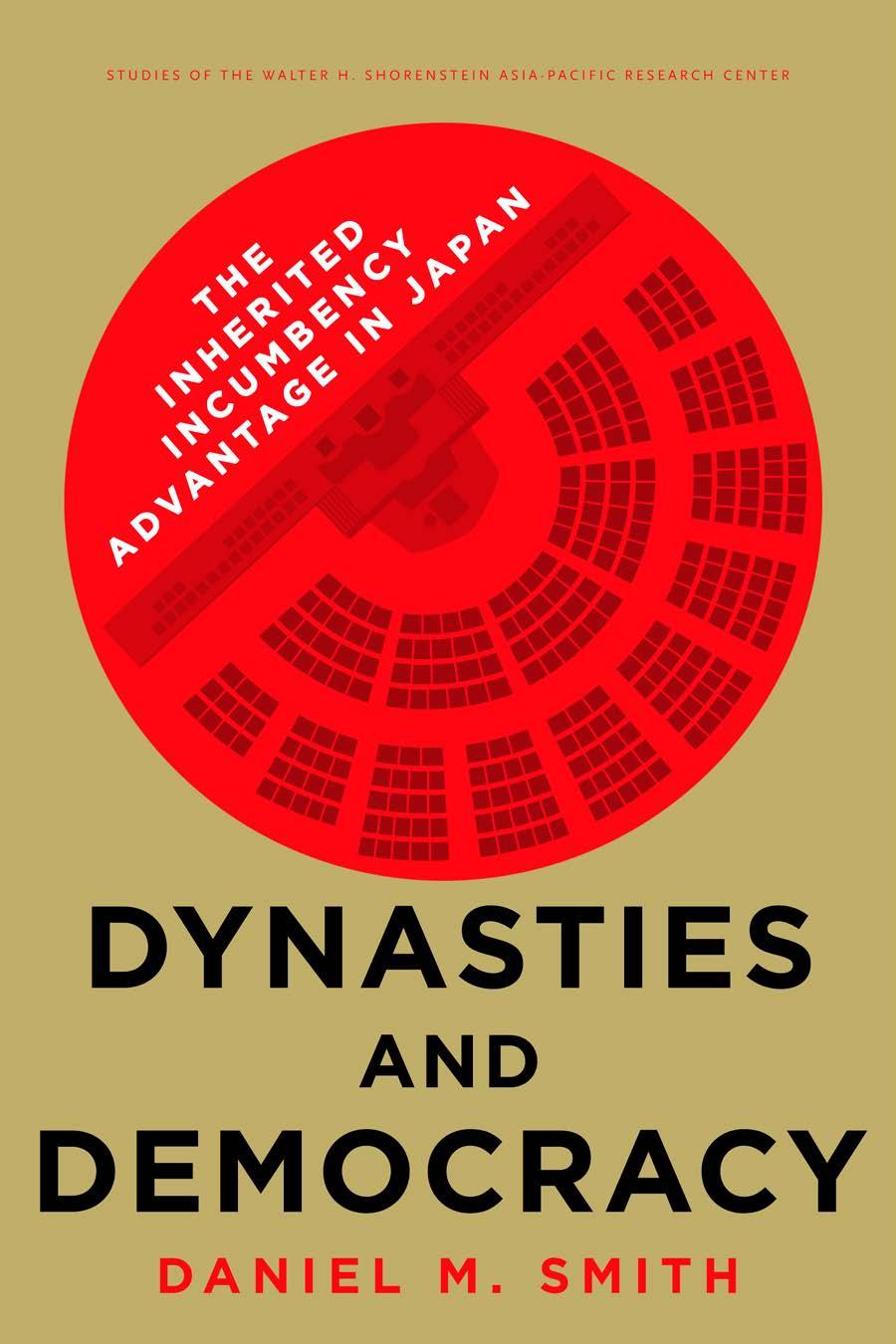
Although democracy is, in principle, the antithesis of dynastic rule, families with multiple members in elective office continue to be common around the world. In most democracies, the proportion of such "democratic dynasties" declines over time, and rarely exceeds ten percent of all legislators. Japan is a startling exception, with over a quarter of all legislators in recent years being dynastic. In Dynasties and Democracy, Daniel M. Smith sets out to explain when and why dynasties persist in democracies, and why their numbers are only now beginning to wane in Japan—questions that have long perplexed regional experts.
Smith introduces a compelling comparative theory to explain variation in the presence of dynasties across democracies and political parties. Drawing on extensive legislator-level data from twelve democracies and detailed candidate-level data from Japan, he examines the inherited advantage that members of dynasties reap throughout their political careers—from candidate selection, to election, to promotion into cabinet. Smith shows how the nature and extent of this advantage, as well as its consequences for representation, vary significantly with the institutional context of electoral rules and features of party organization. His findings extend far beyond Japan, shedding light on the causes and consequences of dynastic politics for democracies around the world.
Paga fácilmente con tarjeta, Klarna, Apple Pay o Google Pay. ¿No estás contento? Siempre tienes 14 días de garantía de devolución. Lee más en nuestros términos. Si tienes preguntas, escríbenos a hello@memmo.org.
Memmo hace que estudiar sea más fácil, estés donde estés. Aquí tienes tus libros de texto y herramientas de estudio inteligentes en un solo lugar: resúmenes, quizzes, podcasts y flashcards. Y también a Ted, tu compañero de estudio que responde a todo lo que te preguntes. Más de 50 000 estudiantes ya estudian aquí. Está hecho para que aprendas más rápido y te estreses menos.