
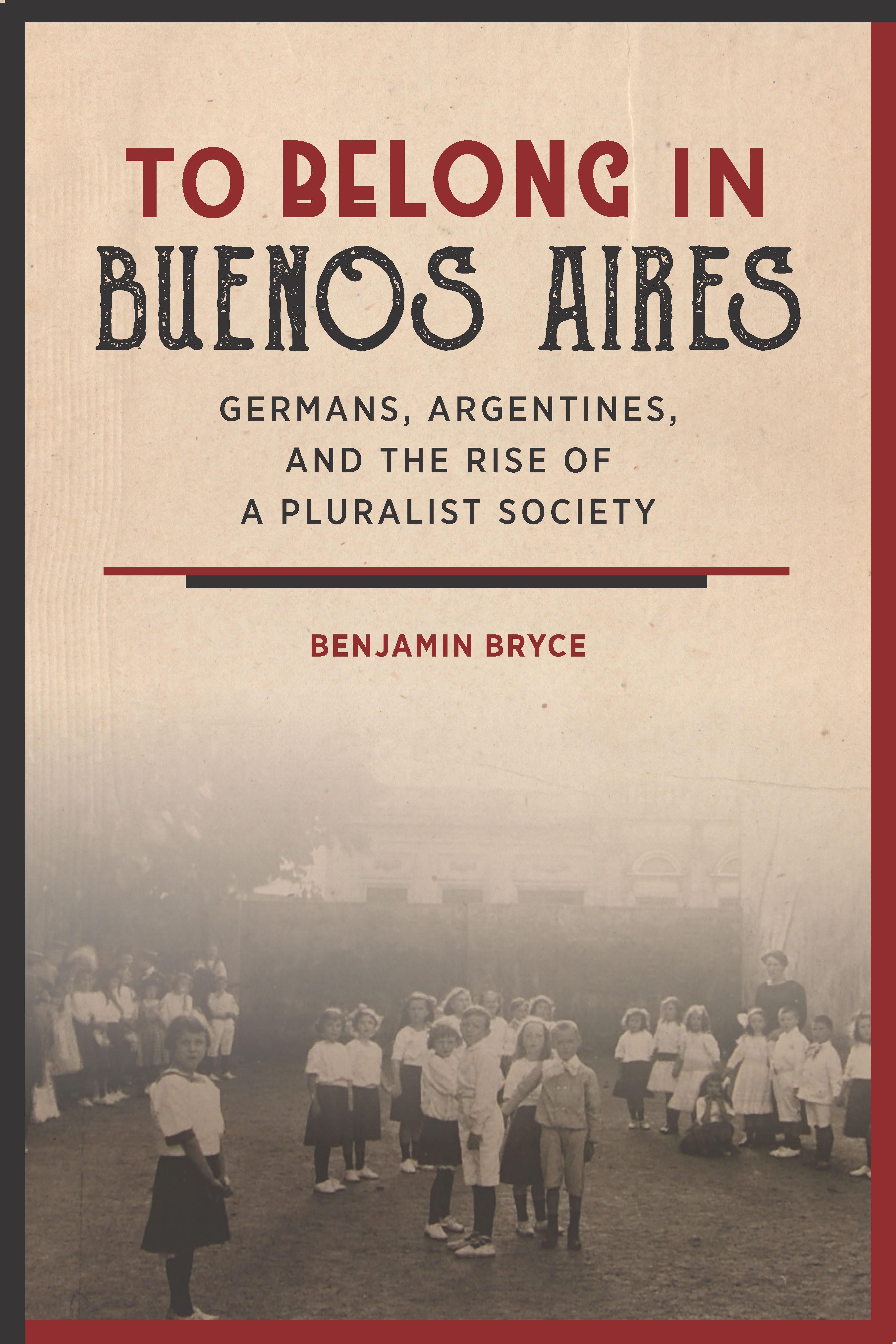
In the late nineteenth and early twentieth centuries, a massive wave of immigration transformed the cultural landscape of Argentina. Alongside other immigrants to Buenos Aires, German speakers strove to carve out a place for themselves as Argentines without fully relinquishing their German language and identity. Their story sheds light on how pluralistic societies take shape and how immigrants negotiate the terms of citizenship and belonging.
Focusing on social welfare, education, religion, language, and the importance of children, Benjamin Bryce examines the formation of a distinct German-Argentine identity. Through a combination of cultural adaptation and a commitment to Protestant and Catholic religious affiliations, German speakers became stalwart Argentine citizens while maintaining connections to German culture. Even as Argentine nationalism intensified and the state called for a more culturally homogeneous citizenry, the leaders of Buenos Aires's German community advocated for a new, more pluralistic vision of Argentine citizenship by insisting that it was possible both to retain one's ethnic identity and be a good Argentine. Drawing parallels to other immigrant groups while closely analyzing the experiences of Argentines of German heritage, Bryce contributes new perspectives on the history of migration to Latin America—and on the complex interconnections between cultural pluralism and the emergence of national cultures.
Paga fácilmente con tarjeta, Klarna, Apple Pay o Google Pay. ¿No estás contento? Siempre tienes 14 días de garantía de devolución. Lee más en nuestros términos. Si tienes preguntas, escríbenos a hello@memmo.org.
Memmo hace que estudiar sea más fácil, estés donde estés. Aquí tienes tus libros de texto y herramientas de estudio inteligentes en un solo lugar: resúmenes, quizzes, podcasts y flashcards. Y también a Ted, tu compañero de estudio que responde a todo lo que te preguntes. Más de 50 000 estudiantes ya estudian aquí. Está hecho para que aprendas más rápido y te estreses menos.