
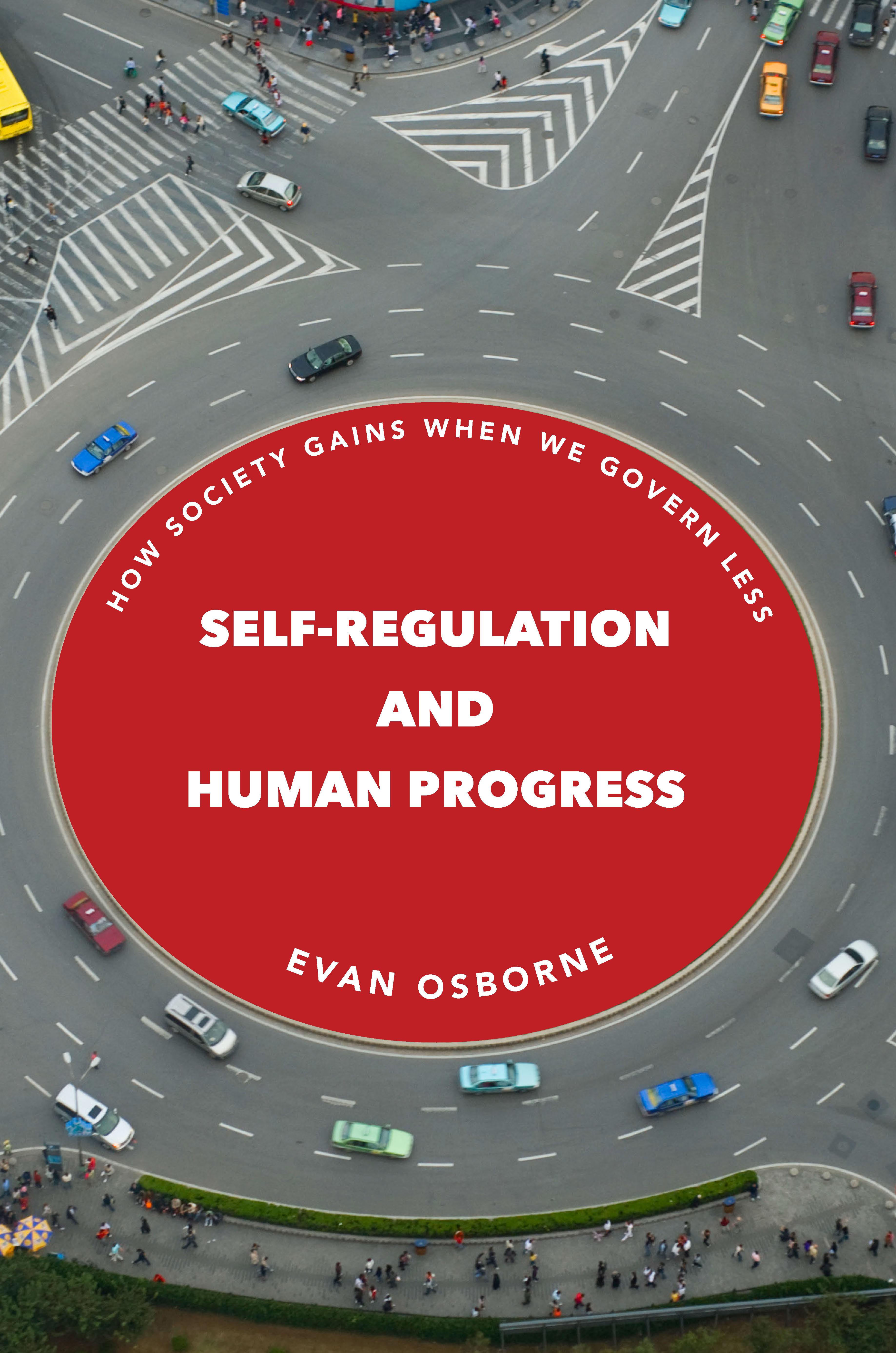
Most of us are familiar with free-market competition: the idea that society and the economy benefit when people are left to self-regulate, testing new ideas in pursuit of profit. Less known is the fact that this theory arose after arguments for the scientific method and freedom of speech had gone mainstream—and that all three share a common basis.
Proponents of self-regulation in the realm of free speech have argued that unhindered public expression causes true ideas to gain strength through scrutiny. Similarly, scientific inquiry has been regarded as a self-correcting system, one in which competing hypotheses are verified by multiple independent researchers. It was long thought that society was better left to organize itself through free markets as opposed to political institutions. But, over the twentieth century, we became less confident in the notion of a self-regulating socioeconomy. Evan Osborne traces the rise and fall of this once-popular concept. He argues that—as society becomes more complex—self-regulation becomes more efficient and can once again serve our economy well.
Paga fácilmente con tarjeta, Klarna, Apple Pay o Google Pay. ¿No estás contento? Siempre tienes 14 días de garantía de devolución. Lee más en nuestros términos. Si tienes preguntas, escríbenos a hello@memmo.org.
Memmo hace que estudiar sea más fácil, estés donde estés. Aquí tienes tus libros de texto y herramientas de estudio inteligentes en un solo lugar: resúmenes, quizzes, podcasts y flashcards. Y también a Ted, tu compañero de estudio que responde a todo lo que te preguntes. Más de 50 000 estudiantes ya estudian aquí. Está hecho para que aprendas más rápido y te estreses menos.