
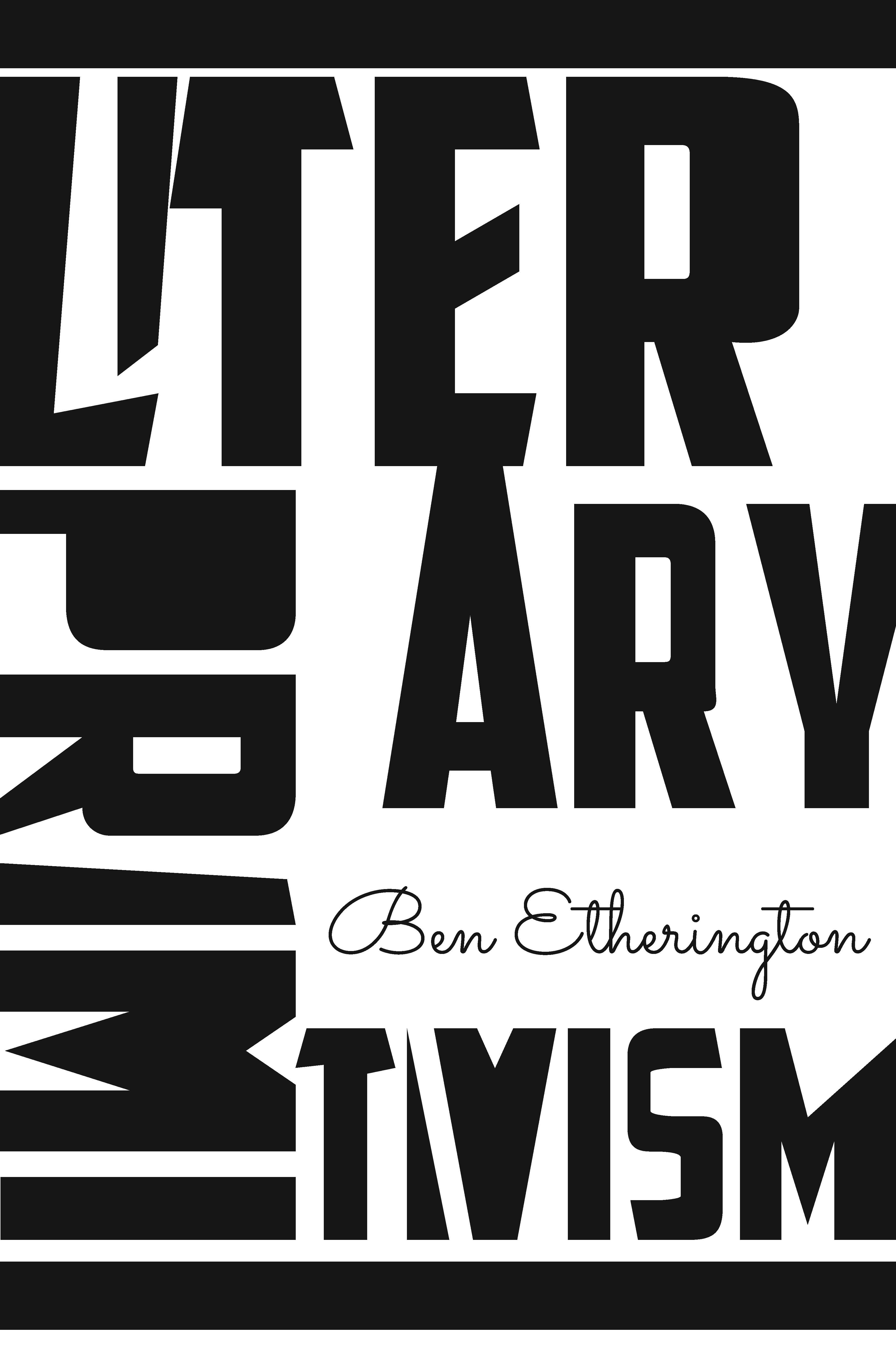
This book fundamentally rethinks a pervasive and controversial concept in literary criticism and the history of ideas. Primitivism has long been accepted as a transhistorical tendency of the "civilized" to idealize that primitive condition against which they define themselves. In the modern era, this has been a matter of the "West" projecting its primitivist fantasies onto non-Western "others." Arguing instead that primitivism was an aesthetic mode produced in reaction to the apotheosis of European imperialism, and that the most intensively primitivist literary works were produced by imperialism's colonized subjects, the book overturns basic assumptions of the last two generations of literary scholarship.
Against the grain, Ben Etherington contends that primitivism was an important, if vexed, utopian project rather than a form of racist discourse, a mode that emerged only when modern capitalism was at the point of subsuming all human communities into itself. The primitivist project was an attempt, through art, to recreate a "primitive" condition then perceived to be at its vanishing point. The first overview of this vast topic in forty years, Literary Primitivism maps out previous scholarly paradigms, provides a succinct and readable account of its own methodology, and presents critical readings of key writers, including Aimé Césaire, Frantz Fanon, D. H. Lawrence, and Claude McKay.
Paga fácilmente con tarjeta, Klarna, Apple Pay o Google Pay. ¿No estás contento? Siempre tienes 14 días de garantía de devolución. Lee más en nuestros términos. Si tienes preguntas, escríbenos a hello@memmo.org.
Memmo hace que estudiar sea más fácil, estés donde estés. Aquí tienes tus libros de texto y herramientas de estudio inteligentes en un solo lugar: resúmenes, quizzes, podcasts y flashcards. Y también a Ted, tu compañero de estudio que responde a todo lo que te preguntes. Más de 50 000 estudiantes ya estudian aquí. Está hecho para que aprendas más rápido y te estreses menos.