
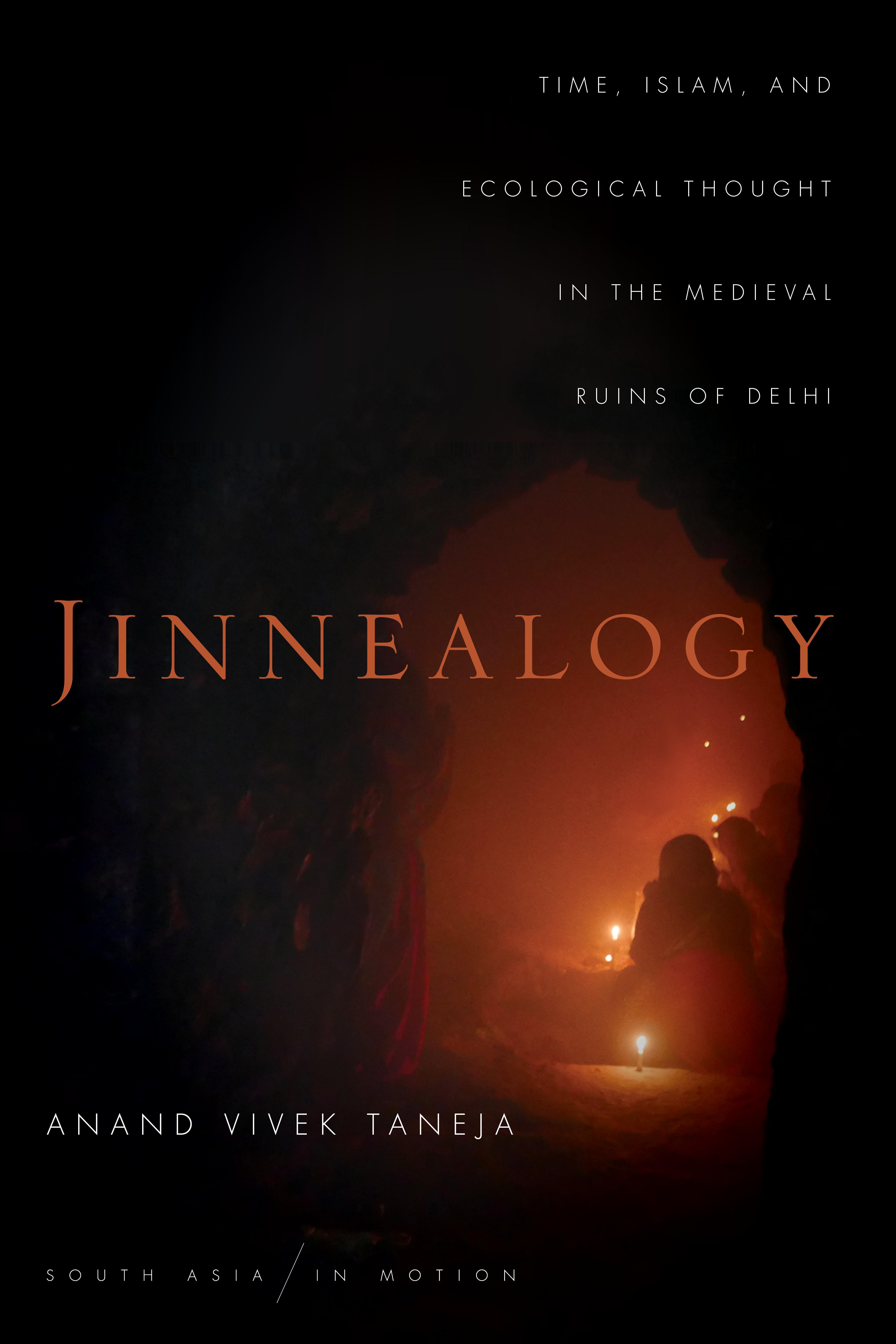
In the ruins of a medieval palace in Delhi, a unique phenomenon occurs: Indians of all castes and creeds meet to socialize and ask the spirits for help. The spirits they entreat are Islamic jinns, and they write out requests as if petitioning the state. At a time when a Hindu right wing government in India is committed to normalizing a view of the past that paints Muslims as oppressors, Anand Vivek Taneja's Jinnealogy provides a fresh vision of religion, identity, and sacrality that runs counter to state-sanctioned history.
The ruin, Firoz Shah Kotla, is an unusually democratic religious space, characterized by freewheeling theological conversations, DIY rituals, and the sanctification of animals. Taneja observes the visitors, who come mainly from the Muslim and Dalit neighborhoods of Delhi, and uses their conversations and letters to the jinns as an archive of voices so often silenced. He finds that their veneration of the jinns recalls pre-modern religious traditions in which spiritual experience was inextricably tied to ecological surroundings. In this enchanted space, Taneja encounters a form of popular Islam that is not a relic of bygone days, but a vibrant form of resistance to state repression and post-colonial visions of India.
Paga fácilmente con tarjeta, Klarna, Apple Pay o Google Pay. ¿No estás contento? Siempre tienes 14 días de garantía de devolución. Lee más en nuestros términos. Si tienes preguntas, escríbenos a hello@memmo.org.
Memmo hace que estudiar sea más fácil, estés donde estés. Aquí tienes tus libros de texto y herramientas de estudio inteligentes en un solo lugar: resúmenes, quizzes, podcasts y flashcards. Y también a Ted, tu compañero de estudio que responde a todo lo que te preguntes. Más de 50 000 estudiantes ya estudian aquí. Está hecho para que aprendas más rápido y te estreses menos.