
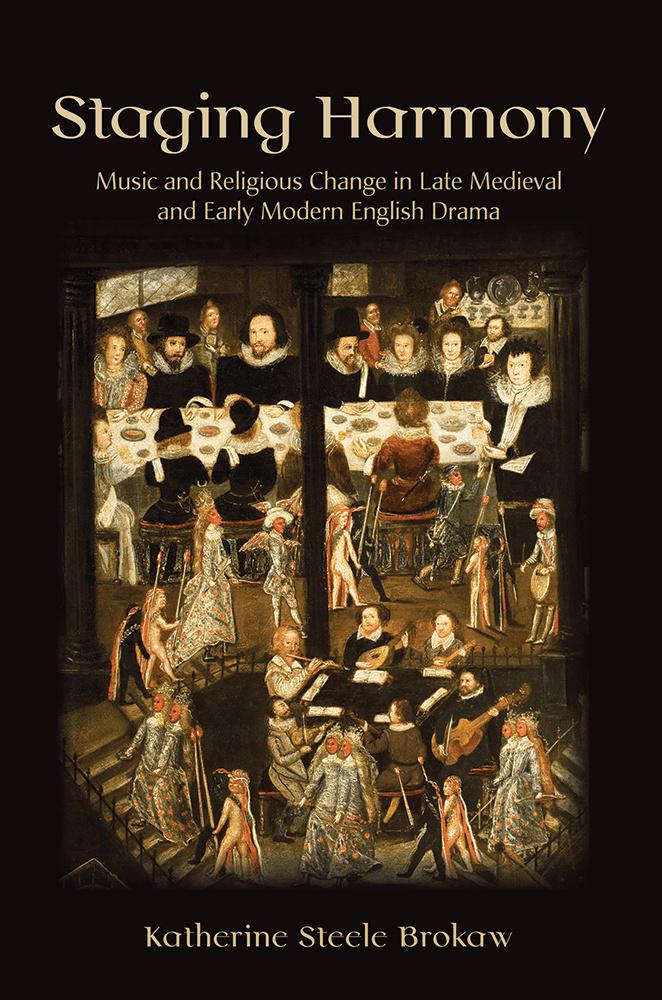
In Staging Harmony, Katherine Steele Brokaw reveals how the relationship between drama, music, and religious change across England's long sixteenth century moved religious discourse to more moderate positions. It did so by reproducing the complex personal attachments, nostalgic overtones, and bodily effects that allow performed music to evoke the feeling, if not always the reality, of social harmony. Brokaw demonstrates how theatrical music from the late fifteenth to the early seventeenth centuries contributed to contemporary discourses on the power and morality of music and its proper role in religious life, shaping the changes made to church music as well as people's reception of those changes. In representing social, affective, and religious life in all its intricacy, and in unifying auditors in shared acoustic experiences, staged musical moments suggested the value of complexity, resolution, and compromise rather than oversimplified, absolutist binaries worth killing or dying for.
The theater represented the music of the church's present and past. By bringing medieval and early Tudor drama into conversation with Elizabethan and Jacobean drama, Brokaw uncovers connections and continuities across diverse dramatic forms and demonstrates the staying power of musical performance traditions. In analyzing musical practices and discourses, theological debates, devotional practices, and early staging conditions, Brokaw offers new readings of well-known plays (Marlowe's Doctor Faustus, Shakespeare's The Tempest and The Winter's Tale) as well as Tudor dramas by playwrights including John Bale, Nicholas Udall, and William Wager.
Paga fácilmente con tarjeta, Klarna, Apple Pay o Google Pay. ¿No estás contento? Siempre tienes 14 días de garantía de devolución. Lee más en nuestros términos. Si tienes preguntas, escríbenos a hello@memmo.org.
Memmo hace que estudiar sea más fácil, estés donde estés. Aquí tienes tus libros de texto y herramientas de estudio inteligentes en un solo lugar: resúmenes, quizzes, podcasts y flashcards. Y también a Ted, tu compañero de estudio que responde a todo lo que te preguntes. Más de 50 000 estudiantes ya estudian aquí. Está hecho para que aprendas más rápido y te estreses menos.