
A 2024 CHOICE OUTSTANDING ACADEMIC TITLE
PROSE AWARDS MEDIA AND CULTURAL STUDIES FINALIST 2024
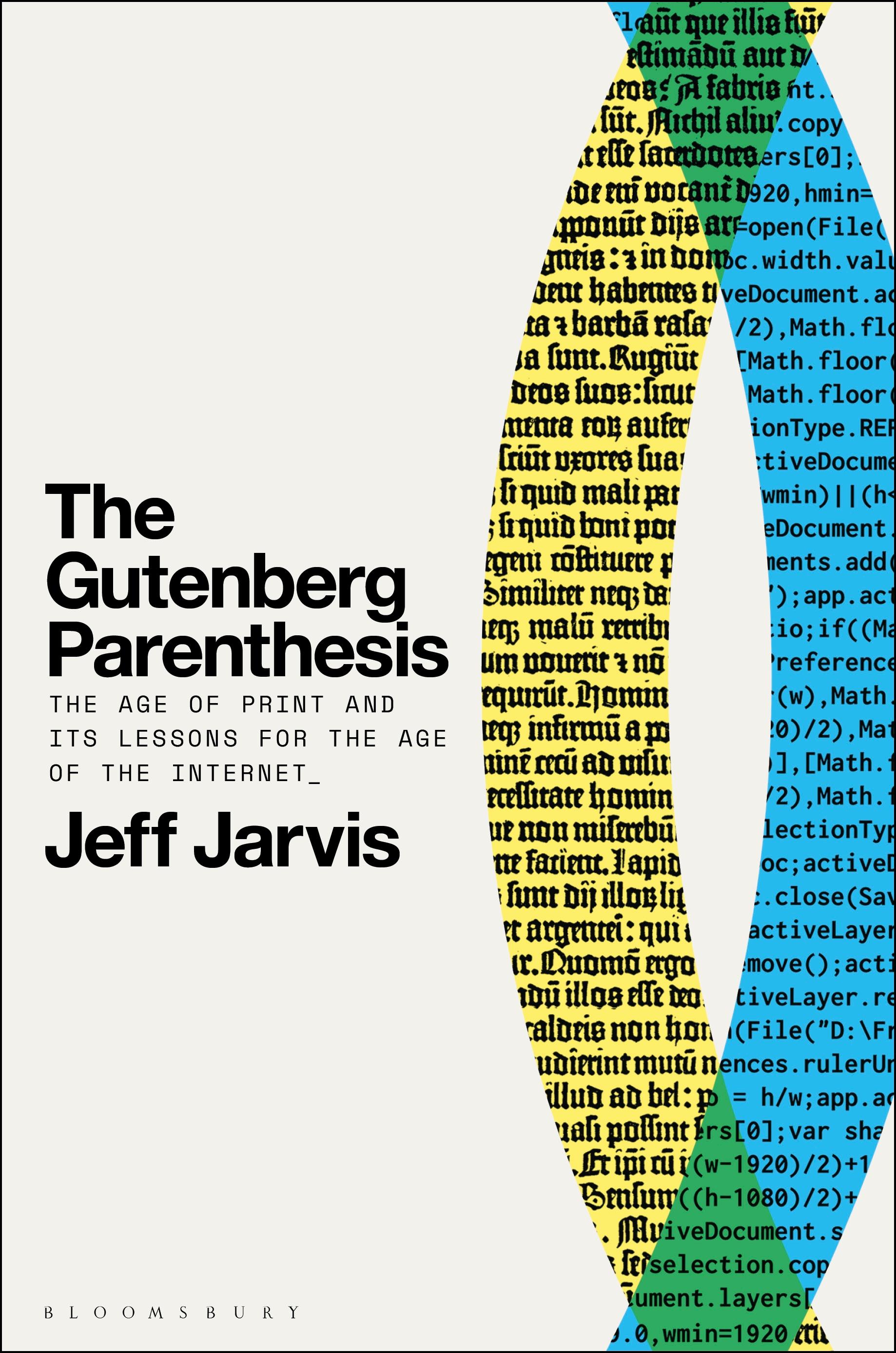
The Gutenberg Parenthesis traces the epoch of print from its fateful beginnings to our digital present – and draws out lessons for the age to come.
The age of print is a grand exception in history. For five centuries it fostered what some call print culture – a worldview shaped by the completeness, permanence, and authority of the printed word. As a technology, print at its birth was as disruptive as the digital migration of today. Now, as the internet ushers us past print culture, journalist Jeff Jarvis offers important lessons from the era we leave behind.
To understand our transition out of the Gutenberg Age, Jarvis first examines the transition into it. Tracking Western industrialized print to its origins, he explores its invention, spread, and evolution, as well as the bureaucracy and censorship that followed. He also reveals how print gave rise to the idea of the mass – mass media, mass market, mass culture, mass politics, and so on – that came to dominate the public sphere.
What can we glean from the captivating, profound, and challenging history of our devotion to print? Could it be that we are returning to a time before mass media, to a society built on conversation, and that we are relearning how to hold that conversation with ourselves? Brimming with broader implications for today's debates over communication, authorship, and ownership, Jarvis' exploration of print on a grand scale is also a complex, compelling history of technology and power.
PROSE AWARDS MEDIA AND CULTURAL STUDIES FINALIST 2024
The Gutenberg Parenthesis traces the epoch of print from its fateful beginnings to our digital present – and draws out lessons for the age to come.
The age of print is a grand exception in history. For five centuries it fostered what some call print culture – a worldview shaped by the completeness, permanence, and authority of the printed word. As a technology, print at its birth was as disruptive as the digital migration of today. Now, as the internet ushers us past print culture, journalist Jeff Jarvis offers important lessons from the era we leave behind.
To understand our transition out of the Gutenberg Age, Jarvis first examines the transition into it. Tracking Western industrialized print to its origins, he explores its invention, spread, and evolution, as well as the bureaucracy and censorship that followed. He also reveals how print gave rise to the idea of the mass – mass media, mass market, mass culture, mass politics, and so on – that came to dominate the public sphere.
What can we glean from the captivating, profound, and challenging history of our devotion to print? Could it be that we are returning to a time before mass media, to a society built on conversation, and that we are relearning how to hold that conversation with ourselves? Brimming with broader implications for today's debates over communication, authorship, and ownership, Jarvis' exploration of print on a grand scale is also a complex, compelling history of technology and power.
Paga fácilmente con tarjeta, Klarna, Apple Pay o Google Pay. ¿No estás contento? Siempre tienes 14 días de garantía de devolución. Lee más en nuestros términos. Si tienes preguntas, escríbenos a hello@memmo.org.
Memmo hace que estudiar sea más fácil, estés donde estés. Aquí tienes tus libros de texto y herramientas de estudio inteligentes en un solo lugar: resúmenes, quizzes, podcasts y flashcards. Y también a Ted, tu compañero de estudio que responde a todo lo que te preguntes. Más de 50 000 estudiantes ya estudian aquí. Está hecho para que aprendas más rápido y te estreses menos.