
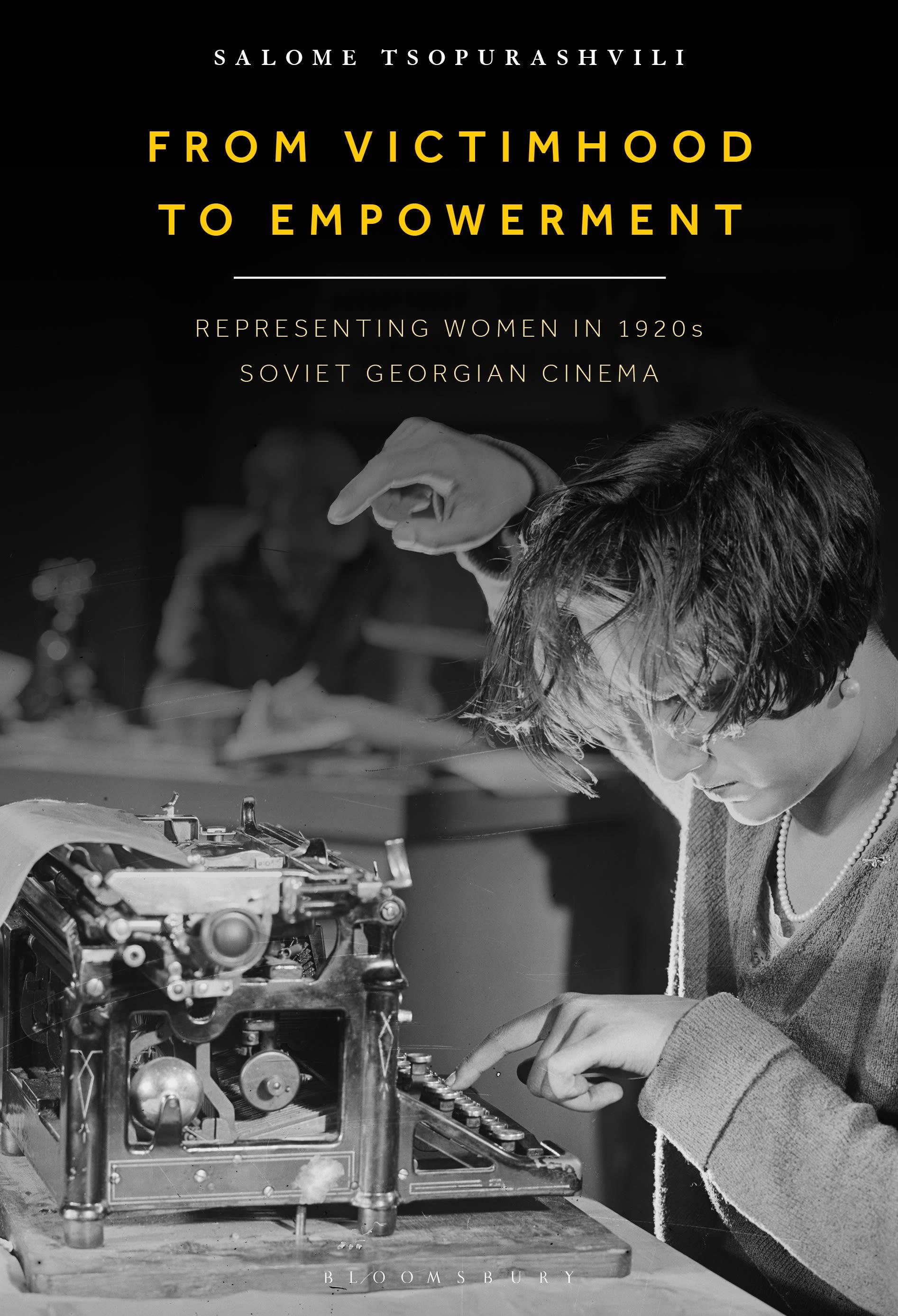
From Victimhood to Empowerment: Representing Women in 1920s Soviet Georgian Cinema brings the cinematographic works of Georgia's State Film Industry from the margins of the Soviet film studies to the centre. The book focuses on women's representations and explores how the gender roles were modified throughout the decade according to the new social and political ideals employing the discourse analysis, postcolonial perspectives and psychoanalytical feminist film theories.
Bringing together Soviet Georgia's most important films of the period, the book inspects the female body's symbolic function in the aspects of class dichotomy and ethnic hierarchies. It analyzes the construction of the 'Oriental other' by the Russian colonial imagination and its subsequent dismantling in the context of the Caucasus's de-Orientalization. It also examines the characteristics embodied by the 'heroine' and 'villain' of the new social order-the New Soviet Woman and the NEPwoman-and explores women's transformation within the revolutionary setting during the decade.
In the light of Bolsheviks' preoccupation and endeavour to improve 'woman question', the book surveys to what extent women's screen images were emancipated and whatthe functional meaning of this emancipation was in the given context; how the new ideals of the New Soviet woman were inscribed in the period's films and how these ideals were combined with Georgian nationality.
Bringing together Soviet Georgia's most important films of the period, the book inspects the female body's symbolic function in the aspects of class dichotomy and ethnic hierarchies. It analyzes the construction of the 'Oriental other' by the Russian colonial imagination and its subsequent dismantling in the context of the Caucasus's de-Orientalization. It also examines the characteristics embodied by the 'heroine' and 'villain' of the new social order-the New Soviet Woman and the NEPwoman-and explores women's transformation within the revolutionary setting during the decade.
In the light of Bolsheviks' preoccupation and endeavour to improve 'woman question', the book surveys to what extent women's screen images were emancipated and whatthe functional meaning of this emancipation was in the given context; how the new ideals of the New Soviet woman were inscribed in the period's films and how these ideals were combined with Georgian nationality.
Páginas: 264
Categoría: Kultur-, Genus- & Postkoloniala studier
e-ISBN: 9781501383168
Peso de envío: 1.2 kg
Envío en: 1-2 días
Paga fácilmente con tarjeta, Klarna, Apple Pay o Google Pay. ¿No estás contento? Siempre tienes 14 días de garantía de devolución. Lee más en nuestros términos. Si tienes preguntas, escríbenos a hello@memmo.org.
Memmo hace que estudiar sea más fácil, estés donde estés. Aquí tienes tus libros de texto y herramientas de estudio inteligentes en un solo lugar: resúmenes, quizzes, podcasts y flashcards. Y también a Ted, tu compañero de estudio que responde a todo lo que te preguntes. Más de 50 000 estudiantes ya estudian aquí. Está hecho para que aprendas más rápido y te estreses menos.