
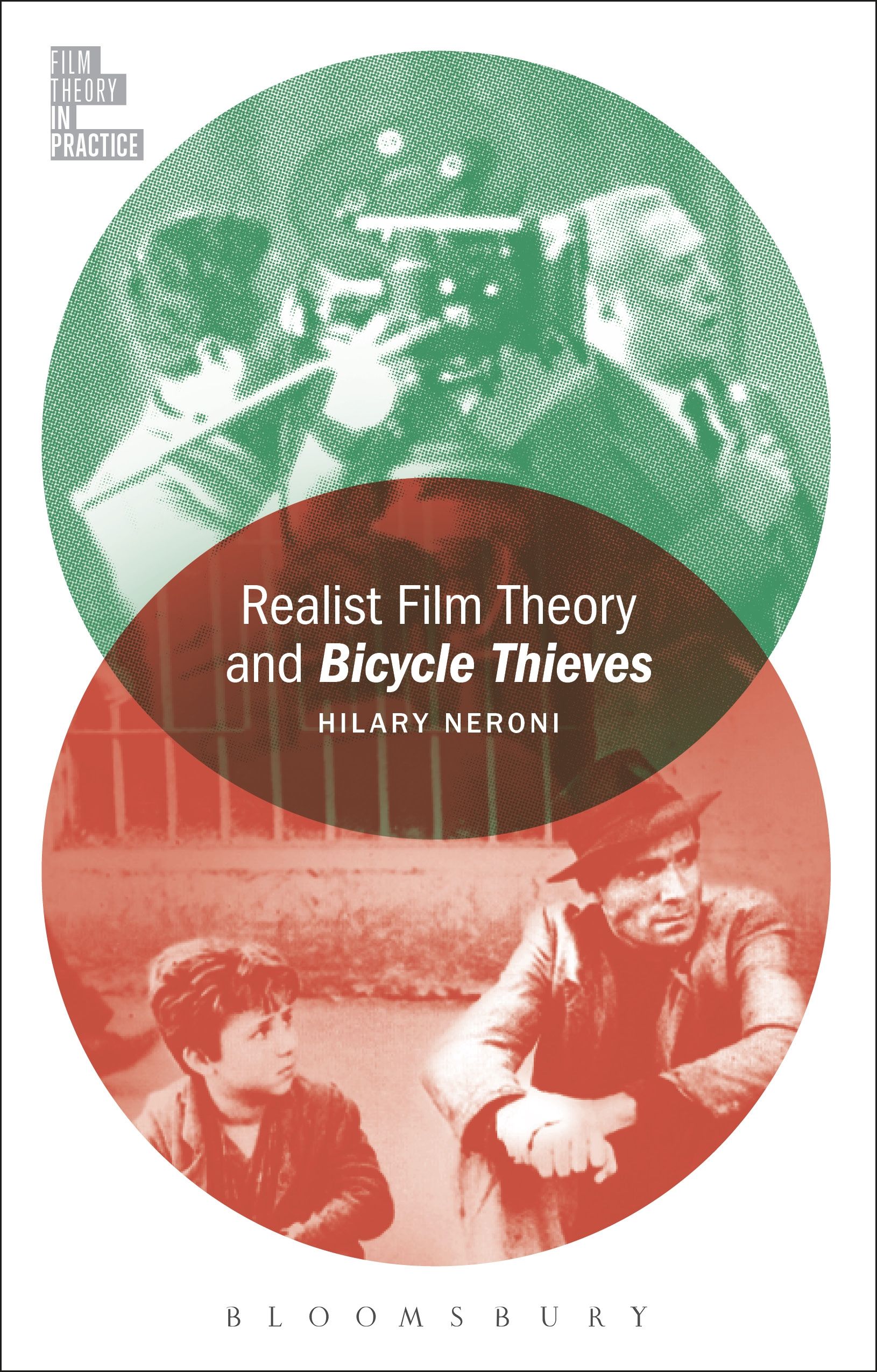
The Film Theory in Practice series fills a gaping hole in the world of film theory. By marrying the explanation of a film theory with the interpretation of a film, the volumes provide discrete examples of how film theory can serve as the basis for textual analysis. Realist Film Theory and Bicycle Thieves offers a concise introduction to realist film theory in jargon-free language and shows how this theory can be deployed to interpret Vittorio De Sica's 1948 Italian neo realist masterpiece Bicycle Thieves.
Hilary Neroni explores the original realist film theorists from the 1940s: André Bazin, Siegfried Kracauer, and Cesare Zavattini, among others. But rather than seeing realist film theory as simply a theory of the past to be moved beyond, the book argues that the prevalence of realism in many different forms within practice and theory suggests the importance of updating this original realist film theory with an understanding of realism that would sustain its viability. Throughout the book, Neroni analyzes neorealist film movements-such as Italian Neorealism, Parallel Cinema of India, and the Iranian New Wave-that challenge mainstream realism with a more radical form that exposes the social order instead of hiding it. Her in-depth investigation of Bicycle Thieves provides a realist methodology that reveals the radicality of its combination of realist techniques, a melodramatic story, and humanist values.
Hilary Neroni explores the original realist film theorists from the 1940s: André Bazin, Siegfried Kracauer, and Cesare Zavattini, among others. But rather than seeing realist film theory as simply a theory of the past to be moved beyond, the book argues that the prevalence of realism in many different forms within practice and theory suggests the importance of updating this original realist film theory with an understanding of realism that would sustain its viability. Throughout the book, Neroni analyzes neorealist film movements-such as Italian Neorealism, Parallel Cinema of India, and the Iranian New Wave-that challenge mainstream realism with a more radical form that exposes the social order instead of hiding it. Her in-depth investigation of Bicycle Thieves provides a realist methodology that reveals the radicality of its combination of realist techniques, a melodramatic story, and humanist values.
Paga fácilmente con tarjeta, Klarna, Apple Pay o Google Pay. ¿No estás contento? Siempre tienes 14 días de garantía de devolución. Lee más en nuestros términos. Si tienes preguntas, escríbenos a hello@memmo.org.
Memmo hace que estudiar sea más fácil, estés donde estés. Aquí tienes tus libros de texto y herramientas de estudio inteligentes en un solo lugar: resúmenes, quizzes, podcasts y flashcards. Y también a Ted, tu compañero de estudio que responde a todo lo que te preguntes. Más de 50 000 estudiantes ya estudian aquí. Está hecho para que aprendas más rápido y te estreses menos.