
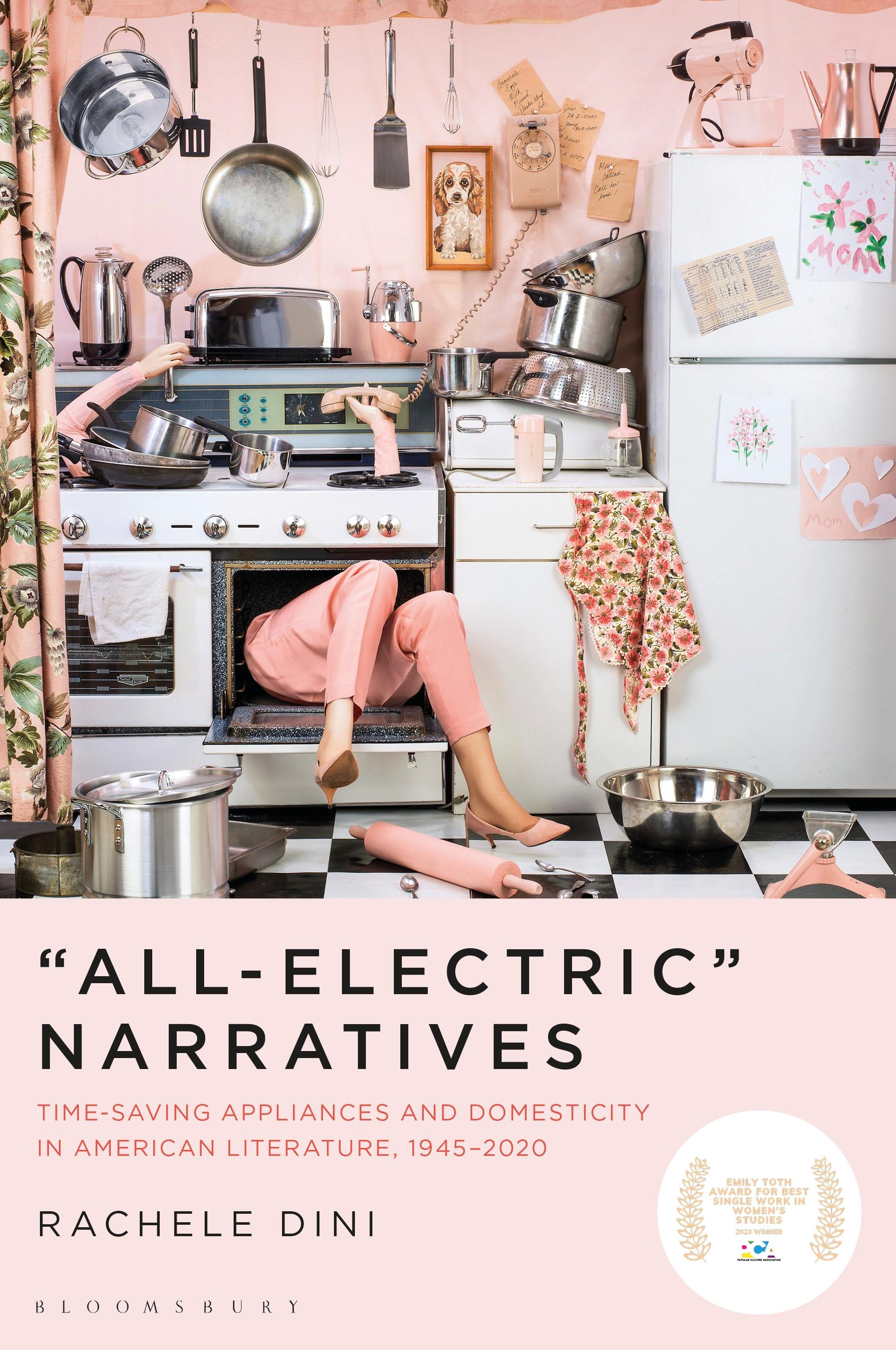
Winner of the 2023 Emily Toth Award for Best Single Work in Women's Studies
“All-Electric” Narratives is the first in-depth study of time-saving electrical appliances in American literature. It examines the literary depiction of refrigerators, vacuum cleaners, oven ranges, washing machines, dryers, dishwashers, toasters, blenders, standing and hand-held mixers, and microwave ovens between 1945, when the “all-electric” home came to be associated with the nation's hard-won victory, and 2020, as contemporary writers consider the enduring material and spiritual effects of these objects in the 21st century.
The appropriation and subversion of the rhetoric of domestic electrification and time-saving comprises a crucial, but overlooked, element in 20th-century literary forms and genres including Beat literature, Black American literature, second-wave feminist fiction, science fiction, and postmodernist fiction. Through close-readings of dozens of literary texts alongside print and television ads from this period, Dini shows how U.S. writers have unearthed the paradoxes inherent to claims of appliances' capacity to “give back” time to their user, transport them into a technologically-progressive future, or “return” them to some pastoral past. In so doing, she reveals literary appliances' role in raising questions about gender norms and sexuality, racial exclusion and erasure, class anxieties, the ramifications of mechanization, the perils and possibilities of conformity, the limitations of patriotism, and the inevitable fallacy of utopian thinking-while both shaping and radically disrupting the literary forms in which they operated.
“All-Electric” Narratives is the first in-depth study of time-saving electrical appliances in American literature. It examines the literary depiction of refrigerators, vacuum cleaners, oven ranges, washing machines, dryers, dishwashers, toasters, blenders, standing and hand-held mixers, and microwave ovens between 1945, when the “all-electric” home came to be associated with the nation's hard-won victory, and 2020, as contemporary writers consider the enduring material and spiritual effects of these objects in the 21st century.
The appropriation and subversion of the rhetoric of domestic electrification and time-saving comprises a crucial, but overlooked, element in 20th-century literary forms and genres including Beat literature, Black American literature, second-wave feminist fiction, science fiction, and postmodernist fiction. Through close-readings of dozens of literary texts alongside print and television ads from this period, Dini shows how U.S. writers have unearthed the paradoxes inherent to claims of appliances' capacity to “give back” time to their user, transport them into a technologically-progressive future, or “return” them to some pastoral past. In so doing, she reveals literary appliances' role in raising questions about gender norms and sexuality, racial exclusion and erasure, class anxieties, the ramifications of mechanization, the perils and possibilities of conformity, the limitations of patriotism, and the inevitable fallacy of utopian thinking-while both shaping and radically disrupting the literary forms in which they operated.
Paga fácilmente con tarjeta, Klarna, Apple Pay o Google Pay. ¿No estás contento? Siempre tienes 14 días de garantía de devolución. Lee más en nuestros términos. Si tienes preguntas, escríbenos a hello@memmo.org.
Memmo hace que estudiar sea más fácil, estés donde estés. Aquí tienes tus libros de texto y herramientas de estudio inteligentes en un solo lugar: resúmenes, quizzes, podcasts y flashcards. Y también a Ted, tu compañero de estudio que responde a todo lo que te preguntes. Más de 50 000 estudiantes ya estudian aquí. Está hecho para que aprendas más rápido y te estreses menos.