
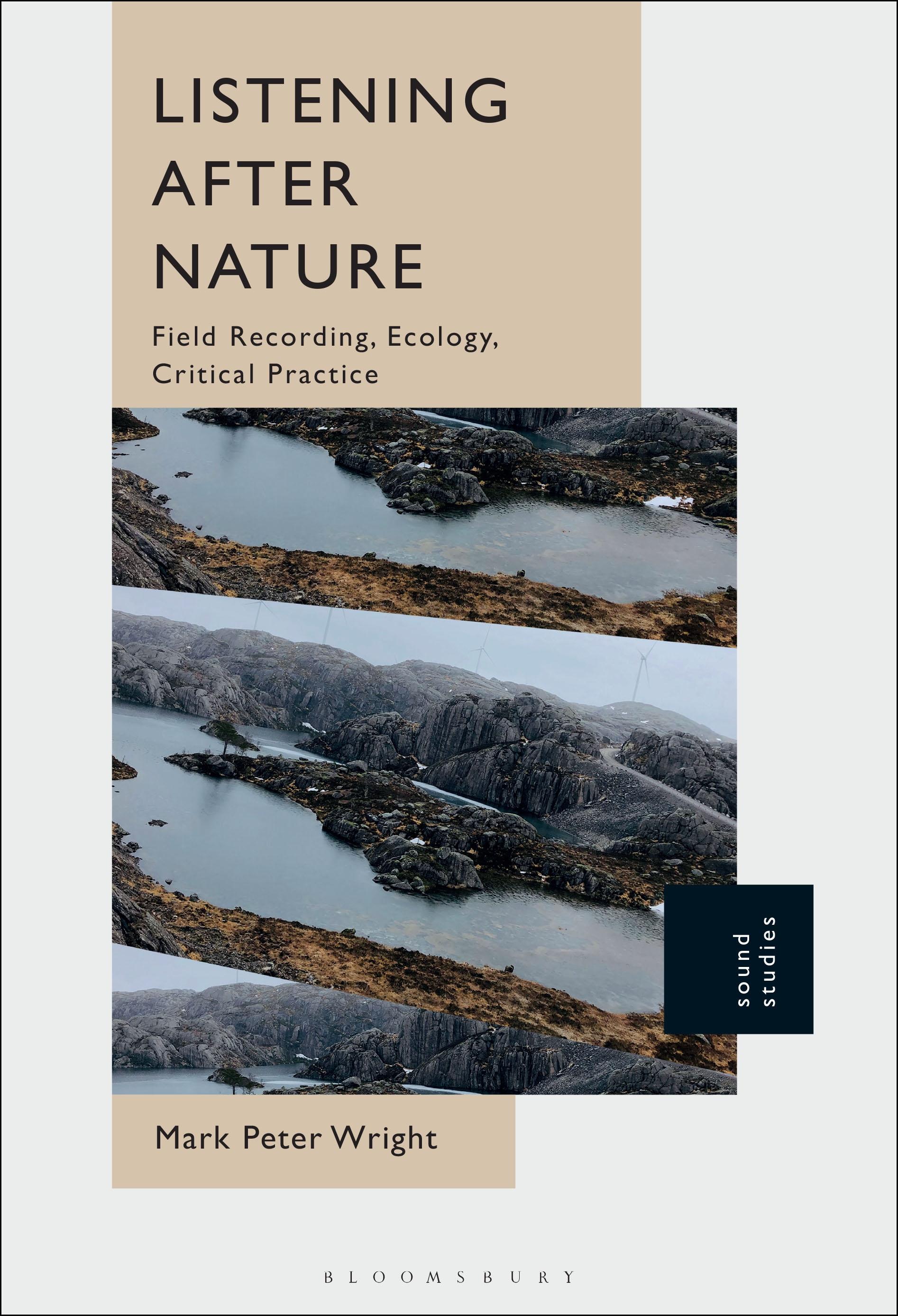
Listening After Nature examines the constructions and erasures that haunt field recording practice and discourse. Analyzing archival and contemporary soundworks through a combination of post-colonial, ecological and sound studies scholarship, Mark Peter Wright recodes the Field; troubles conceptions of Nature; expands site-specificity; and unearths hidden technocultures. What exists beyond the signal? How is agency performed and negotiated between humans and nonhumans? What exactly is a field recording and what are its pedagogical potentials?
These questions are operated by a methodology of listening that incorporates the spaces of audition, as well as Wright's own practice-based reflections. In doing so, Listening After Nature posits a range of novel interventions. One example is the “Noisy-Nonself,” a conceptual figuration with which to comprehend the presence of reticent recordists. “Contact Zones and Elsewhere Fields” offers another unique contribution by reimagining the relationship between the field and studio. In the final chapter, Wright explores the microphone by tracing its critical and creative connections to natural resource extraction and contemporary practice.
Listening After Nature auditions water and waste, infrastructures and animals, technologies and recordists, data and stars. It grapples with the thresholds of sensory perception and anchors itself to the question: what am I not hearing? In doing so, it challenges Western universalisms that code the field whilst offering vibrant practice-based possibilities.
These questions are operated by a methodology of listening that incorporates the spaces of audition, as well as Wright's own practice-based reflections. In doing so, Listening After Nature posits a range of novel interventions. One example is the “Noisy-Nonself,” a conceptual figuration with which to comprehend the presence of reticent recordists. “Contact Zones and Elsewhere Fields” offers another unique contribution by reimagining the relationship between the field and studio. In the final chapter, Wright explores the microphone by tracing its critical and creative connections to natural resource extraction and contemporary practice.
Listening After Nature auditions water and waste, infrastructures and animals, technologies and recordists, data and stars. It grapples with the thresholds of sensory perception and anchors itself to the question: what am I not hearing? In doing so, it challenges Western universalisms that code the field whilst offering vibrant practice-based possibilities.
Paga fácilmente con tarjeta, Klarna, Apple Pay o Google Pay. ¿No estás contento? Siempre tienes 14 días de garantía de devolución. Lee más en nuestros términos. Si tienes preguntas, escríbenos a hello@memmo.org.
Memmo hace que estudiar sea más fácil, estés donde estés. Aquí tienes tus libros de texto y herramientas de estudio inteligentes en un solo lugar: resúmenes, quizzes, podcasts y flashcards. Y también a Ted, tu compañero de estudio que responde a todo lo que te preguntes. Más de 50 000 estudiantes ya estudian aquí. Está hecho para que aprendas más rápido y te estreses menos.