
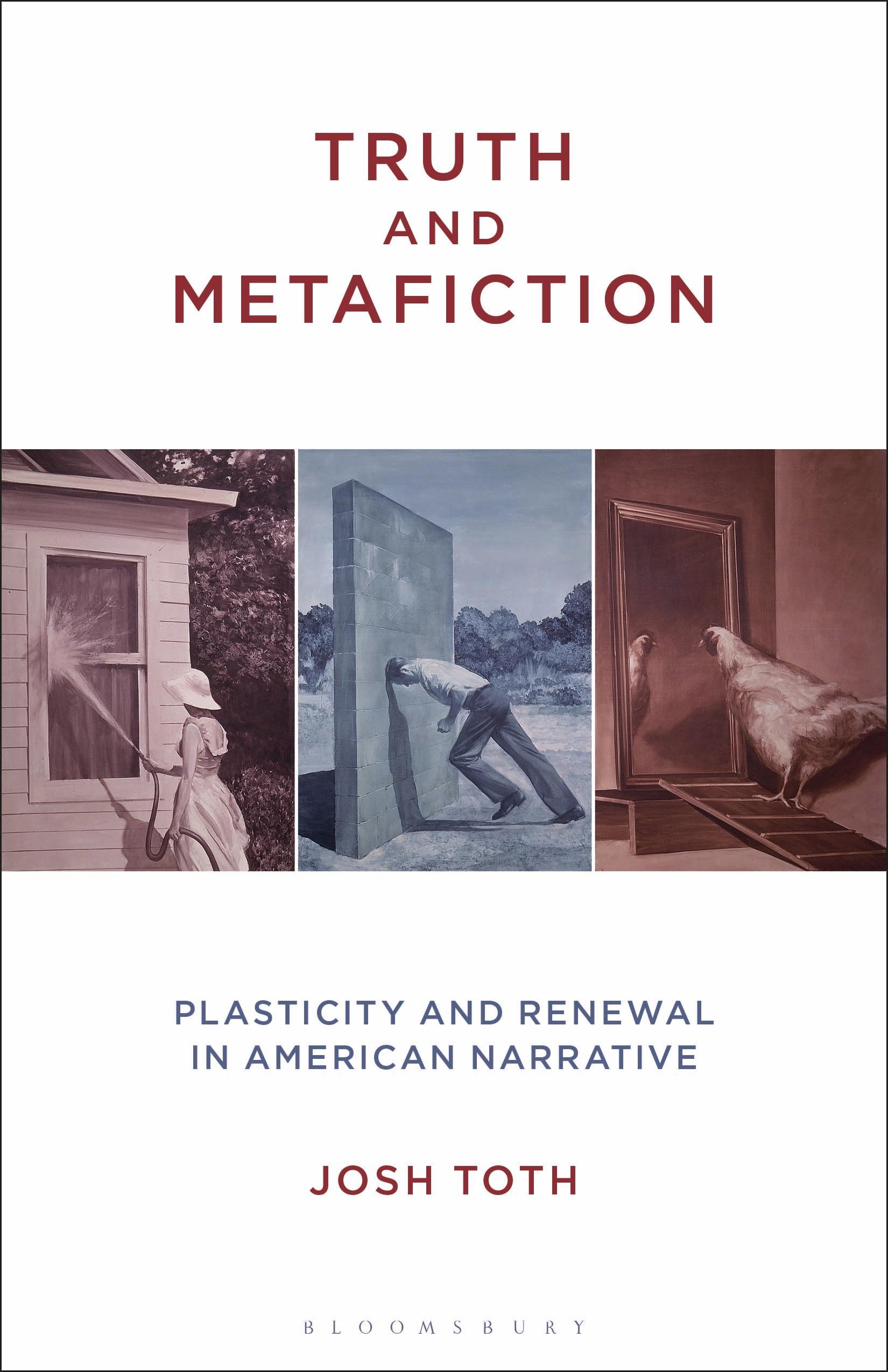
Metafiction has long been associated with the heyday of literary postmodernism-with a certain sense of irresponsibility, political apathy, or outright nihilism. Yet, if (as is now widely assumed) postmodernism has finally run its course, how might we account for the proliferation of metafictional devices in contemporary narrative media? Does this persistence undermine the claim that postmodernism has passed, or has the function of metafiction somehow changed?
To answer these questions, Josh Toth considers a broad range of recent metafictional texts-bywriters such as George Saunders and Jennifer Egan and directors such as Sofia Coppola and Quentin Tarantino. At the same time, he traverses a diffuse theoretical landscape: from the rise of various new materialisms (in philosophy) and the turn to affect (in literary criticism) to the seemingly endless efforts to name postmodernism's ostensible successor.
Ultimately, Toth argues that much contemporary metafiction moves beyond postmodern skepticism to reassert the possibility of making true claims about real things. Capable of combating a “post-truth” crisis, such forms assert or assume a kind of Hegelian plasticity; they actively and persistently confront the trauma of what is infinitely mutable, or perpetually other. What is outside or before a given representation is confirmed and endured as that which exceeds the instance of its capture. The truth is thereby renewed; neither denied nor simply assumed, it is approached as ethically as possible. Its plasticity is grasped because the grasp, the form of its narrative apprehension, lets slip.
To answer these questions, Josh Toth considers a broad range of recent metafictional texts-bywriters such as George Saunders and Jennifer Egan and directors such as Sofia Coppola and Quentin Tarantino. At the same time, he traverses a diffuse theoretical landscape: from the rise of various new materialisms (in philosophy) and the turn to affect (in literary criticism) to the seemingly endless efforts to name postmodernism's ostensible successor.
Ultimately, Toth argues that much contemporary metafiction moves beyond postmodern skepticism to reassert the possibility of making true claims about real things. Capable of combating a “post-truth” crisis, such forms assert or assume a kind of Hegelian plasticity; they actively and persistently confront the trauma of what is infinitely mutable, or perpetually other. What is outside or before a given representation is confirmed and endured as that which exceeds the instance of its capture. The truth is thereby renewed; neither denied nor simply assumed, it is approached as ethically as possible. Its plasticity is grasped because the grasp, the form of its narrative apprehension, lets slip.
Paga fácilmente con tarjeta, Klarna, Apple Pay o Google Pay. ¿No estás contento? Siempre tienes 14 días de garantía de devolución. Lee más en nuestros términos. Si tienes preguntas, escríbenos a hello@memmo.org.
Memmo hace que estudiar sea más fácil, estés donde estés. Aquí tienes tus libros de texto y herramientas de estudio inteligentes en un solo lugar: resúmenes, quizzes, podcasts y flashcards. Y también a Ted, tu compañero de estudio que responde a todo lo que te preguntes. Más de 50 000 estudiantes ya estudian aquí. Está hecho para que aprendas más rápido y te estreses menos.