
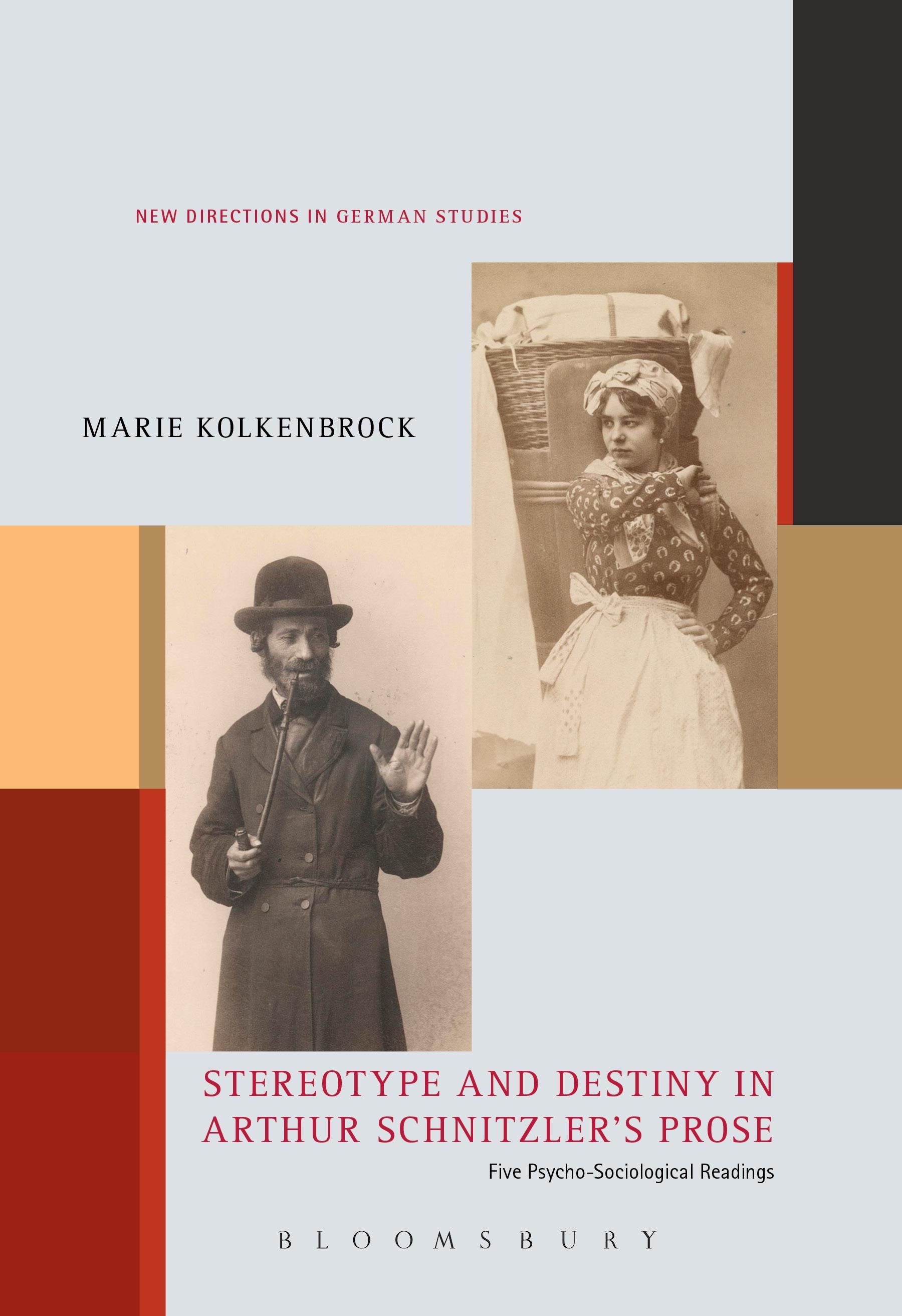
What was the function of the invocation of destiny in the increasingly secularized era of turn-of-the-century Vienna? By exploring this question, Stereotype and Destiny in Arthur Schnitzler's Prose offers a new psycho-sociological perspective on the narrative works of Arthur Schnitzler.
While Vienna 1900 as a site of crisis has been established in the scholarship, this book focuses on the presence of forces that deny the existence of said crisis and work to contain its subversive and critical potential. Stereotype and destiny emerge in Schnitzler's prose texts as a form of these counter-critical forces. In her readings, Kolkenbrock shows that stereotype and destiny serve as an interrelated coping mechanism for a central psychological conflict of modernity: the paradoxical need to be recognized as 'normal' and 'special' at the same time. While, through the complex of "stereotype and destiny," Schnitzler's prose addresses central modern questions of identity and subjecthood, Kolkenbrock's close readings also reveal how the texts inscribe themselves aesthetically in the literary tradition of Romanticism and as such offer crucial sources for understanding Schnitzler's representations of embattled subjecthood within broader social and aesthetic traditions.
While Vienna 1900 as a site of crisis has been established in the scholarship, this book focuses on the presence of forces that deny the existence of said crisis and work to contain its subversive and critical potential. Stereotype and destiny emerge in Schnitzler's prose texts as a form of these counter-critical forces. In her readings, Kolkenbrock shows that stereotype and destiny serve as an interrelated coping mechanism for a central psychological conflict of modernity: the paradoxical need to be recognized as 'normal' and 'special' at the same time. While, through the complex of "stereotype and destiny," Schnitzler's prose addresses central modern questions of identity and subjecthood, Kolkenbrock's close readings also reveal how the texts inscribe themselves aesthetically in the literary tradition of Romanticism and as such offer crucial sources for understanding Schnitzler's representations of embattled subjecthood within broader social and aesthetic traditions.
Páginas: 280
Categoría: Litteraturvetenskap & Teori
e-ISBN: 9781501330971
Peso de envío: 1.2 kg
Envío en: 1-2 días
Paga fácilmente con tarjeta, Klarna, Apple Pay o Google Pay. ¿No estás contento? Siempre tienes 14 días de garantía de devolución. Lee más en nuestros términos. Si tienes preguntas, escríbenos a hello@memmo.org.
Memmo hace que estudiar sea más fácil, estés donde estés. Aquí tienes tus libros de texto y herramientas de estudio inteligentes en un solo lugar: resúmenes, quizzes, podcasts y flashcards. Y también a Ted, tu compañero de estudio que responde a todo lo que te preguntes. Más de 50 000 estudiantes ya estudian aquí. Está hecho para que aprendas más rápido y te estreses menos.