
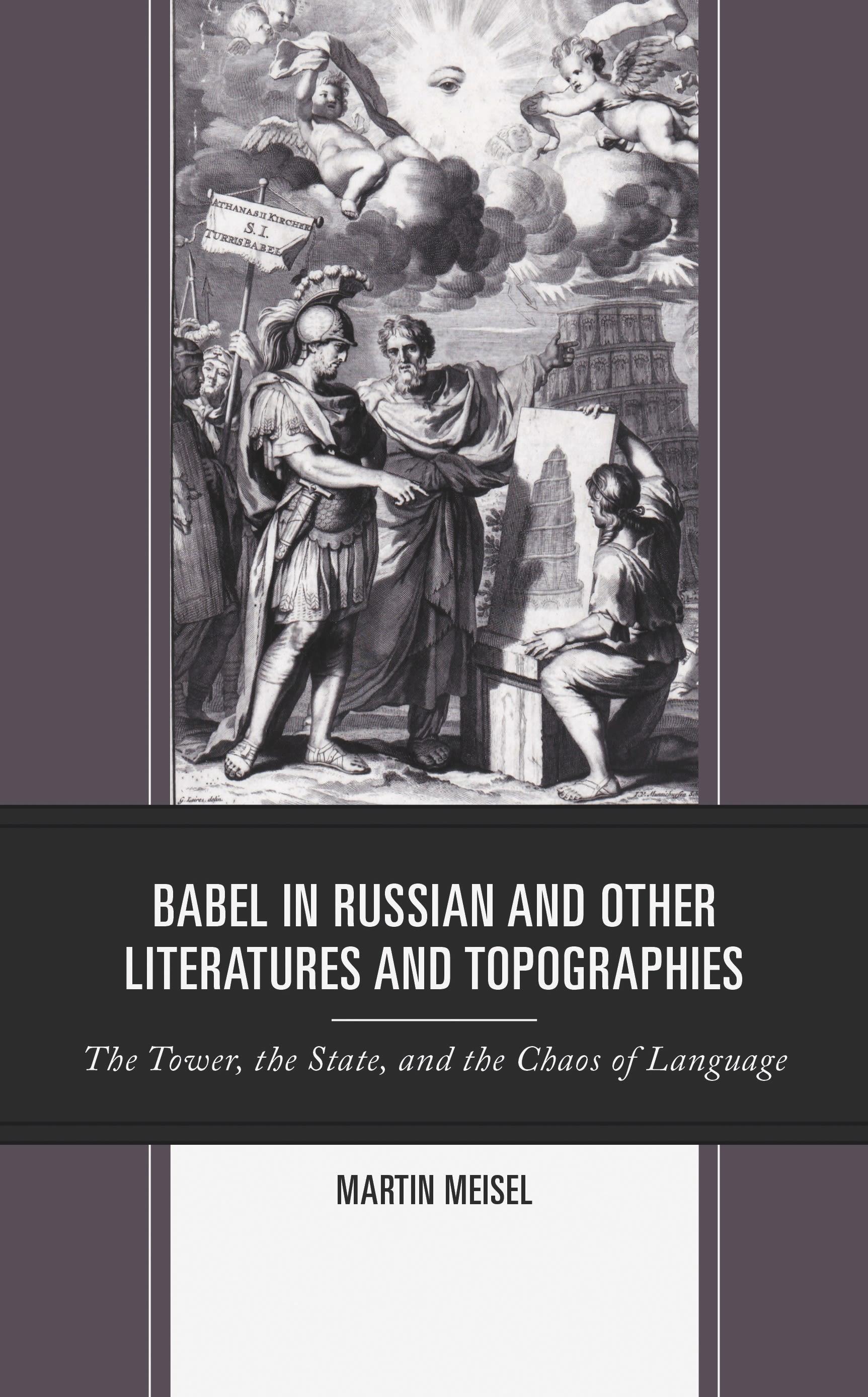
This study analyzes the biblical Tower of Babel story, a cautionary tale that accounts for the diversity of languages and peoples, in Russian literature and other topographies. The author pursues its linking of language, architecture, and society as well as its relevance in art and literature over centuries. To come to terms with a perceived disorder in the realm of language, alternative explanations and projects for remediation abound. The disorder and diversity themselves find expression in art, literature, and philosophical reflection and caused the emergence of a historical linguistics. The ambition of the builders—with its social and organizational premise—reemerges in both political and material form as cities, states, and monumental constructions. Utopian aspirations and linguistic claims permeate both revolutionary notions of universality and the romantic essentialism of the nation state. These in turn provoke dystopian critique in literature and film. As Martin Meisel reveals in this study, the wrestle with language in its recalcitrant instability and imperfect social function enters into dialogue with the celebration of its diversity, elasticity, and creativity.
Paga fácilmente con tarjeta, Klarna, Apple Pay o Google Pay. ¿No estás contento? Siempre tienes 14 días de garantía de devolución. Lee más en nuestros términos. Si tienes preguntas, escríbenos a hello@memmo.org.
Memmo hace que estudiar sea más fácil, estés donde estés. Aquí tienes tus libros de texto y herramientas de estudio inteligentes en un solo lugar: resúmenes, quizzes, podcasts y flashcards. Y también a Ted, tu compañero de estudio que responde a todo lo que te preguntes. Más de 50 000 estudiantes ya estudian aquí. Está hecho para que aprendas más rápido y te estreses menos.