
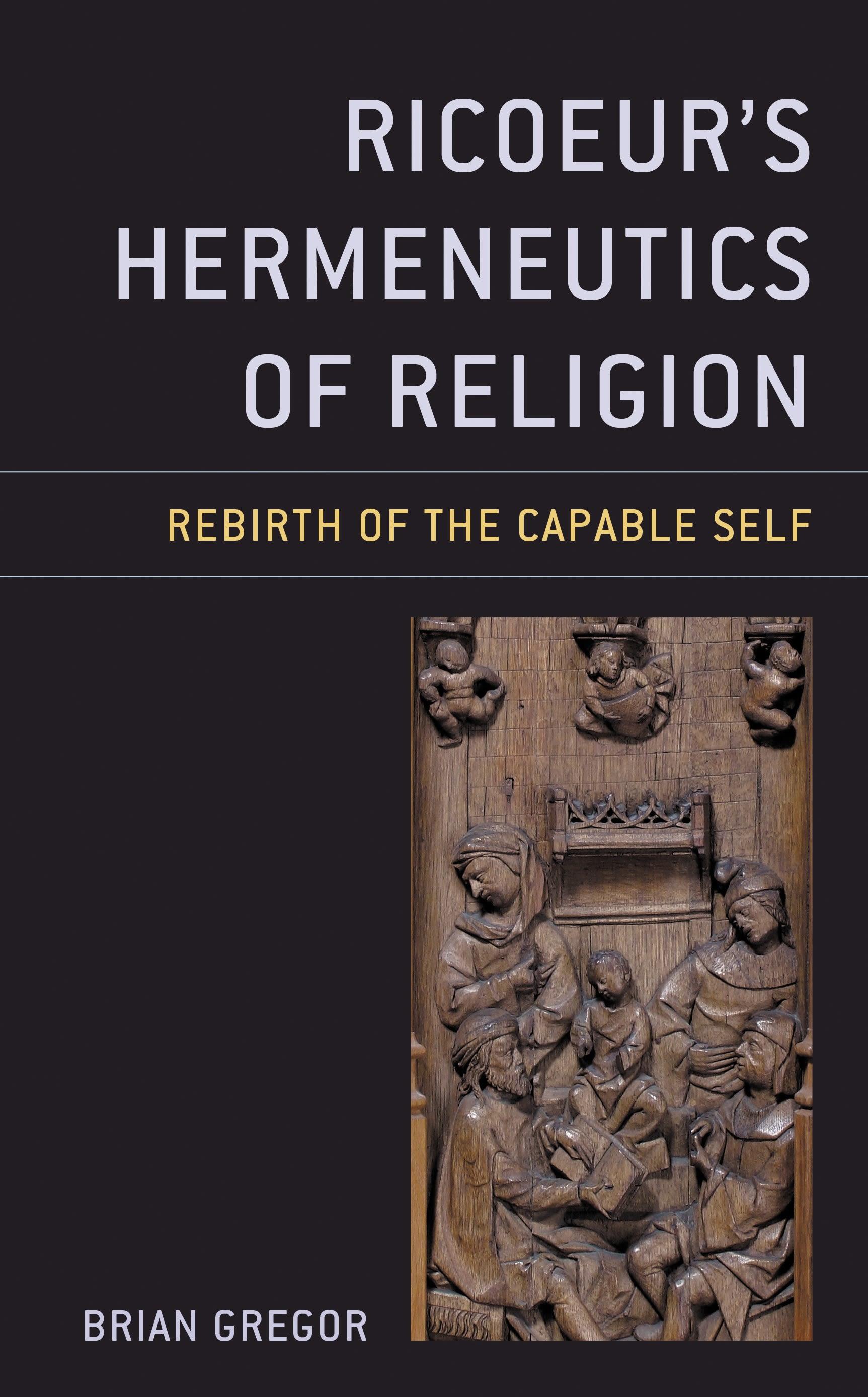
Religion was a constant theme throughout Paul Ricoeur’s long career, and yet he never wrote a full-length treatment of the topic. In this important new book, Brian Gregor draws on the full scope of Ricoeur’s writings to lay out the essential features of his philosophical interpretation of religion, from his earliest to his last work.
Ricoeur’s central claim is that religion aims at the regeneration of human capability—in his words, “the rebirth of the capable self.” This book provides a rich thematic account of Ricoeur’s hermeneutics of religion, showing how the theme of capability informs his changing interpretations of religion, from his early work on French reflexive philosophy and the philosophy of the will to his late work on forgiveness, mourning, and living up to death. Gregor exhibits Ricoeur’s original contribution to philosophical reflection on such themes as evil, suffering, and violence, as well as imagination, embodiment, and spiritual exercise. He also presents a critical reconsideration of Ricoeur’s separation of philosophy from theology, and his philosophical interpretation of Christian theological ideas of revelation, divine transcendence and personhood, atonement, and eschatology.
Additionally, Gregor provides an expansive look at Ricoeur’s interlocutors, including Marcel, Jaspers, Kant, Hegel, Levinas, and Girard. Theologically-inclined readers will be particularly interested in the book’s treatment of Karl Barth and the Protestant theology of the Word, which was a vital influence on Ricoeur.
The result is a study of Ricoeur that is both sympathetic and critical, provocative and original, inviting the reader into a deeper engagement with Ricoeur’s philosophical interpretation of religion.
Ricoeur’s central claim is that religion aims at the regeneration of human capability—in his words, “the rebirth of the capable self.” This book provides a rich thematic account of Ricoeur’s hermeneutics of religion, showing how the theme of capability informs his changing interpretations of religion, from his early work on French reflexive philosophy and the philosophy of the will to his late work on forgiveness, mourning, and living up to death. Gregor exhibits Ricoeur’s original contribution to philosophical reflection on such themes as evil, suffering, and violence, as well as imagination, embodiment, and spiritual exercise. He also presents a critical reconsideration of Ricoeur’s separation of philosophy from theology, and his philosophical interpretation of Christian theological ideas of revelation, divine transcendence and personhood, atonement, and eschatology.
Additionally, Gregor provides an expansive look at Ricoeur’s interlocutors, including Marcel, Jaspers, Kant, Hegel, Levinas, and Girard. Theologically-inclined readers will be particularly interested in the book’s treatment of Karl Barth and the Protestant theology of the Word, which was a vital influence on Ricoeur.
The result is a study of Ricoeur that is both sympathetic and critical, provocative and original, inviting the reader into a deeper engagement with Ricoeur’s philosophical interpretation of religion.
Paga fácilmente con tarjeta, Klarna, Apple Pay o Google Pay. ¿No estás contento? Siempre tienes 14 días de garantía de devolución. Lee más en nuestros términos. Si tienes preguntas, escríbenos a hello@memmo.org.
Memmo hace que estudiar sea más fácil, estés donde estés. Aquí tienes tus libros de texto y herramientas de estudio inteligentes en un solo lugar: resúmenes, quizzes, podcasts y flashcards. Y también a Ted, tu compañero de estudio que responde a todo lo que te preguntes. Más de 50 000 estudiantes ya estudian aquí. Está hecho para que aprendas más rápido y te estreses menos.